China appears increasingly willing to keep its commercial lifelines open to Iran despite Washington’s threat of sweeping economic retaliation, with Chinese-registered tankers continuing to navigate the Strait of Hormuz through the corridor approved by Tehran.
The latest movements have added a fresh and potentially explosive dimension to the confrontation between Washington and Beijing, coming just days after US President Donald Trump unveiled what he called an “Economic D-Day” against Iran and warned countries providing Tehran with an economic “lifeline” that they could face severe consequences.
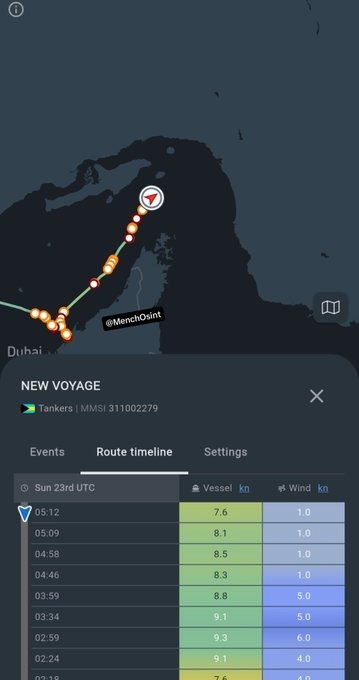
Maritime tracking and shipping reports have shown that Chinese-linked vessels have continued to feature prominently among ships using the northern corridor of the Strait, which has been dominated by Iranian- and Chinese-linked traffic since attacks on commercial vessels made the alternative southern route increasingly hazardous.
The development is significant because the Strait of Hormuz remains one of the world’s most strategically important energy chokepoints. Any sustained disruption to shipping through the waterway threatens global oil supplies, freight costs and energy prices.
But the picture is more complicated than a simple Chinese challenge to Washington. Reuters reported last week that two major Chinese state-controlled tanker operators, COSCO Shipping Energy Transportation and China Merchants Energy Shipping, had kept their fleets away from both the Strait of Hormuz and Bab el-Mandeb because of escalating security risks.
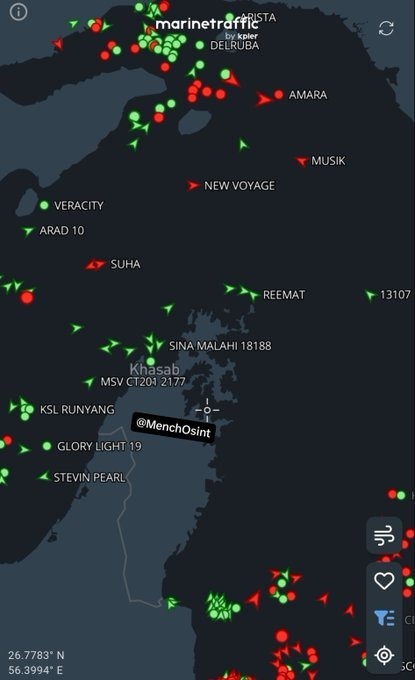
That distinction matters: individual Chinese-registered or China-linked vessels have continued to appear in the waterway even as some of China’s biggest state shipping companies have adopted more cautious routing strategies.
Still, Beijing has made clear that it rejects Washington’s broader campaign to isolate Tehran. Chinese officials have pushed back against Trump’s “Economic D-Day” strategy, calling for diplomatic efforts to resolve the conflict rather than intensified economic warfare.
Trump, meanwhile, has threatened countries and companies that continue doing business with Iran with potentially devastating economic measures. His administration’s campaign is aimed not only at Tehran but also at the international networks that keep Iranian oil and other trade moving.
The stakes are enormous. China is one of Iran’s most important economic partners, particularly in the oil trade, making Beijing a critical test of whether Washington can genuinely choke off Tehran’s access to international markets.
And that is where the latest tanker movements become politically explosive.
If China-linked shipping can continue finding routes through a waterway where Iran still exercises considerable influence, Washington faces a far more difficult task than simply announcing another round of sanctions. Economic isolation only works when enough of the world agrees to enforce it.
For Tehran, Chinese commercial activity offers evidence that it is not completely cut off. For Washington, it presents a direct challenge to the credibility of the new pressure campaign.
The message emerging from Hormuz is therefore stark: Trump may be threatening an economic D-Day, but China’s continued commercial engagement with Iran could make a total economic blockade of Tehran far harder to achieve.
With oil prices already reacting to the escalating confrontation and Brent crude recently settling above $94 a barrel, the battle over Hormuz is no longer merely a regional dispute. It is becoming a test of who controls the economic arteries connecting the Middle East to the wider world.