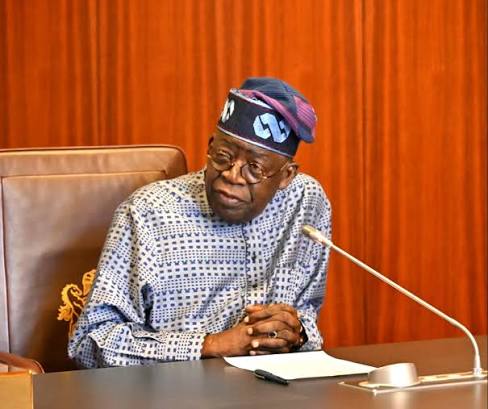
President Bola Tinubu has approved a sweeping reorganisation of the Nigerian Army, expanding its operational structure from eight to 12 divisions and authorising the recruitment of 28,000 additional personnel in what is being described as one of the most significant military reforms in recent years.
The decision, announced in a statement issued on Thursday by the President’s Special Adviser on Information and Strategy, Bayo Onanuga, is aimed at strengthening Nigeria’s security architecture amid escalating insurgency, banditry, kidnapping, separatist violence and attacks on critical national infrastructure across the country.
According to the Presidency, the expansion is designed to decentralise military operations, improve command and control, enhance border security, protect strategic national assets, reinforce counter-insurgency operations and enable quicker military responses to emerging security threats.
The restructuring forms part of the Tinubu administration’s broader efforts to modernise the Armed Forces through increased recruitment, acquisition of military hardware, improved troop welfare and sustained investment in operational readiness.
Under the new operational structure, the Nigerian Army will now operate 12 divisions strategically positioned across the federation.
The 1 Division, headquartered in Kaduna, will oversee Kaduna, Kano, Katsina and Jigawa states, while the 2 Division in Ibadan will cover Oyo, Osun, Ekiti and Ondo states. The 3 Division in Jos will retain responsibility for Plateau, Bauchi and Gombe states.
The newly created 5 Division, headquartered in Makurdi, will supervise military operations in Benue, Nasarawa and Kogi states, while the 6 Division in Port Harcourt will continue to oversee Rivers, Akwa Ibom and Cross River states. The 7 Division in Maiduguri will remain responsible for Borno and Yobe states, and the 8 Division in Sokoto will cover Sokoto, Kebbi and Zamfara states.
The new 9 Division, based in Ilorin, will oversee Kwara and Niger states, while the 10 Division in Jalingo will be responsible for Taraba and Adamawa states. The 81 Division in Lagos will continue to supervise Lagos and Ogun states, while the 82 Division in Enugu will cover Enugu, Anambra, Abia, Ebonyi and Imo states. The newly approved 83 Division, headquartered in Benin City, will oversee Edo, Delta and Bayelsa states.
The Presidency stated that establishing new divisions in Makurdi, Ilorin, Jalingo and Benin City is expected to strengthen military operations by bringing command structures closer to some of the country’s most volatile security flashpoints.
Implementation of the new force structure will be carried out in two phases. The first phase, comprising the activation of the 5, 9 and 10 Divisions and the reorganisation of existing formations, is scheduled for completion by September 2026. The second phase, which includes the establishment of the 83 Division in Benin City and additional restructuring, is expected to be concluded by December 2026.
President Tinubu also approved the recruitment of 28,000 additional soldiers to boost the Army’s manpower and enhance its capacity to confront the country’s growing security challenges.
The President commended the Chief of Army Staff, Lt.-Gen. Waidi Shuaibu, alongside officers and soldiers of the Nigerian Army, for their dedication, professionalism and commitment to defending Nigeria’s sovereignty and territorial integrity.
He reaffirmed his administration’s commitment to sustained investment in the Armed Forces, assuring that the military would continue to receive the resources, equipment and support required to effectively safeguard the nation’s territorial integrity and protect the lives and property of Nigerians.
The far-reaching military overhaul comes as Nigeria continues to grapple with persistent insurgency in the North-East, widespread banditry and mass kidnappings across the North-West and North-Central, separatist violence in parts of the South-East, as well as oil theft and pipeline vandalism in the Niger Delta. The restructuring is expected to significantly reshape the Army’s operational strategy and strengthen its ability to respond more rapidly to security threats nationwide.