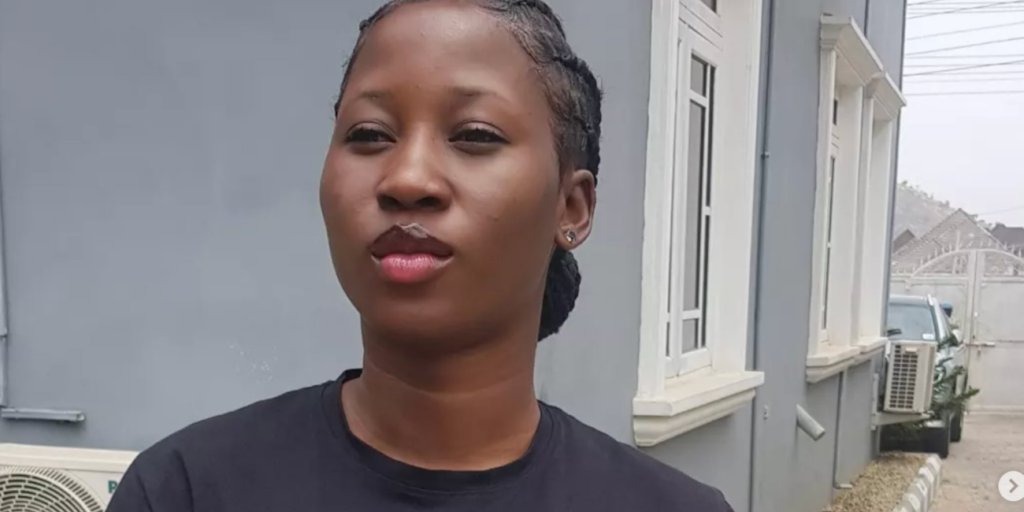
The controversy surrounding the death of 26-year-old physiotherapist, Mary Habila, at the Ebonyi residence of Nigeria’s Minister of Works, David Umahi, took another dramatic turn on Wednesday as her grieving father declined to comment on the circumstances of her death while preparing to receive her body for burial.
Mary’s father, Baba Habila, was at the morgue in Abakaliki, Ebonyi State, to collect his daughter’s remains ahead of her burial scheduled for Friday in Nok, Jaba Local Government Area of Kaduna State.
Confirming the development, the President General of the Ham People and Secretary-General of the Southern Kaduna People’s Union (SOKAPU), Jerry Andrew Ham, said Baba Habila and the family’s counsel, Barrister Yusuf, informed members of the community that the family would proceed with the burial and would not request an autopsy before interment.
When contacted, Baba Habila, overwhelmed by grief, struggled to speak. Through tears, he said he was not in a position to comment on the matter before abruptly ending the telephone conversation.

Mary Habila died on June 27, 2026, at Minister Umahi’s residence in Uburu, Ohaozara Local Government Area of Ebonyi State. Nearly three weeks later, the circumstances surrounding her death remain unresolved, with investigators yet to publicly disclose the cause of death.
The case has continued to generate nationwide outrage amid conflicting accounts from key parties and growing demands for an independent, transparent and credible investigation.
Fresh revelations have also intensified the controversy. Sources familiar with the investigation disclosed that Minister Umahi was reportedly at the residence when Habila died but allegedly left shortly afterwards. Although the minister has publicly confirmed that the young woman died at his residence, he has not clarified whether he personally witnessed the events leading to her death.
A source familiar with the matter claimed, “David Umahi was in the house when she died, but I heard he hurriedly left after Mary Habila died.”
Earlier, the minister acknowledged that Habila died in his residence, describing her as a physiotherapist seconded from the David Umahi Federal University of Health Sciences to the Federal Ministry of Works. He also maintained that he advised the family to consent to an autopsy to determine the cause of death, alleging that they initially declined.
However, investigators have reportedly challenged aspects of that account.
Police sources handling the investigation said they were yet to establish that Mary Habila and another woman, Anita Baski, who accompanied her from Kaduna State, were employees of the university as claimed. According to investigators, the two women arrived at the minister’s residence on June 26, while Habila was found unresponsive the following morning.
The matter, initially handled by the Ohaozara Divisional Police Headquarters, was later transferred to the Ebonyi State Criminal Investigation Department (SCID) in Abakaliki due to its sensitive nature.
Investigators have also insisted that an autopsy remains crucial to determining the actual cause of death and reportedly resisted efforts to release Habila’s body before the completion of forensic procedures.
Sources further disclosed that Jonathan Bawado, a police officer serving as Senator Umahi’s Personal Assistant and former Aide-de-Camp during his tenure as Governor of Ebonyi State, allegedly brought Habila and Anita Baski to the residence. He was also said to have alerted medical personnel after Habila was discovered unconscious.
The case has raised additional questions over why staff allegedly linked to a federal university teaching hospital were assigned to the private residence of the Minister of Works without any publicly explained official responsibility.
Investigators are also examining reports that members of Habila’s family were allegedly pressured not to insist on an autopsy before burial.
Public concern deepened after reports emerged that Habila was allegedly found without clothing when her body was removed from the minister’s residence, further fueling demands for accountability and a thorough investigation.
As police continue to reconstruct the events leading to the young woman’s death, including who was present at the residence, what actions were taken after she was found unresponsive and when emergency medical assistance was sought, Nigerians continue to await answers in a case that has become one of the country’s most controversial death investigations in recent times.