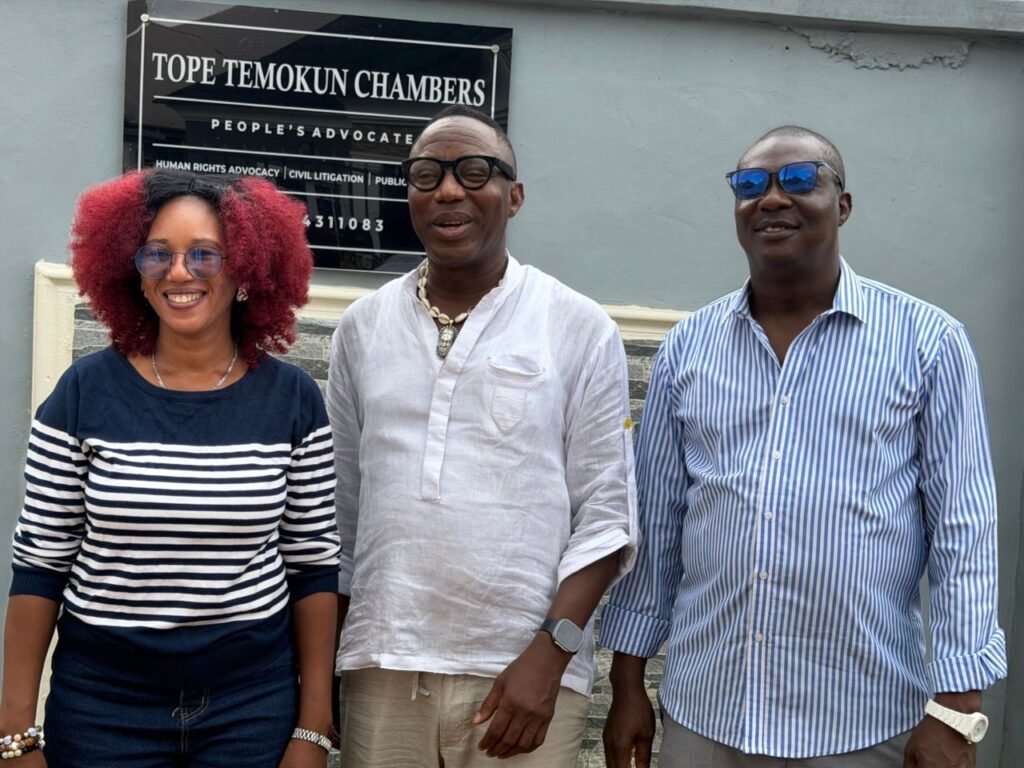
Prominent human rights activist, publisher, and former presidential candidate, Omoyele Sowore, on Saturday paid a significant visit to a civil rights office located in Mowe, along the Lagos/Ogun axis, in what participants described as a powerful moment of reflection, solidarity, and renewed commitment to the struggle for justice, accountability, and human dignity in Nigeria.
The visit, which took place on the Sabbath, went beyond the routine exchange of pleasantries. Those present described it as a meeting of minds united by a common belief that Nigeria can become a fairer, more accountable, and more just society despite the challenges confronting the nation.
Addressing participants during the engagement, it was emphasized that while some visits may appear ordinary, others serve as reminders of enduring principles and sacrifices that continue to shape the nation’s democratic journey.
The gathering reflected on the importance of courage in the face of intimidation and oppression, noting that convictions rooted in justice remain stronger than threats, while ideas committed to social change are far more difficult to imprison than the individuals who champion them.
Participants acknowledged that the pursuit of justice, accountability, and the protection of human dignity often comes with resistance, misunderstanding, and personal sacrifice. However, they maintained that history has consistently demonstrated that meaningful progress is achieved by individuals who choose to stand for what is right even when doing so is inconvenient or dangerous.
The discussions also focused on the growing need for citizens to actively engage in governance and continue questioning those in positions of authority. Speakers stressed that democracy thrives when citizens refuse to surrender their rights and responsibilities in holding leaders accountable.
Despite it being a day traditionally reserved for worship and rest, attendees spent several hours exchanging ideas on how to build a better Nigeria, improve governance, strengthen democratic institutions, and create opportunities for ordinary citizens who continue to bear the burden of economic hardship and social inequality.
Sowore was described as a leading voice for Nigerians who reject the notion that the country’s challenges are permanent or insurmountable. Participants noted that throughout his years of activism, journalism, and political engagement, he has consistently challenged injustice and demanded accountability regardless of the personal consequences.
The meeting concluded with a renewed commitment to the ideals of justice, freedom, transparency, and social progress. Attendees expressed confidence that no amount of intimidation, political pressure, or systemic obstacles would discourage those committed to advocating for a better society.
They maintained that faith in a more equitable Nigeria remains unshaken and reaffirmed that the struggle for justice, accountability, and national transformation must continue until meaningful change is achieved for all citizens.