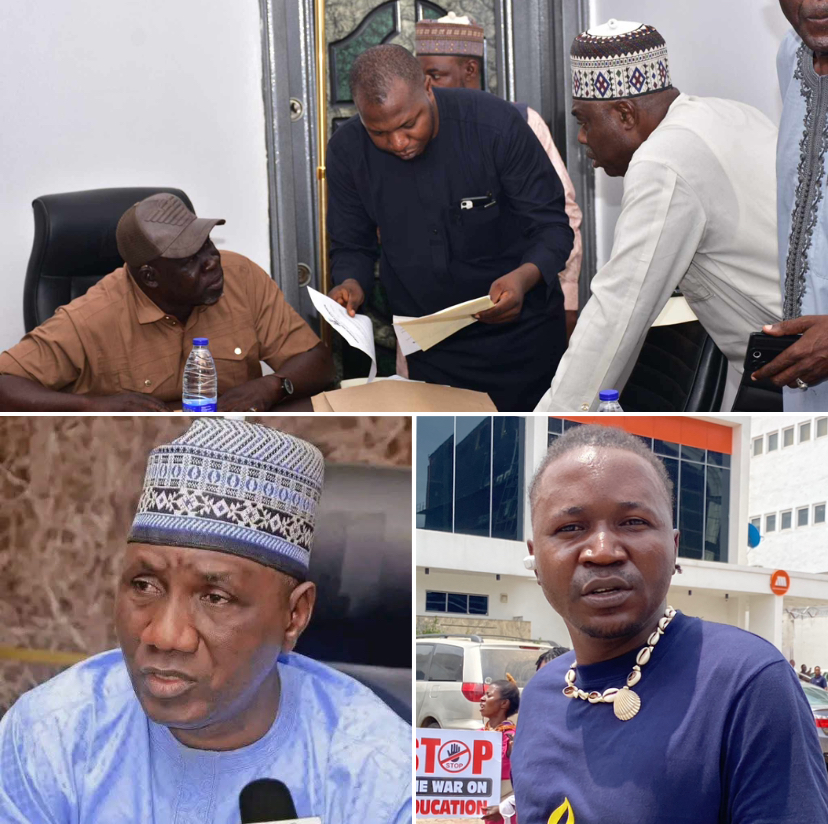
The inauguration of the Assets and Projects Verification Committee by the Executive Chairman of Gwagwalada Area Council, Hon. Kasim Mohammed, has triggered renewed public interest in what many residents and stakeholders describe as one of the most important accountability exercises in the history of the Council.
The committee, which has been mandated to verify assets, projects, liabilities, employment records, revenue structures and contractual obligations inherited by the current administration, now finds itself at the center of growing demands for transparency and public disclosure.
For years, citizens, community leaders, civil society organisations, investigative journalists and public accountability advocates have raised questions concerning the true state of Gwagwalada Area Council’s finances, assets, debts, revenue collections, contracts, abandoned projects and employment records.
Many of these concerns remained unanswered throughout the tenure of the immediate past administration despite repeated calls for disclosure and public accountability.
Ironically, several of the records now being sought by the current administration through the verification committee are the same records that activists, community stakeholders and investigative media organisations previously demanded from government officials.
This has led to growing public expectations that the verification exercise will finally provide answers to questions that have lingered for years.
Stakeholders insist that the committee’s report must not be treated as an internal government document hidden from public scrutiny. Instead, they argue that every finding should be released to the public in the interest of transparency and good governance.
The committee’s assignment covers areas that have consistently generated public concern, including abandoned projects, public-private partnership arrangements, budget implementation, internally generated revenue, contractors, consultants, liabilities, fixed assets, employment records and nominal rolls.
Observers maintain that these records are public documents financed with taxpayers’ resources and therefore belong to the people of Gwagwalada rather than political office holders.
Civil society actors have consequently urged the administration of Hon. Kasim Mohammed to publicly release the final report immediately after completion, arguing that transparency would strengthen public confidence in the current government and establish a clear distinction between inherited challenges and new policy directions.
Residents say any inherited debt burden should be disclosed to the public. Projects that received funding but remain uncompleted should be identified. Existing liabilities capable of affecting future development programmes should be documented. Revenue arrangements entered into by previous administrations should be explained, while assets and contractual obligations should be fully accounted for.
According to governance advocates, transparency serves not only the interests of citizens but also protects the current administration from future political disputes over responsibilities inherited from previous governments.
Political analysts warn that one of the greatest mistakes an incoming administration can make is to inherit unresolved controversies and remain silent about them, only for future generations to struggle in distinguishing between inherited liabilities and newly created problems.
For this reason, many believe the verification exercise presents an opportunity for the current administration to establish a clear historical record of the state of affairs it inherited upon assumption of office.
Observers insist that accountability should not be mistaken for political persecution. Rather, they describe it as a necessary component of responsible governance, institutional transparency and public trust.
They further argue that where allegations involving financial misconduct, abuse of office, contract irregularities or mismanagement of public resources have previously emerged through petitions, media investigations, court actions or citizens’ complaints, relevant law-enforcement and anti-corruption agencies should be allowed to independently examine available evidence and determine whether any laws were violated.
Advocates emphasise that no individual should be declared guilty without due process, while equally maintaining that no public official should be insulated from lawful scrutiny.
As public attention intensifies around the verification exercise, many residents say the committee now has a rare opportunity to redefine transparency and accountability within local government administration in Gwagwalada.
For them, the issue is straightforward: the people deserve facts, the people deserve records, and the people deserve accountability.
Whether the committee’s findings ultimately become a landmark moment for transparency or another report lost within government archives may determine how history judges this administration’s commitment to openness and public trust.
For now, all eyes remain fixed on the verification committee and the promise that the truth, wherever it may lead, will finally be revealed.