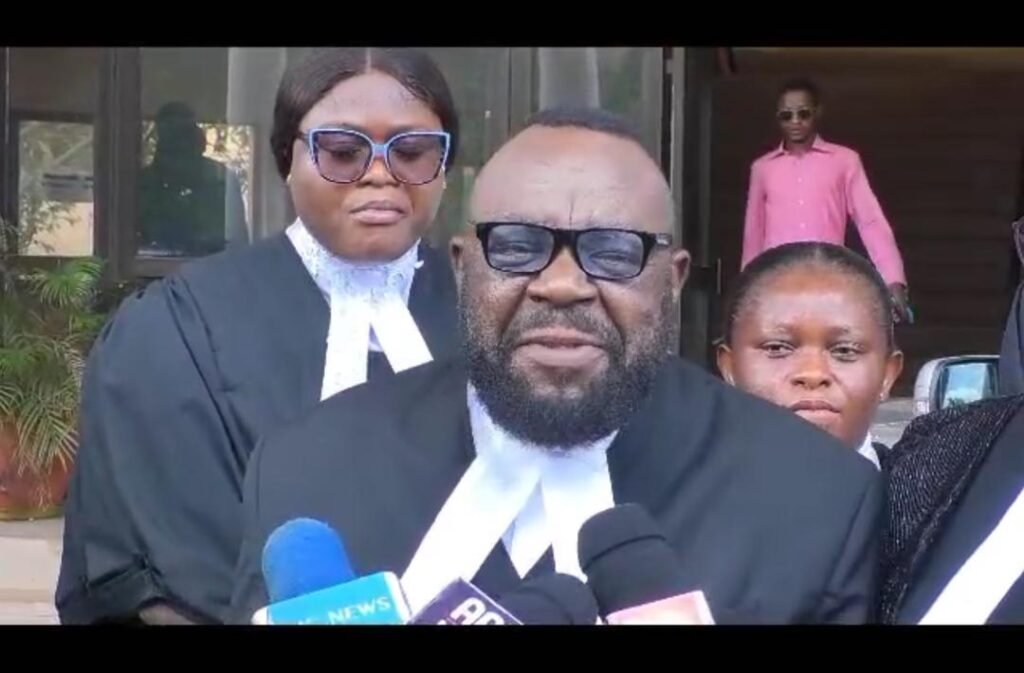
The legal battle surrounding detained leader of the Indigenous People of Biafra (IPOB), Nnamdi Kanu, took a dramatic turn as his counsel, Aloy Ejimakor, accused Justice James Omotosho of violating the Nigerian Constitution by ordering the separatist leader out of the courtroom during proceedings.
The accusation followed a tense session at the Federal High Court in Abuja, where Kanu was reportedly removed after heated exchanges with the bench over the legal basis of his trial.
According to Ejimakor, the courtroom ejection amounted to a denial of fair hearing and breached Section 36 of the 1999 Constitution, which guarantees every accused person the right to participate in his own trial and defend himself before a competent court.
The defence team argued that Kanu’s exclusion from proceedings deprived him of the constitutional safeguards available to every criminal defendant and raised fundamental questions about due process in one of Nigeria’s most controversial prosecutions.
The incident reportedly stemmed from Kanu’s insistence that the court identify the specific law under which he was being prosecuted. During earlier proceedings, the IPOB leader repeatedly challenged the prosecution and the court to “show me the law,” contending that some charges against him were anchored on repealed anti-terror legislation rather than extant laws.
Ejimakor maintained that even where a defendant is alleged to have been disruptive, constitutional guarantees cannot be casually suspended, insisting that criminal proceedings should not continue in the absence of an accused person except in circumstances expressly authorised by law.
However, reports from the proceedings suggested that Justice Omotosho considered Kanu’s conduct disruptive to the administration of justice, with accounts indicating that the court exercised its authority to maintain order in the courtroom.
The latest confrontation is the newest chapter in Kanu’s protracted legal saga, which has generated intense debate over jurisdiction, his controversial rendition from Kenya in 2021, and allegations by his supporters that Nigerian courts have relied on repealed statutes in prosecuting him.
The IPOB leader’s legal team has consistently argued that his transfer from Kenya to Nigeria violated domestic and international law, while supporters have accused the judiciary of disregarding constitutional and human rights protections.
As legal observers continue to scrutinise the proceedings, the courtroom clash has reignited concerns over the delicate balance between judicial authority and the constitutional rights of defendants in high-profile criminal trials.
At press time, there was no official response from the court regarding the allegations of constitutional breach.