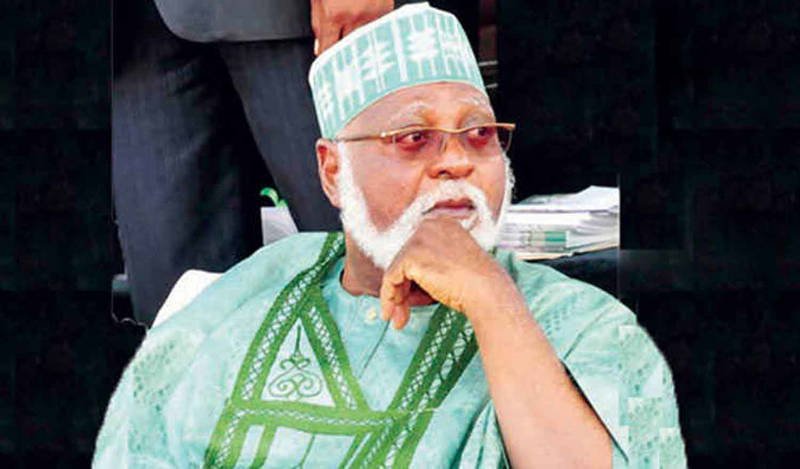
Former Head of State, General Abdulsalami Abubakar, has reiterated that the late Chief Moshood Kashimawo Olawale Abiola did not die from poisoning, maintaining that the winner of the annulled June 12, 1993 presidential election collapsed suddenly during a meeting with United States diplomats shortly before his death in 1998.
Abdulsalami disclosed that Abiola’s final moments occurred during a diplomatic engagement involving then United States Ambassador to Nigeria, Walter Carrington, and other U.S. Embassy officials, where the detained politician reportedly became suddenly ill and collapsed in the course of discussions.
He maintained that immediate efforts were made to provide medical attention, but Abiola could not be revived.
The former military ruler, who took over after the death of General Sani Abacha, firmly dismissed long-standing allegations that Abiola was poisoned while in detention, insisting there was no credible evidence to support such claims.
The late MKO Abiola died on July 7, 1998, while still in custody, an event that triggered national shock and deepened political tensions during Nigeria’s transition period.
Abdulsalami further explained that a comprehensive post-mortem examination was carried out with the involvement of Nigerian pathologists and international medical experts, following requests from Abiola’s family to ensure transparency and credibility.
According to him, the findings of the joint medical investigation concluded that Abiola suffered from severe and long-standing heart-related conditions, including hypertensive heart disease and coronary artery complications, which could lead to sudden collapse and death.
He added that toxicology tests conducted during the examination found no traces of poison, reinforcing the conclusion that Abiola’s death was due to natural medical causes rather than foul play.
Despite these official conclusions, Abiola’s death has remained one of the most debated political tragedies in Nigeria’s history, with persistent public speculation over possible poisoning or assassination.
However, Abdulsalami maintained that such narratives were not supported by medical evidence or the findings of the independent investigative process, stressing that the results were clear and conclusive.
The circumstances surrounding Abiola’s final hours continue to occupy a sensitive place in Nigeria’s democratic memory, particularly given his widely acknowledged status as the presumed winner of the annulled 1993 presidential election.
More than two decades later, his death remains a defining moment in Nigeria’s political evolution, symbolizing both the struggles and sacrifices that shaped the country’s return to civilian rule.