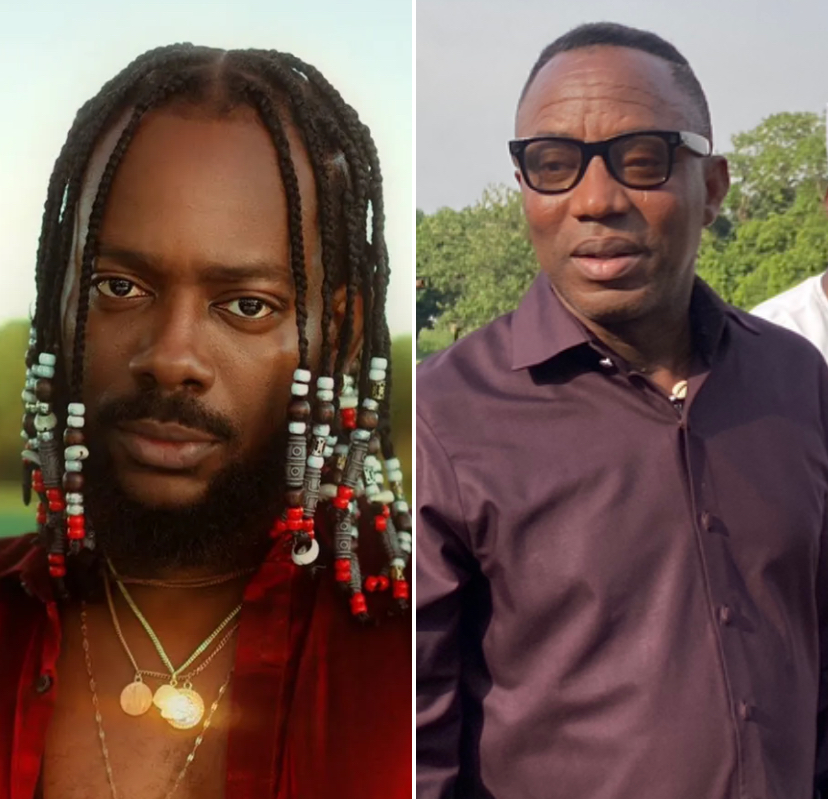
Human rights activist and former presidential candidate Omoyele Sowore has launched a fierce attack on the Nigeria Police Force and the country’s judiciary following the sentencing of a social media user over a controversial post involving the daughter of popular Nigerian music stars Adekunle Gold and Simi.
The activist described the police as a “private army for the rich and famous,” warning that freedom of expression in Nigeria is gradually being criminalised under the controversial cybercrime framework.
The outrage followed the conviction of Samuel Adeboye Adeyeye, popularly known on X as Swanky_concept, who was sentenced to two years imprisonment after pleading guilty to charges linked to spreading false information online.
Adeyeye had sparked outrage on social media after falsely announcing the death of the celebrity couple’s daughter, Deja, in a viral post that read: “My sincere condolences to the Adekunle family. Rip to Deja.”
The disturbing post quickly gained traction online, triggering panic, anger, and backlash from fans before it was confirmed to be false.
Court proceedings revealed that Adeyeye was arraigned on May 14 on allegations bordering on cyberbullying, malicious publication, and spreading false information through electronic means. He pleaded guilty before the court and was sentenced the following day.
Reacting to the development, Sowore accused both the police and the judiciary of selective justice, arguing that influential Nigerians now weaponise state institutions against ordinary citizens for online speech.
In a strongly worded reaction posted on X, Sowore recalled a controversial 2012 tweet made by Adekunle Gold during the administration of former President Goodluck Jonathan.
At the time, the singer had tweeted: “Dear God, if you give us Da Grin back, we give you Jonathan in return.”
The post referenced late Nigerian rapper Da Grin, who died in a fatal car accident in 2010.
Sowore argued that although the statement was deeply controversial, Adekunle Gold was neither arrested nor prosecuted because it was widely defended as freedom of expression.
“This was Adekunle Gold in 2012 openly criticizing then President Goodluck Jonathan. Back then, it was rightly called free speech, and if he had been arrested for those tweets, we would have been on the streets demanding his immediate release,” Sowore wrote.
“How then does someone who benefited from freedom of expression turn around years later to use the police, courts, and the brutal cybercrime framework against ordinary Nigerians over online banter and social media exchanges?”
The activist insisted that freedom of speech cannot become a privilege reserved only for the powerful or influential.
“You cannot enjoy free speech when you are powerless and criminalize it the moment you become influential,” he added.
Sowore further condemned what he described as the increasing misuse of the Cybercrime Act to intimidate critics, social media users, and ordinary Nigerians.
“Freedom of expression must apply to everyone — celebrities, politicians, activists, and poor young Nigerians on social media alike,” he stated.
“The Nigeria Police Force must stop acting as a private army for the rich and famous, while the judiciary must stop handing down outrageous punishments over internet speech that should never be criminal matters in the first place.”
The development has since triggered heated reactions across Nigerian social media, with many Nigerians divided over whether the sentence was justified punishment for a harmful false alarm or an excessive crackdown on online speech.