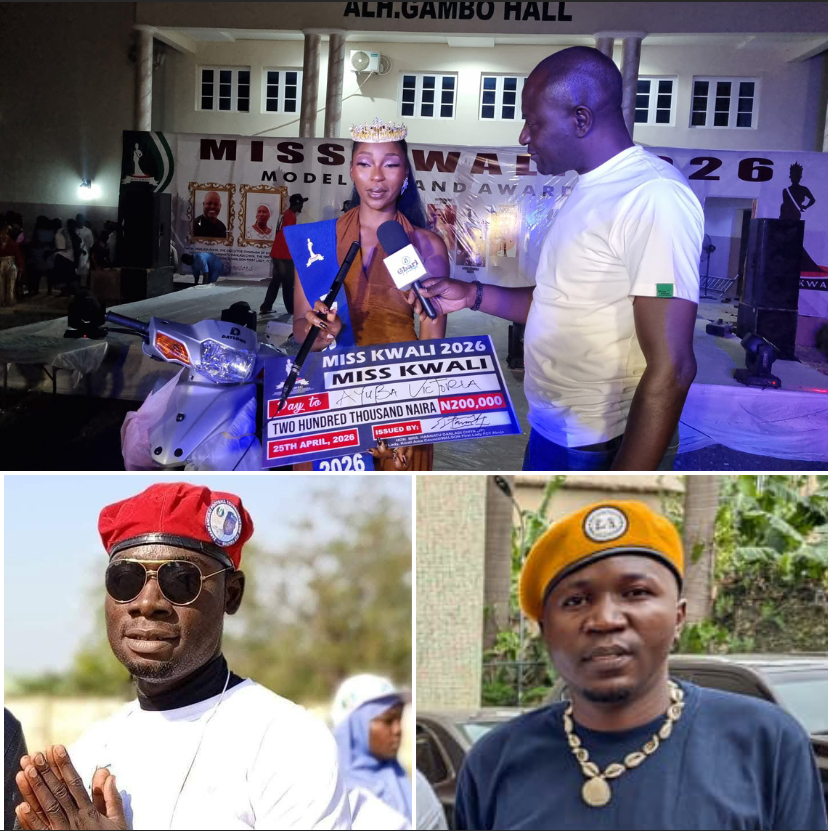
The debate surrounding the Miss Kwali 2026 pageant has taken a sharper turn following a strong rejoinder from community organizer and political activist, Dobiza Dobiza, who has publicly pushed back against recent criticisms raised by human rights advocate Manasseh B.P over the nature of the prize awarded at the event.
The controversy began after Manasseh B.P questioned the decision of the Kwali Area Council initiative to present a motorcycle, reportedly valued between ₦1.7 million and ₦2 million, as the grand prize for the winner of the Miss Kwali pageant. In his earlier remarks, Manasseh argued that the prize undermined the prestige of pageantry and suggested that a more symbolic or financially flexible reward, such as a car or structured cash prize, would have better reflected the aspirational values associated with such platforms.
However, in a strongly worded Facebook response that has since gone viral across local political and community circles, Dobiza Dobiza—popularly known as “ONE MAN SQUAD”—defended the organizers and dismissed the criticisms as unfair and disconnected from grassroots realities.
According to Dobiza, the Miss Kwali initiative is not merely a beauty contest but a long-standing empowerment and cultural development program introduced in 2020 by the First Lady of Kwali Area Council, Mrs. Hannatu Danladi Chiya. He emphasized that the platform was designed to promote peaceful coexistence, encourage girl child education, and celebrate cultural diversity among young women in the area.
He further stated that the event integrates multiple components including beauty presentation, academic quiz sessions, and cultural showcases, making it a holistic youth development initiative rather than a luxury-driven pageant.
“It is easy to sit outside and criticize, but those who understand the foundation and purpose of this program know it is about impact, not glamour for the sake of optics,” Dobiza wrote.
He also highlighted that beyond the motorcycle prize, several participants were empowered with sewing machines and additional financial support to help them build sustainable livelihoods. According to him, this aspect of the program is often overlooked in public debate.
Dobiza stressed that the empowerment package reflects a practical approach to youth support, especially in a community where many young women face economic limitations and need tools for immediate self-reliance rather than symbolic luxury rewards.
He also commended Mrs. Hannatu Danladi Chiya for what he described as “consistent grassroots investment in girls’ education and empowerment,” noting that she has personally supported some of the participants in their academic journeys through sponsorship arrangements.
Another key point raised in his rebuttal was the inclusiveness of the event. Dobiza noted that participants were drawn from different ethnic backgrounds within Kwali Area Council and were treated equally, reinforcing the pageant’s message of unity and coexistence.
In his words, equating the initiative to a “lack of prestige” was described as “unfair, dismissive, and counterproductive to community-led development efforts.”
The response has intensified public discourse, with residents and social media users now divided between those who believe pageantry should maintain higher symbolic luxury standards, and others who argue that local government initiatives must prioritize practicality and direct empowerment over ceremonial grandeur.
While Manasseh B.P’s criticism continues to spark questions about how public institutions frame youth empowerment events, Dobiza Dobiza’s defense has shifted the conversation toward intent, context, and the realities of grassroots development in Kwali.
As of the time of this report, the Kwali Area Council has not issued an official statement addressing the ongoing exchange between both community figures.
What remains clear is that the Miss Kwali 2026 pageant has moved beyond celebration into a wider cultural and political conversation—one that now questions not just what is given, but what truly defines value in community empowerment initiatives.