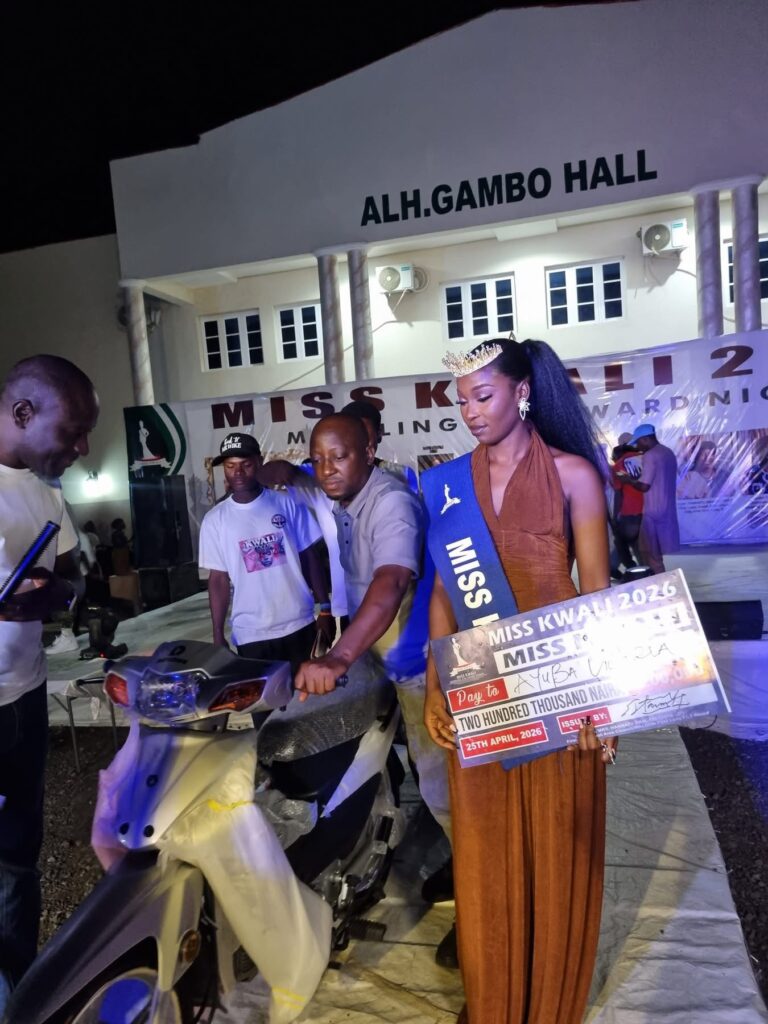
A Facebook post by community organizer and human rights activist, Manasseh B.P, has ignited fresh debate over public event planning and value perception after he criticized the prize awarded at the recently concluded Miss Kwali Pageant organized under the Kwali Area Council initiative in the Federal Capital Territory.
Manasseh, in his widely circulated post, acknowledged the effort of the council in promoting culture, youth engagement, and community pride through the pageant. However, he argued that the choice of a motorcycle as the grand prize for the winner undermined the dignity and aspirational nature of the event.
According to him, while the motorcycle—estimated between ₦1.7 million and ₦2 million—may have been intended as a practical reward, it ultimately sent a message that fell short of the prestige typically associated with pageantry platforms, which are expected to symbolize excellence, aspiration, and empowerment.
He further suggested that the prize could have been better structured into a more impactful package, proposing alternatives such as a modest car within the ₦3 million range or a well-organized cash prize that would give the winner flexibility and long-term value.
Beyond the monetary debate, the activist emphasized that the issue reflects deeper concerns about planning, perception, and institutional seriousness. He argued that when public bodies organize events meant to inspire young people, every component—from logistics to rewards—becomes part of the message they send to the public.
“A mismatch between the scale of the event and the nature of the prize can unintentionally undermine the credibility of the entire program,” he noted, warning that such decisions risk weakening public confidence in future initiatives.
The post has since generated mixed reactions online, with some agreeing that public events should reflect higher symbolic value, while others defend the council’s decision, arguing that practicality should take precedence over luxury in local government-sponsored programs.
The Kwali Area Council initiative, which is part of ongoing efforts to promote youth participation and cultural identity within Kwali Area Council, has not officially responded to the criticism at the time of this report.
As the discussion continues, Manasseh’s message has reignited a broader question: in public celebration and youth empowerment platforms, should value be measured by practicality—or by symbolism?
For many observers, the controversy is no longer just about a motorcycle. It is about what society chooses to reward, and what message those rewards send to the next generation.