Students of the University of Abuja are facing renewed financial pressure after the institution approved an increase in transportation fares following the latest surge in petrol prices across Nigeria, a development that has triggered frustration, anxiety, and growing concerns about academic attendance.
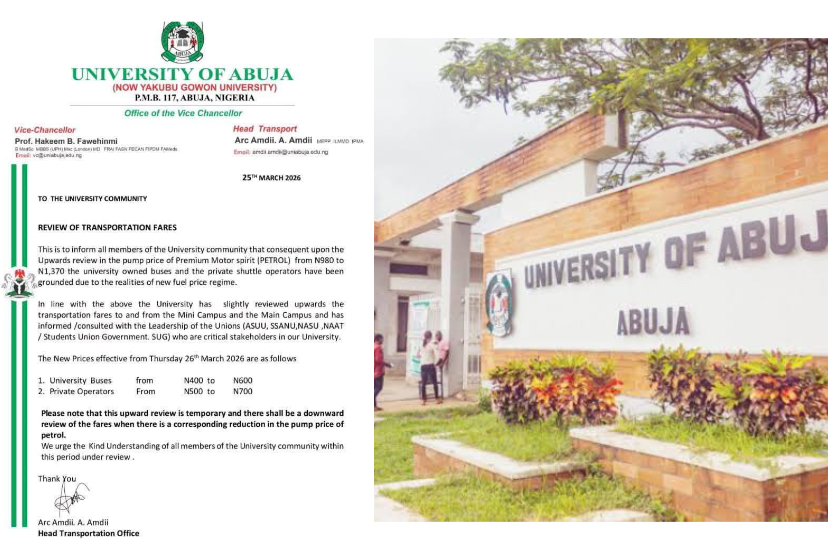
In an official memo dated March 25, 2026, the university management announced an upward review of transport fares between the Mini Campus and the Main Campus, citing operational challenges caused by the sudden spike in fuel prices. The adjustment came after petrol prices surged dramatically from ₦980 to ₦1,370 per litre, forcing university buses and several private shuttle operators to suspend services temporarily due to unsustainable operating costs.
Under the new arrangement, university bus fares have increased from ₦400 to ₦600, while private shuttle operators are now charging between ₦500 and ₦700 depending on demand and timing. The new pricing structure officially took effect on March 26, 2026.
For many students, the increment represents more than just a fare adjustment — it signals another layer of financial hardship in an already strained academic environment. Students who commute daily between the Mini Campus and the Main Campus now face significantly higher weekly transportation costs, forcing some to reconsider their daily academic schedules.
Several students expressed concern that the fare hike may lead to increased absenteeism, especially among those relying solely on limited allowances from parents or guardians. With lectures often scheduled across campuses, transportation remains essential to academic participation, and any increase directly affects students’ ability to attend classes consistently.
Some students have also begun calculating the long-term implications of the increase. A student who previously spent ₦800 daily on transport now faces expenses exceeding ₦1,200 per day, translating into thousands of naira weekly — a burden many describe as unsustainable.
Others warned that if the situation persists, more students may resort to trekking long distances between campuses, a physically demanding and time-consuming alternative that could negatively impact academic performance and overall student welfare.
The temporary suspension of transport services earlier this week also exposed the heavy reliance of students on campus transportation. During the disruption, many students were stranded for hours, while others arrived late to lectures or missed academic activities entirely.
While the university management described the increment as temporary and tied to fuel price fluctuations, uncertainty continues to dominate student conversations, as there is no clear timeline for when fares may return to previous rates.
The development reflects the broader ripple effects of Nigeria’s rising fuel prices, where increases in petrol costs are gradually affecting education, transportation, and the cost of living nationwide. For students already grappling with accommodation fees, feeding expenses, and academic materials, the new transport fares represent yet another financial obstacle.
As economic pressures deepen, students at the University of Abuja now find themselves navigating not just academic challenges, but also the growing cost of simply getting to class.