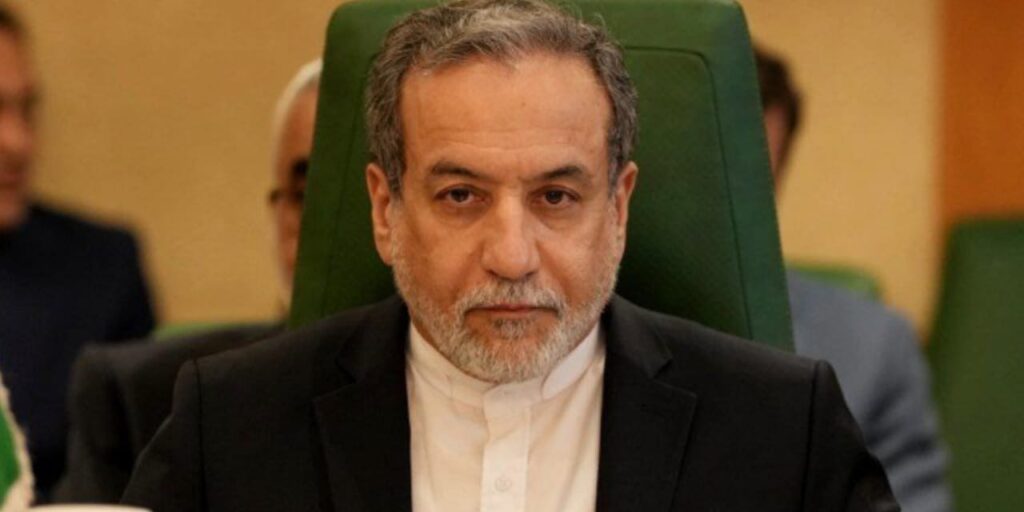
Tensions across the Middle East surged dangerously on Friday after Israel reportedly launched coordinated strikes on major industrial and energy infrastructure inside Iran — a move Tehran says directly undermines ongoing diplomacy backed by Donald Trump.
Iran’s Foreign Affairs Minister, Seyed Abbas Araghchi, accused Israel of carrying out what he described as “strategic economic warfare,” claiming that two of Iran’s largest steel factories, a power plant, and civilian nuclear-related facilities were hit in what appears to be one of the most significant infrastructure attacks in recent months.
Posting on X, the Iranian minister delivered a blunt warning that echoed across global diplomatic corridors:
“Israel has hit 2 of Iran’s largest steel factories, a power plant and civilian nuclear sites among other infrastructure… Israel claims it acted in coordination with the U.S.”
The accusation immediately raised geopolitical alarm bells, particularly because the strikes reportedly came just hours after Trump publicly announced a 10-day pause in potential U.S. military actions against Iran’s energy infrastructure — a move intended to allow diplomacy to take precedence over confrontation.
According to Araghchi, the Israeli strikes directly contradict Washington’s diplomatic posture.
“The attack contradicts POTUS extended deadline for diplomacy,” he said, before issuing Tehran’s most chilling warning yet:
“Iran will exact HEAVY price for Israeli crimes.”
The statement marks a sharp escalation in rhetoric, fueling fears that retaliation from Tehran may not only be imminent but potentially broader in scale.
The development comes amid a fragile geopolitical balancing act, where the United States publicly signals negotiation while Israel maintains an aggressive military posture toward Iran’s strategic infrastructure.
Just one day earlier, Trump had announced via Truth Social that Washington would delay any planned strikes on Iranian energy facilities for ten days, describing ongoing talks as “very productive” and expressing optimism about diplomatic progress.
“As per Iranian Government request… I am pausing the period of Energy Plant destruction by 10 Days to Monday, April 6, 2026, at 8 P.M., Eastern Time,” Trump stated.
“Talks are ongoing… they are going very well.”
The announcement had briefly lowered global tension, but Friday’s reported strikes by Israel appear to have shattered that fragile calm.
Military analysts warn that targeting steel factories is not merely symbolic — it strikes at the backbone of Iran’s industrial and military supply chain. Steel production is critical for infrastructure, defense manufacturing, and economic stability. Disrupting it signals a long-term strategic objective rather than a short-term tactical strike.
The reported attack on a power plant further compounds the situation, as energy infrastructure strikes often signal escalation toward economic warfare — a tactic that historically precedes wider regional conflict.
As of the time of reporting, neither Israeli nor U.S. officials had publicly confirmed or denied the specific claims, adding another layer of uncertainty and speculation to an already volatile situation.
Meanwhile, security observers warn that Iran’s promise of a “heavy price” could manifest in multiple ways, from proxy confrontations across the Middle East, cyber warfare, maritime disruptions, or direct retaliatory strikes.
The Middle East now stands on another geopolitical fault line, diplomacy on paper, escalation on the ground.
And as Washington talks peace, Israel appears to be writing its own script, one missile at a time.