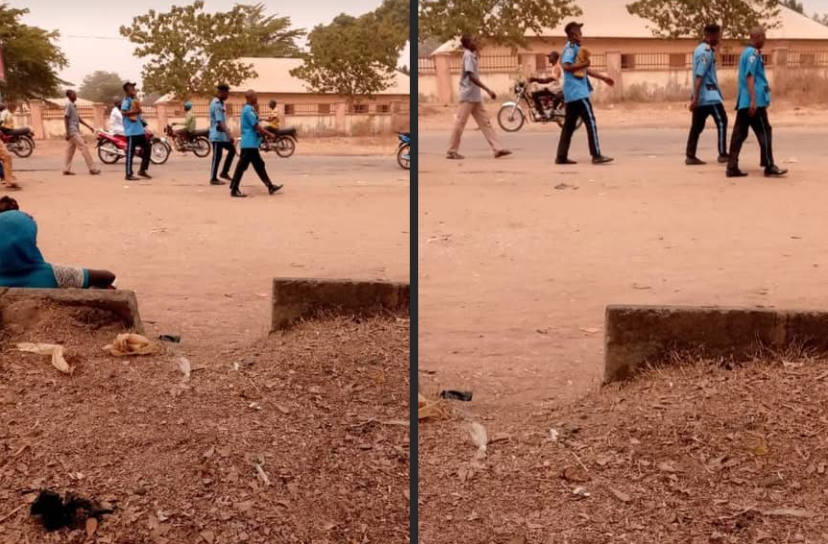
A tense atmosphere is brewing in Gwagwalada, following a viral Facebook post by Muhammed Isah Hassan, popularly known as Dan Isah, alleging the sudden deployment of unfamiliar security personnel bearing tags that read “National Security Guard for Ganduje.”
In the post, Dan Isah expressed shock and concern over what he described as the importation of foreigners into Gwagwalada under the guise of special security protection for Abdullahi Ganduje. His message, written partly in Hausa-inflected English, captured the growing anxiety on the streets:
“Wallahi they are in serious fear, they have imported some foreigners written in their tag, National Security Guard for Ganduje, yet, here in Gwagwalada…
If Gwagwalada cannot happen in Kano, Kano, no supposed happen in Gwagwalada oooo.”
At the heart of the post is a powerful comparison: Kano versus Gwagwalada. Kano, Ganduje’s political stronghold, is known for its intense political competition and resilience of local structures. Dan Isah’s question resonates loudly—if certain actions cannot be attempted in Kano, why should they be tested in Gwagwalada?
Residents who spoke to Chronicles Reporters echoed similar concerns, describing the presence of unfamiliar armed personnel as intimidating rather than reassuring. Some fear it signals an attempt to suppress dissent or manufacture fear ahead of political activities.
Political observers note that heavy security deployments often reveal more fear at the top than strength.
“When power feels threatened, it overcompensates,” said a civil society advocate in Gwagwalada. “You don’t import force into a community that is peaceful unless you’re afraid of the people’s voice.”
Dan Isah’s post frames the issue not just as a security concern, but as a dignity and equality question, why should Gwagwalada be treated as a testing ground for tactics that would spark resistance elsewhere?
Gwagwalada, long known for its politically conscious youth and history of resistance, is no stranger to tension. What is new, however, is the growing digital documentation of these moments, citizens naming names, pointing out uniforms, tags, and movements in real time.
For many, the message is simple: respect local communities, or risk awakening their collective resolve.
As Dan Isah’s words continue to circulate online, one thing is clear. Gwagwalada is alert, watching, and asking questions. And in Nigeria’s charged political climate, questions are often more dangerous than silence.
— Chronicles Reporters