The Borno State Government has set aside N150 million in its 2026 budget for the feeding of sheep and goats kept within the Government House.
The allocation is contained in the approved 2026 budget estimates published on the official website of the state government. The expenditure falls under Government House operations and is listed as “General purchase of feeding for various Sheep and Goat within the Government House.”
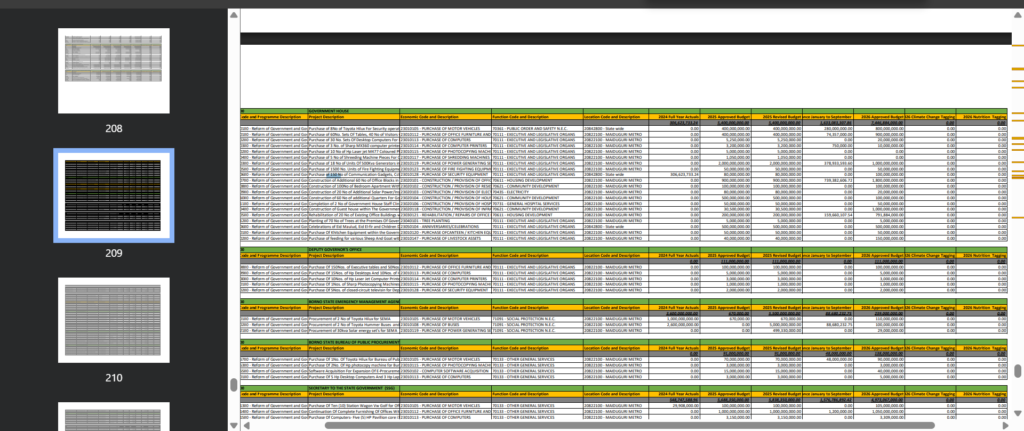
A breakdown of the allocation suggests that the animals will be fed at an average cost of about N410,958 per day over the 365-day fiscal year. This translates to approximately N2.8 million weekly. However, the budget document does not disclose the number of sheep and goats covered by the allocation.
In the same budget, the state government also earmarked N50 million for the purchase of kitchen equipment for use within the Government House.
The allocation has drawn attention against the backdrop of previous spending patterns by the Borno State Government. A review of the state’s 2025 full-year budget performance earlier revealed that N4.3 billion was spent on “livelihood support for repentant Boko Haram members” during the year.
Of that amount, N1.6 billion was reportedly disbursed between October and December 2025 alone, covering just three months.
In comparison, the total capital expenditure of the Borno State Primary Healthcare Development Board for the entire 2025 fiscal year stood at N2 billion,more than N2 billion less than what was spent on the reintegration programme for former insurgents.
Similarly, the Borno State University Teaching Hospital recorded a capital expenditure of N2.7 billion in 2025, while the Hospital Management Board spent N3.1 billion, both figures still below the N4.3 billion allocated to the livelihood support scheme.
Earlier budget reviews also showed that between January and September 2024, the state government spent N3.45 billion under the Disarmament, Demobilisation and Reintegration (DDR) programme for so-called repentant Boko Haram members.
Meanwhile, investigations in 2025 quoted frontline Nigerian soldiers deployed in Borno and Yobe states, who alleged that some reintegrated insurgents were leaking sensitive military information to their former commanders. The soldiers reportedly described the reintegration policy as a “deadly mistake” that continued to put lives at risk.
The 2026 budget allocations have since sparked renewed debate over government spending priorities in a state still grappling with insecurity, humanitarian challenges, and strained public services.