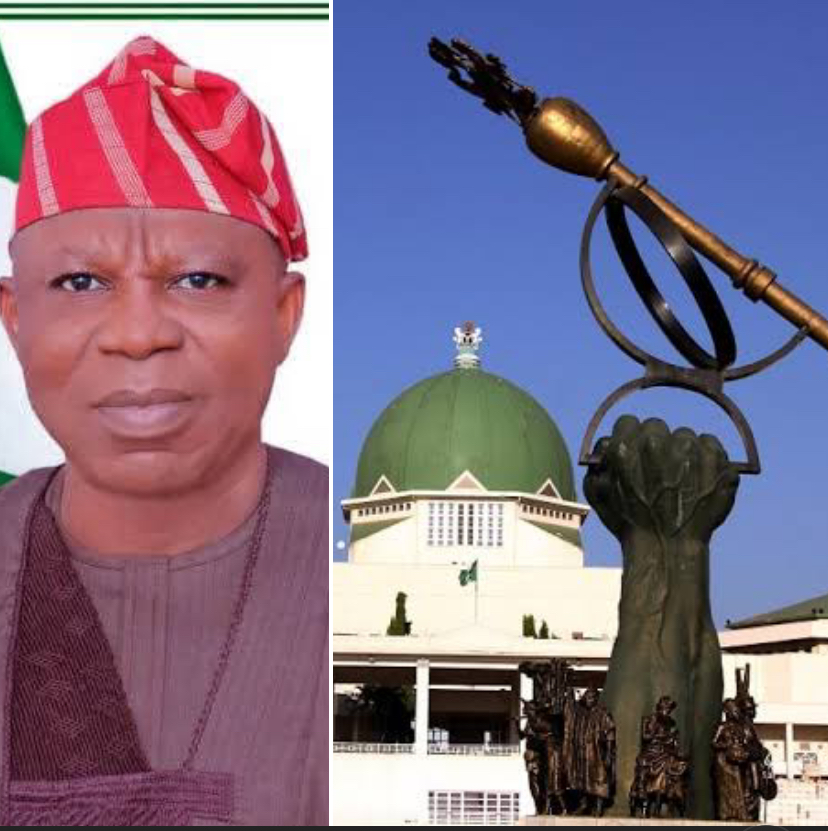
A major legislative scandal is brewing at the National Assembly following explosive revelation that the recently gazetted Tax Reform Acts do not reflect what was actually debated, voted upon and passed by both chambers of the federal legislature.
In a strongly worded petition dated Thursday, 18 December 2025, addressed to the Speaker of the House of Representatives, Rt. Hon. Abbas Tajudeen, a legal practitioner and legislative drafting expert, Edward Omaga, Esq., demanded the immediate suspension of the Clerk to the National Assembly, Mr. Kamorudeen Ogunlana, over what he described as a “grave violation” of statutory and constitutional responsibilities.
Omaga, who was called to the Nigerian Bar in 2007 and holds a Master’s Degree in Legislative Drafting from the University of Abuja, accused the Clerk of failing in his statutory duty of engrossment under Section 5 of the Acts Authentication Act, 1961 (now Cap A2, Laws of the Federation of Nigeria, 2004). He warned that the alleged discrepancies threaten the integrity of Nigeria’s entire law-making process.
The petition follows allegations raised on the floor of the House of Representatives on Wednesday, 17 December 2025, by Hon. Abdulsammad Dasuki (PDP, Sokoto), who claimed that the versions of the Tax Reform Acts published in the Official Gazette of the Federal Republic of Nigeria materially differ from the harmonised bills approved by the National Assembly.
According to Omaga’s letter, Hon. Dasuki disclosed that he personally reviewed the Votes and Proceedings of the House, the harmonised legislative texts agreed upon by both chambers, and the gazetted versions currently in circulation. The lawmaker reportedly expressed shock after discovering discrepancies between what lawmakers voted for and what Nigerians are now being asked to obey as laws.
Omaga described the allegations as “deeply troubling” and warned that if established, they would amount to a direct assault on parliamentary sovereignty, constitutionalism, and the rule of law. He stressed that the Clerk to the National Assembly bears the primary responsibility for ensuring that bills passed by lawmakers are accurately engrossed, authenticated and transmitted for gazetting.
“What is in circulation as law must be exactly what was passed by Parliament—nothing more, nothing less,” Omaga argued, adding that any deviation undermines democratic legitimacy and public trust.
The senior lawyer further raised the alarm that if errors or alterations could occur in the Tax Reform Acts—laws of immense fiscal and national importance—then other Acts passed since the inauguration of the 10th National Assembly may also be affected. He called for a comprehensive audit of all legislations gazetted during the current Assembly.
In his demands, Omaga urged the Speaker to initiate decisive action, including a House Resolution recommending the immediate suspension of the Clerk to the National Assembly by the National Assembly Service Commission (NASC). He also called for the constitution of an Independent Panel of Inquiry made up of experts in legislative drafting, constitutional law, forensic document examination and public administration, with unrestricted access to all legislative records.
Beyond investigation, the petition demanded the recall of all affected Tax Reform Acts and every other Act passed since the 10th National Assembly that has already been gazetted or sold to the public, warning that continued circulation of “invalid or unauthorized laws” could plunge individuals and corporate bodies into legal confusion.
Omaga went further to demand that the Clerk refund all monies collected from Nigerians who purchased the allegedly defective Acts and issue an unreserved public apology for any losses suffered as a result.
In a dramatic escalation, the petitioner issued a seven-day ultimatum to the Speaker, warning that failure to meet the demands would leave him with no option but to approach a court of competent jurisdiction for declaratory and injunctive reliefs, including claims for aggravated damages.
He emphasized that his action was not politically motivated but driven by civic responsibility and professional obligation to defend the sanctity of Nigeria’s legislative process.
The petition has been copied to the President of the Senate, the Chairman of the National Assembly Service Commission, and the Secretary of the Commission, signaling a widening institutional spotlight on the controversy.
As of the time of filing this report, neither the Office of the Speaker nor the Clerk to the National Assembly has issued an official response to the allegations. However, the unfolding controversy is already stirring intense debate within legal, political, and civil society circles, with many warning that the matter could evolve into one of the most serious legislative integrity crises in Nigeria’s democratic history.
Chronicles Reporters will continue to monitor developments closely.