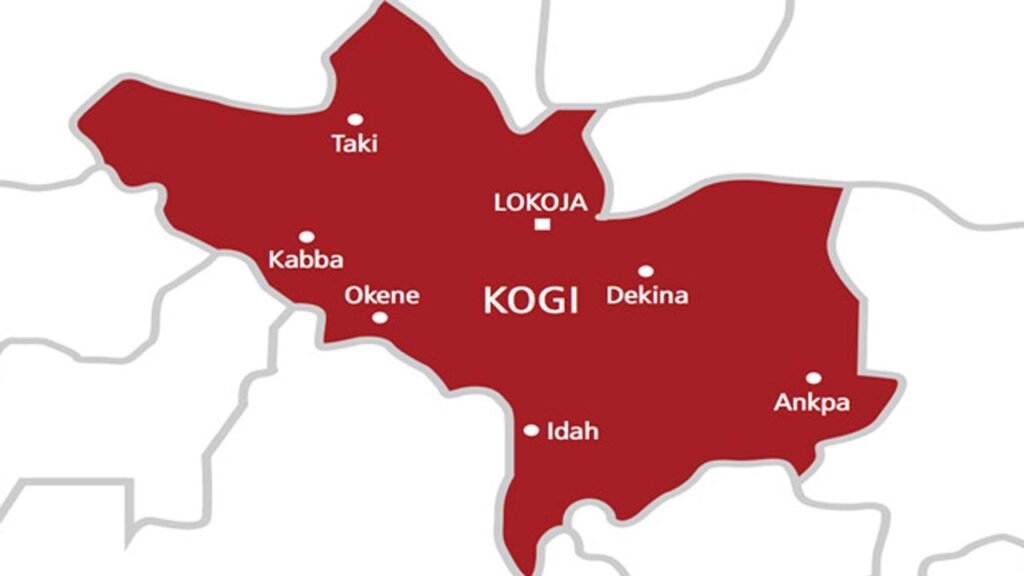
A CRISIS OF GOVERNANCE AND SECURITY.
The political landscape of Kogi State is characterized by dynamics often criticized for prioritizing power and might over institutional robustness and democratic principles.
This approach to governance is frequently cited as a contributing factor to the breakdown of security infrastructure and the alarming rise in violent crime, particularly kidnapping, within the state.
The intensity of recent electoral contests in the state has often been described in metaphors of conflict, suggesting a political environment where survival is tied to the exertion of force rather than adherence to established democratic norms.
This environment creates a vacuum, often filled by unscrupulous elements, leading to a tragic shift where individuals become the targets of violent predation.
THE POLITICAL ECONOMY OF POWER IN KOGI STATE.
The electoral narrative projected from Kogi State frequently suggests an emphasis on political maneuvering and the mobilization of force over intellectual leadership, order, and the rule of law.
Phrases like “gangsterism” and “hooliganism”—originally used in political discourse to critique the conduct of certain high-profile national politicians—have unfortunately become descriptive of some political actors and their methods within the state.
A persistent critique of the state’s leadership has been its perceived failure to evolve from primitive, “ossified patterns” of governance.
This system is often accused of lacking the modern political sophistication necessary to address foundational developmental challenges, including exclusivity, high illiteracy rates, pervasive poverty, and infrastructural stagnation.
Instead, governance appears to be centered on patronage distribution and “sharing formulas”—a system where loyalty to a political patron, often demonstrated through participation in electoral violence or intimidation, is rewarded with access to state resources and positions, rather than merit or public service capacity.
This political reward mechanism has fostered a culture of hypocrisy and sycophancy within the political class, prioritizing personal admiration over principled engagement.
This dynamic is a significant impediment to participatory democracy and transparent accountability, reducing governance to a private enterprise rather than a public trust.
ACCOUNTABILITY, DEVELOPMENT AND THE SECURITY NEXUS.
While commendable efforts are occasionally made—such as the timely payment of workers’ remuneration—merely servicing recurrent expenditure should not be the sole benchmark for evaluating good governance.
A critical gap remains in the state’s accountability mechanisms regarding the utilization of Federal Allocations and Internally Generated Revenue (IGR).
The lack of demonstrable, transformative capital development suggests a disconnect between resource availability and public welfare.
This systemic inaction and a focus on patronage have inadvertently empowered criminal elements. The failure to secure the vast, ungoverned spaces—specifically the state’s extensive forests and remote areas—has allowed them to become operational hubs for bandits and kidnappers.
Poverty and high unemployment rates—especially among the youth—are widely considered the primary drivers of crime, transforming a generation of jobless individuals into potential recruits for criminal syndicates.
This is a tragedy mirroring the broader Nigerian security crisis, with a distinct Kogi State manifestation.
RECOMMENDATIONS FOR A PATH FORWARD.
Moving forward, the state must prioritize:
- Transformative Infrastructural Development:
Utilizing the state’s vast arable lands and mineral resources to foster economic activities beyond the urban centers. This strategy would address rural-urban migration, promote structural development, and make remote areas less hospitable for criminal operations.
- Bridging the Rural-Urban Gap:
Implementing policies that facilitate access to education, healthcare, and economic opportunities in rural settlements to reduce regional unemployment and the vulnerability of youth to criminal recruitment.
- Enhanced Security Operations:
Comprehensive security sweeps of all forests and ungoverned territories, with the aim of ejecting unauthorized occupants and dismantling criminal networks.
Sustainable security can only be achieved through inclusive governance that values vision, purpose, and civility over ethnic bigotry and political tribalism.
Leadership must transition from rewarding political loyalty to fostering an environment where meritocracy and accountability drive state development and citizen security.
STATISTICS AND CASE EXAMPLES OF KIDNAPPING IN KOGI STATE.
To provide concrete evidence for the security claims, the following statistics and case examples related to kidnapping in Kogi State can be cited:
- Concrete Statistics on Insecurity
Gathering precise, real-time data on kidnapping in Nigeria is challenging due to underreporting.
However, credible security tracking organizations and national reports consistently highlight Kogi State as a major hotspot:
- Focus on the Ajaokuta-Lokoja-Abuja Highway: This corridor, due to its strategic location connecting the South and North, has historically been one of the most dangerous in the country. Data from the Nigeria Security Tracker (NST) and similar platforms frequently record incidents of mass abductions targeting travelers on this axis.
- National Reports: According to a report by SBM Intelligence (a geo-political risk advisory firm), Kogi State has been consistently ranked among the states with a high frequency of kidnap-for-ransom incidents. For instance, reports from 2023 indicated a significant increase in incidents, with numbers rising consistently in critical LGAs like Lokoja, Adavi, and Ajaokuta.
- Victim Demographics: Incidents have targeted a wide range of victims, including students (e.g., at the Confluence University of Science and Technology, CUSTECH), political figures, traditional rulers, and foreign nationals, demonstrating the generalized nature of the threat.
- Notable Cases of Kidnapping in Kogi State
For specific citation and case reference, the following well-publicized incidents can be used:
- The Abduction of Students (2024): In May 2024, a highly publicized attack occurred at the Confluence University of Science and Technology (CUSTECH), Osara, where numerous students were abducted from their hostels. This incident underscored the extension of the kidnapping menace from highways to educational institutions.
- The Attack on Foreign Nationals (2023): In August 2023, reports confirmed the abduction of several expatriate workers (including two Indian and two Nigerian nationals) in the Ajaokuta Local Government Area. This incident, often linked to mining or infrastructure projects, highlighted the economic dimension of the crime and its impact on foreign investment.
- Abduction of Traditional Rulers (Ongoing): The abduction of high-profile community leaders and traditional rulers has been a recurring tactic. These cases, such as the widely reported incidents involving royal figures in the Koton-Karfe and Adavi LGAs, are often intended to intimidate the local populace and assert criminal control over territories.
ADDITIONAL STATISTICS AND CASE EXAMPLES OF KIDNAPPING IN KOGI STATE.
To further substantiate the claims regarding the proliferation of insecurity, it is necessary to cite specific incidents and reliable reports. The state’s strategic location, connecting the North and South, makes its highways and vast forests prime targets for criminal groups.
- Major Case Reference: The CUSTECH Abduction (May 2024)
The most impactful single incident in 2024 was the mass abduction at an educational institution, confirming the depth of the security crisis:
- Incident: On May 9, 2024, bandits invaded the Confluence University of Science and Technology (CUSTECH), Osara, Okene, abducting students who were preparing for examinations.
- Scale: Initial reports confirmed nine students missing, though subsequent security operations rescued a higher number of victims.
- Tragic Outcome: While security forces, including troops and local vigilantes, successfully rescued many of the abducted students, two students—James Michael-Anajuwe and Musa Hussein—were tragically killed by their abductors (Source: The Guardian Nigeria, The Cable – May 2024 reports).
- Geographic Dimension: Reports indicated the kidnappers were traced to their hideouts in forests extending into a neighboring state (Kwara State), highlighting the interstate nature of these criminal operations (Source: Police and State Government statements, May 2024).
- Highway Abductions and Ongoing Trends
Kidnapping on major transport routes remains a persistent threat:
- Targeted Routes: Key security flashpoints include the Ajaokuta-Lokoja-Abuja Highway and the Kabba-Okene highway.
- Recent Traveler Abductions: Incidents of kidnappers attacking commercial vehicles and abducting multiple travelers have been continuously reported throughout late 2024 (e.g., reports of abductions on the Kabba-Okene highway and the Isanlu-Idofin axis, as seen in Premium Times and Punch Newspapers reports from late 2025).
- Criminal Profile: Security reports often link the perpetrators to organized bandit groups leveraging the state’s ungoverned forests to intercept travelers and demand ransom.
- Academic and Security Assessments.
The problem is further underscored by academic studies and intelligence reports:
SBM Intelligence Report (2024 Update): Security assessments, such as those by SBM Intelligence, consistently categorize Kogi State as a high-risk area, noting that the North-Central region has experienced a “dramatic rise in incidents” of kidnapping, often surpassing the figures of previous years (Source: Grim Reaping: Economics of Nigeria’s Kidnap Industry – A 2024 Update).
Underlying Drivers: Academic studies focusing on Kogi state specifically identify unemployment, poverty, and the proliferation of small arms and light weapons (SALWs) as key drivers of the crisis, concluding that kidnapping is a major threat to public safety and socio-economic development (Source: Academic research papers on kidnapping in Kogi State, e.g., in Global Scientific Journal and ResearchGate).