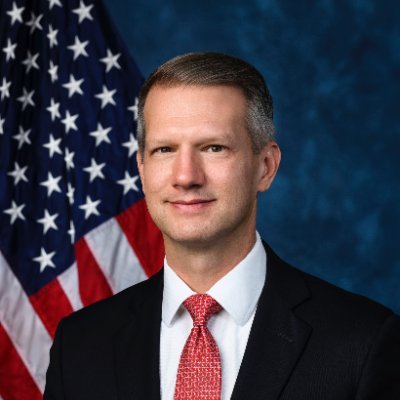
A prominent United States lawmaker, Riley Moore, has warned President Bola Ahmed Tinubu’s administration against “testing the resolve” of U.S. President Donald J. Trump over the alleged killings of Christians in Nigeria.
In a statement posted on his official X (formerly Twitter) handle, Moore cautioned that nations which had underestimated Trump’s determination in the past “had all failed,” adding that the U.S. would no longer ignore what he described as “atrocities against Christians” in Nigeria.
“To the Government of Nigeria & @officialABAT: President Trump has provided forewarning. If you do not correct the current state of inaction to stop the killing of our brothers and sisters in Christ in your country, the days of the U.S. looking the other way are over — it will never happen on @POTUS’ watch,” Moore wrote.
“I urge you to cooperate with us in preventing this atrocity that worsens every day. We want your people to live in peace — all of them, especially Christians. The President has been clear. I would not test his resolve. Many have tried, and all have failed. We will not allow the gates of hell to prevail against the faithful.”
Moore’s comments come in the wake of President Trump’s recent threat to launch military action against Nigeria, alleging that the Tinubu administration has failed to stop the “genocide” of Christians by “radical Islamists and Fulani militias.”
In a fiery post on Truth Social, Trump said the U.S. could move “guns-a-blazing” into Nigeria if the killings continue, warning that Washington would immediately halt all aid to the country.
“If the Nigerian government continues to allow the killing of Christians, the U.S.A. will immediately stop all aid and assistance to Nigeria, and may very well go into that now disgraced country, ‘guns-a-blazing,’ to completely wipe out the Islamic terrorists who are committing these horrible atrocities,” Trump said.
“I am hereby instructing our Department of War to prepare for possible action. If we attack, it will be fast, vicious, and sweet, just like the terrorist thugs attack our cherished Christians,” he added.
Trump’s remarks followed his decision to re-designate Nigeria as a “Country of Particular Concern” (CPC) — a label reserved for nations accused of severe violations of religious freedom.
The Nigerian government has, however, rejected the allegations of a Christian genocide, describing such claims as “false” and “misrepresentative” of the country’s religious reality.
In a statement issued on Saturday, President Bola Tinubu emphasized that Nigeria’s constitution guarantees freedom of religion and that his government continues to promote peaceful coexistence among citizens of all faiths.
“Nigeria stands firmly as a democracy governed by constitutional guarantees of religious liberty,” Tinubu said.
“Since 2023, our administration has maintained an open and active engagement with Christian and Muslim leaders alike and continues to address security challenges which affect citizens across faiths and regions.”
He dismissed what he called an “external mischaracterisation” of Nigeria’s complex security challenges, insisting that religious tolerance remains a core tenet of the nation’s identity.
“The characterisation of Nigeria as religiously intolerant does not reflect our national reality,” Tinubu stated. “Religious freedom and tolerance have been a core tenet of our collective identity and shall always remain so. Nigeria opposes religious persecution and does not encourage it.”
The U.S. warning and Trump’s threats mark a new low in diplomatic relations between Washington and Abuja. Analysts say the development could strain cooperation in areas such as counterterrorism, security assistance, and trade relations, especially if the Trump administration pursues punitive measures.
Meanwhile, human rights groups and religious organizations within Nigeria have called for restraint, urging both governments to focus on dialogue and domestic reforms rather than military confrontation.
As tensions rise, observers fear that Trump’s hardline rhetoric and the U.S. Congress’s growing involvement could internationalize Nigeria’s internal conflicts, potentially escalating instability across West Africa.