Human rights lawyer and activist, Okere Kingdom, has condemned his recent arrest and detention by operatives of the Nigeria Police Force in Abuja, describing the experience as “illegal, brutal, and deeply traumatic.”
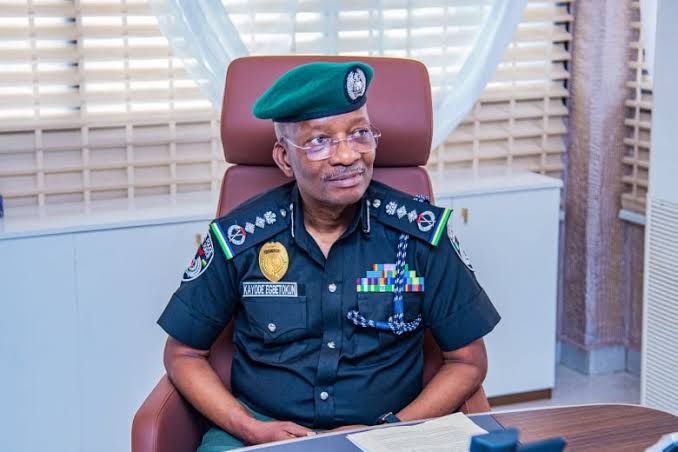
Speaking shortly after his release from Kuje Prison, Okere launched a scathing attack on the Inspector-General of Police (IGP), Kayode Egbetokun, accusing him of abusing his office and ruling the police force with what he called “absolute impunity.”
“My arrest was so traumatic. The IG himself has become the chief terrorist of the Federation. You know, they say power corrupts, and absolute power corrupts absolutely,” Okere said. “Because his regime was illegally sustained — the Police Act was illegally amended to make him an absolute IG. That is why you see him exercising absolute power.”
Okere, known for his bold activism across the Southeast and South-South regions, was reportedly violently arrested in Utako, Abuja, while addressing journalists on issues of justice, equity, and equality in Nigeria.
“I was addressing the media — I was live on News Central, Arise Television, and other outlets — talking about why there should be justice for all Nigerians, irrespective of tribe,” he recounted. “While I was still speaking, armed policemen swooped in and picked me up like a criminal.”
According to Okere, his only “offence” was speaking the truth about the marginalisation of certain regions in Nigeria, particularly the Southeast.
“I said it clearly — Nnamdi Kanu is being held because he is an Igbo man,” he stated. “A former Governor of Kaduna State once accused the National Security Adviser of paying and arming bandits, yet nothing happened. Nobody was arrested or questioned. But the moment you speak up against injustice, the police come after you.”
The activist condemned what he described as the “politics of insecurity” and selective justicethat have plagued the Nigerian state, alleging that the system deliberately targets voices of dissent while shielding those in power.
“They must stop this politics of insecurity and stop victimising people from the Southeast because we are vulnerable,” he declared. “Every Nigerian deserves equal treatment, no matter their tribe. I refuse to live in a country that treats me as a second-class citizen.”
Okere also challenged the legality of his arrest, noting that there was no valid court orderauthorising the police to apprehend him.
“The supposed court order only said protesters shouldn’t go near the National Assembly or the Three Arms Zone. I was at Utako — far away from those areas — addressing the press. So, I ask again: when did addressing the media become an offence in this country?”
The activist vowed to take legal action against the Inspector-General of Police for unlawful arrest, detention, and violation of his fundamental human rights.
“Now that I’m out of this illegal, brutal detention, I will take him to court and demand damages,” he said. “Addressing the press is not a crime. That was the only thing I did.”
Okere further accused the Tinubu administration of pushing Nigeria towards a police state, where freedom of speech and civic engagement are treated as crimes.
“This government is turning Nigeria into a police state,” he warned. “Citizens, journalists, and activists are now targets for simply speaking up. But we will not be silent — we will resist oppression with the power of truth.”
His arrest has sparked widespread outrage among human rights defenders, journalists, and civil society groups, following a wave of police crackdowns on peaceful protests in Abuja and other cities. These protests were largely driven by calls for the release of detained IPOB leader Nnamdi Kanu and demands for justice, equality, and an end to government impunity.
Chronicles Reporters remains committed to truth, accountability, and fearless journalism — because information brings transformation.