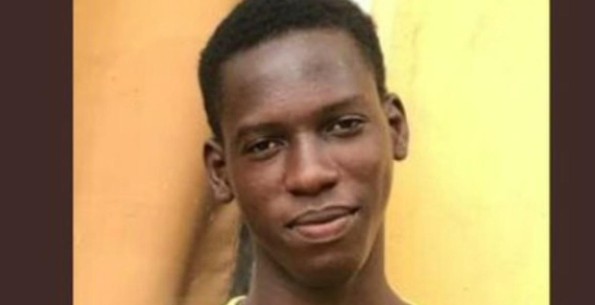
The Lagos State Coroner’s Court has ordered the Infectious Diseases Hospital, Yaba, to release the remains of journalist Pelumi Onifade to his parents for burial, nearly six years after he was shot while covering the #EndSARS protests and subsequently disappeared before his body was discovered in a mortuary.
The order represents a major development in the prolonged search for justice for the 20-year-old Gboah TV reporter, whose death in October 2020 sparked widespread condemnation from local and international press freedom organisations.
The coroner, Mrs Temitope Oladele, issued the directive following an application by Alimi Adamu, counsel representing the Onifade family and Media Rights Agenda (MRA), seeking permission for the journalist’s parents to take custody of his remains.
The body, identified by mortuary tag number 1385, had remained in government custody while investigations and judicial proceedings continued to establish the circumstances surrounding his death.
The application followed the adoption of a witness statement on oath by Onifade’s mother, Bose Onifade, which was filed before the court on November 11, 2026.
Granting the application, Oladele directed the hospital to release the remains to the family within 14 days of receiving the court order.
Adamu had also asked the court to formally acknowledge, pursuant to Section 29 of the Coroner’s System Law of Lagos State, that the remains had been kept in government custody for forensic and judicial purposes.
He explained that such formal recognition would assist the family in resolving administrative complications arising from the prolonged storage of the body, particularly issues relating to mortuary charges.
However, the coroner maintained that the circumstances surrounding the custody of the remains were already reflected in the court’s records.
She directed that the order be served on the hospital before any further issues relating to its implementation could be considered.
Meanwhile, proceedings continued with fresh efforts to secure the attendance of witnesses believed to have important information about the journalist’s shooting, arrest and subsequent disappearance.
Adamu informed the court that efforts to secure the appearance of one of the witnesses had been unsuccessful because his exact whereabouts remained unknown.
According to the lawyer, the witness had maintained telephone contact with him but expressed fears for his personal safety and reportedly suffered from post-traumatic stress disorder following the incident.
He explained that the witness was allegedly with Onifade when the shooting occurred and could provide crucial evidence about the events that led to the journalist’s disappearance and eventual discovery of his remains.
Adamu consequently applied for permission to allow the witness to testify electronically, with appropriate measures to protect his identity and personal information.
The coroner granted the request and directed that the summons be served on the witness through WhatsApp.
Another witness, Jimmy Michael, was also scheduled to appear before the inquest.
Lagos State counsel, Adebola Araba, told the court that he had contacted Michael, who reportedly confirmed that he was occupied with his seasonal Christmas business but had not refused to testify.
Michael was also said to have been present with Onifade when the journalist was shot.
Following Adamu’s application, the coroner issued a fresh summons directing that Michael be served electronically.
The lawyer further identified Michael Oluwajoba Bamiro, director of Gboah TV, as another important witness, explaining that he reportedly arrived at the scene shortly after the shooting.
The court approved his appearance at the next sitting, while Adamu undertook to file his witness deposition on oath before then.
Onifade was a 20-year-old student of the Department of History at Tai Solarin University of Education, Ogun State, and an intern reporter with Gboah TV, an online television station based in Lagos.
On October 24, 2020, he was deployed alongside a colleague to cover the #EndSARS protests at the Abattoir area of Oko-Oba, Agege, Lagos State.
The incident reportedly occurred during a confrontation between security operatives and a crowd accused of attempting to break into a government facility where COVID-19 palliatives were stored.
Eyewitness accounts indicated that police officers and personnel attached to the Lagos State Government Task Force opened fire during the confrontation, with Onifade sustaining gunshot injuries.
Despite wearing a jacket identifying him as a journalist, he was taken away in a police vehicle alongside some of the individuals arrested during the operation.
His disappearance subsequently triggered days of frantic searches by his parents, colleagues and friends, who visited several police stations and other security facilities across Lagos in an attempt to establish his whereabouts.
On October 27, 2020, his family and Gboah TV publicised his disappearance on social media, appealing to members of the public for information that could help locate him.
The family later received communication from police officers and was invited to the Lagos State Police Command headquarters in Ikeja.
On October 28, officers informed the family and his colleagues that five people had been arrested in connection with the incident at Agege on October 24, adding that one of the suspects had died and his body deposited at a mortuary in Ikorodu.
Two days later, on October 30, the family identified Onifade’s remains at the mortuary.
However, the police subsequently denied that the journalist was among those arrested during the operation, claiming that his body had been recovered from an unspecified location and deposited at the mortuary.
The conflicting accounts further deepened concerns surrounding his death, particularly over what happened between his reported arrest and the discovery of his body.
The circumstances surrounding the shooting, the identity of those responsible and the events that led to his death remained unresolved.
The case attracted international condemnation, with the Committee to Protect Journalists (CPJ) calling on Nigerian authorities to conduct a credible and transparent investigation and ensure that those responsible were held accountable.
The United Nations Educational, Scientific and Cultural Organization (UNESCO) also called for a thorough investigation, describing the killing as a matter requiring urgent attention from the Nigerian authorities.
In August 2021, Media Rights Agenda instituted legal proceedings against the police authorities and the Lagos State Government at the Federal High Court in Lagos, seeking an independent investigation into the journalist’s death and the identification and prosecution of those responsible.
The organisation argued that Onifade’s shooting and arrest while performing his journalistic duties amounted to violations of his fundamental rights, including his rights to life, personal liberty and freedom of expression.
On July 19, 2024, Justice Ayokunle Faji of the Federal High Court in Lagos directed the Lagos State Attorney-General to take necessary steps to investigate the journalist’s death and conduct a coroner’s inquest to establish the cause of death and identify those responsible for possible prosecution.
The judgment followed the legal action instituted by Media Rights Agenda over the authorities’ failure to provide a satisfactory explanation of the circumstances surrounding his death.
In September 2024, international press freedom organisations, including the Committee to Protect Journalists, the Media Foundation for West Africa and the International Press Institute, renewed calls for the release of Onifade’s remains to his family and demanded accountability.
The organisations expressed concern that nearly four years after the incident, his parents were still unable to bury their son while the circumstances surrounding his death remained unresolved.
A significant breakthrough came on June 23, 2026, when the Lagos State DNA and Forensic Centre presented a sealed forensic report to the coroner, confirming that the unidentified body bearing mortuary tag number 1385 belonged to Onifade.
The DNA analysis reportedly established a genetic match between the remains and a sample provided by his mother, ending nearly six years of uncertainty over the identity of the body.
However, the confirmation of his identity did not resolve the central questions surrounding his death.
The cause of death and the identity of those responsible remain matters for the ongoing inquest, while the medical autopsy report requested by the court was still outstanding.
The police have continued to deny that Onifade died in their custody.
With the latest order directing the Infectious Diseases Hospital, Yaba, to release his remains within 14 days, his family is now closer to finally laying him to rest after years of uncertainty and a prolonged struggle for justice.
The coroner adjourned further proceedings until December 15, 2026, as the inquest continues to establish the circumstances surrounding the young journalist’s death and determine whether anyone should be held accountable.