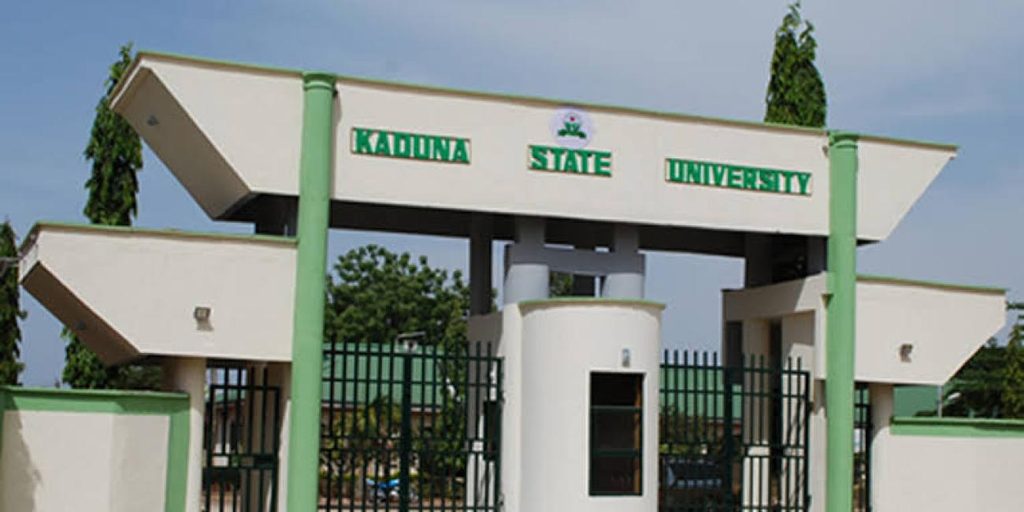
Kaduna State University (KASU) has been shut down following the commencement of a seven-day warning strike by non-teaching staff unions over the alleged failure of the Kaduna State Government to implement agreements reached with university workers and address outstanding welfare concerns.
The industrial action, which began at 12:00 am on Tuesday, November 10, 2026, is expected to run until 12:00 am on Monday, November 17, 2026, disrupting administrative and other non-academic activities across the institution.
The strike was declared by the Joint Action Committee (JAC) of the Non-Academic Staff Union of Educational and Associated Institutions (NASU), Senior Staff Association of Nigerian Universities (SSANU) and National Association of Academic Technologists (NAAT).
The development has thrown the university community into another period of uncertainty, with students facing further disruptions to academic activities amid recurring industrial disputes involving university workers and the state government.
In a letter dated November 9, 2026, and addressed to Governor Uba Sani, the unions said their decision to embark on the strike followed the government’s alleged failure to respond to a seven-day ultimatum issued to it, which expired on Sunday, November 8.
The letter, signed by the Joint Action Committee of the three unions, disclosed that the decision was reached at a congress held on Monday, November 9, following approval from the national headquarters of NASU, SSANU and NAAT.
The unions expressed disappointment over what they described as the government’s failure to respond to their demands despite the expiration of the ultimatum.
“Sir, we wish to inform you that the 7-day ultimatum expired on Sunday, 8th November, 2026 without any response, invitation for dialogue, or concrete action,” the letter stated.
Consequently, the unions directed all their members at Kaduna State University to withdraw their services throughout the seven-day warning strike, with the exception of workers responsible for providing essential services.
Among their major demands is the immediate and full implementation of the 2026 Nigerian Government/non-teaching staff agreements for all members of the Joint Action Committee at the university, including the payment of outstanding arrears arising from the agreements.
They also demanded respect for the autonomy of the university, accusing the authorities of failing to implement the 25 per cent salary increment approved for non-teaching staff in Nigerian universities.
Other demands include the payment of outstanding promotion implementation arrears, implementation of staff group life insurance and the consequential adjustments arising from the 2024 National Minimum Wage Act.
The unions maintained that the outstanding issues have continued to affect the welfare and working conditions of non-teaching staff, insisting that the strike became necessary after the government allegedly failed to take concrete steps towards resolving the disputes.
The latest industrial action comes weeks after the administration of Governor Uba Sani reportedly announced that it had resolved outstanding issues responsible for the labour dispute at Kaduna State University.
However, the commencement of another strike has raised fresh questions about the government’s handling of labour relations at the institution and whether previous assurances translated into the actual implementation of agreements reached with the workers.
The renewed shutdown also threatens to deepen the disruption of academic activities at the university, leaving students uncertain about the resumption of normal administrative and academic operations.
With the warning strike scheduled to last seven days, attention is now on the Kaduna State Government and the university authorities to address the unions’ grievances before the expiration of the industrial action and prevent a possible escalation of the dispute.
For students already affected by repeated disruptions, the latest development has renewed concerns about the stability of the university’s academic calendar and how long they will continue to bear the consequences of unresolved disagreements between workers, university management and the government.