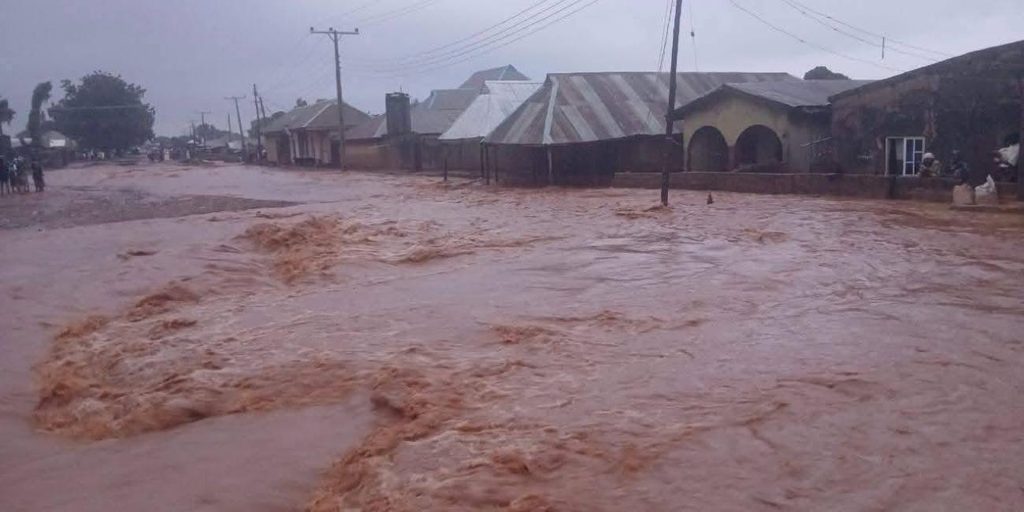
Residents of Mokwa in Niger State have raised the alarm over renewed flooding in the town after heavy rainfall submerged parts of Rabba Road, about 16 months after a devastating flood killed 206 people and displaced thousands of residents.
The latest flooding reportedly started late on Wednesday and continued into Thursday morning following heavy rainfall, according to residents who spoke about the situation.
Videos from the affected area showed floodwater covering sections of Rabba Road, leaving residents and road users struggling to move through the area.
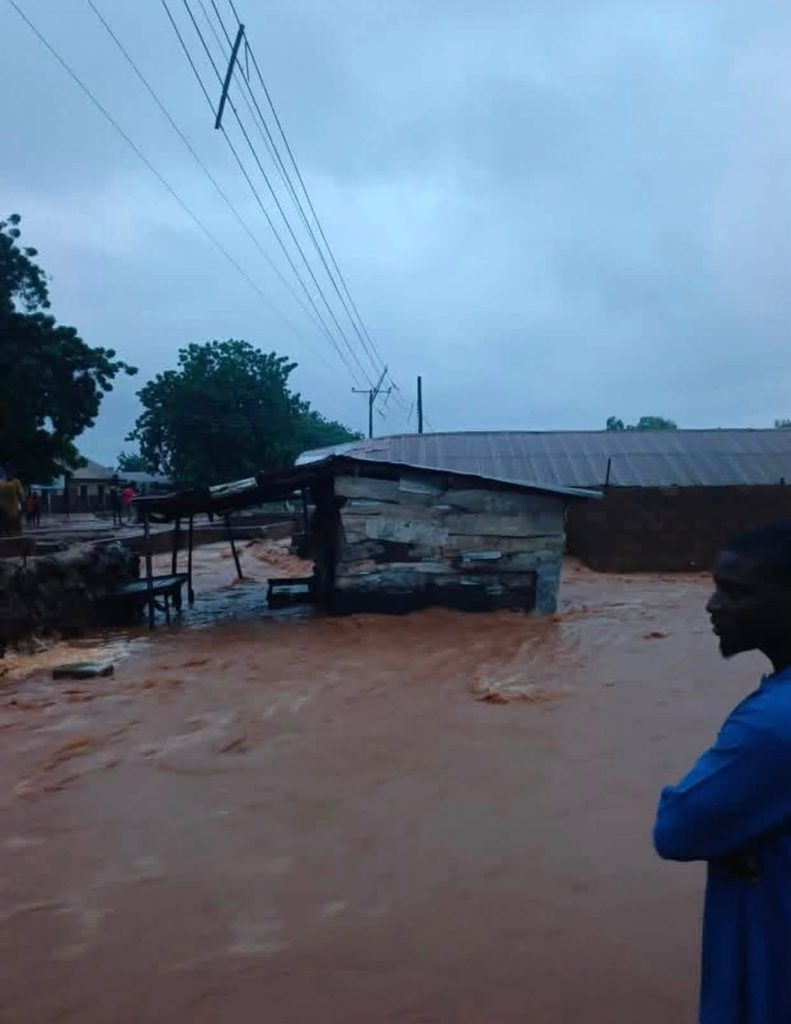
The recurrence has renewed fears among residents and communities still recovering from the devastating flood of May 2025, with concerns growing over the safety of homes, properties, businesses and livelihoods if the rainfall continues.
One resident described the latest development as particularly worrying because it occurred after the town had experienced one of the worst flood disasters in its history.
“The flooding started late on Wednesday and continued into Thursday morning following the heavy rainfall. We are seriously worried because this is happening again after what Mokwa experienced last year,” the resident said.
Another resident expressed disappointment over what was described as inadequate preventive measures following the previous disaster.
“We are disappointed in the Tinubu government and the Niger State Government because promises were made during the last disaster, but we have not seen enough meaningful intervention to prevent another occurrence,” the resident said.
Residents said the situation had heightened anxiety in the town, particularly among people living in areas prone to flooding.
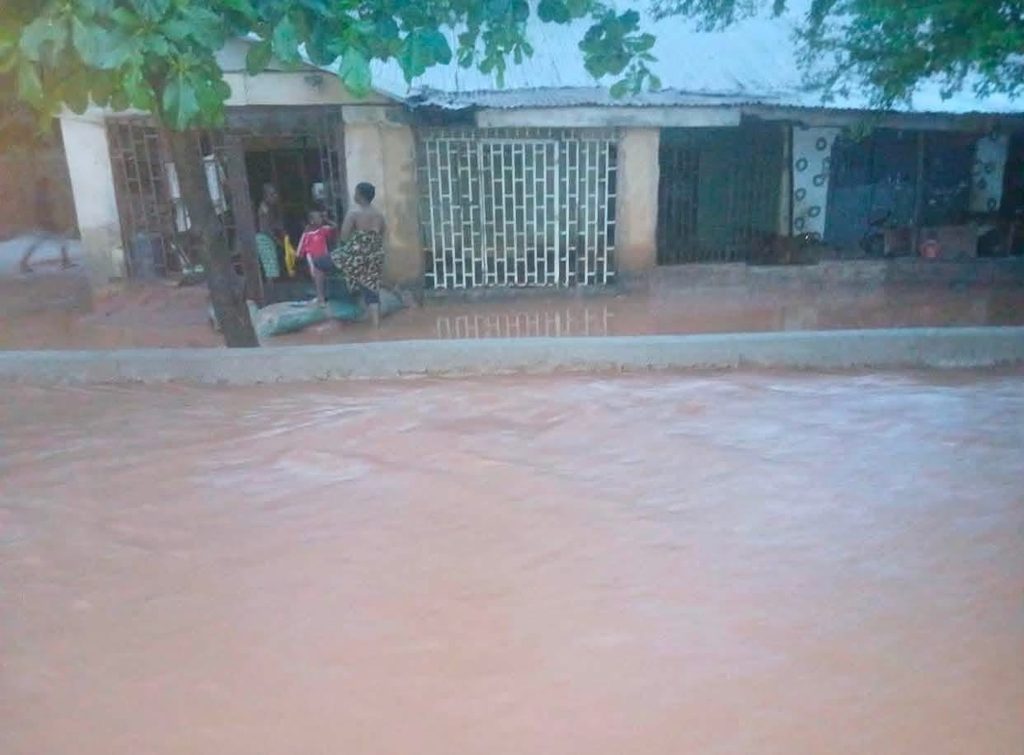
“People are now living in fear whenever it rains heavily because they do not know whether they will lose their homes, properties or means of livelihood again,” another resident said.
The latest incident occurred about 16 months after the devastating flood that struck Mokwa on May 29, 2025.
The 2025 disaster submerged parts of the town, destroyed homes and infrastructure and resulted in hundreds of deaths and displacements.
The Niger State Government subsequently put the death toll at 206, while reporting that 458 homes were completely destroyed, 82 people were injured and 3,534 residents were displaced. The state government also reported that 180 hectares of farmland were submerged.
The National Emergency Management Agency, NEMA, in an assessment conducted shortly after the disaster, reported that 151 bodies had been recovered, while 503 households and 264 houses had been affected and 3,018 people displaced at that stage of the response.
The International Organization for Migration also reported that 3,018 people, representing 503 households, were affected by the May 2025 flood, with 92 per cent of the assessed houses completely destroyed.
The disaster also damaged roads and bridges and severely disrupted economic activities in the town.
Concerns over the vulnerability of communities around Mokwa have persisted even after the 2025 disaster.
In September 2026, heavy rainfall reportedly washed away a wooden bridge linking Rabba community with Mokwa. The bridge had reportedly been reconstructed several times by residents after the original concrete bridge was destroyed during the 2025 flood.
The collapse reportedly left residents of Rabba struggling to access farms, schools, healthcare facilities and markets, further highlighting the challenges facing communities affected by flooding and damaged infrastructure.
Meanwhile, the Niger State Government has announced measures aimed at addressing flooding and erosion in Mokwa.
In July 2026, the Niger State Agro-Climatic Resilience in Semi-Arid Landscapes, ACReSAL, project opened bids for the construction of stormwater drainage structures and gully-erosion intervention in Mokwa.
According to the project authorities, the original intervention was designed to address about 5.2 kilometres of gully erosion but was expanded to approximately 17 kilometres following the devastating 2025 flood.
Niger State officials said the intervention was intended to address the underlying causes of flooding and erosion, protect lives and property and improve climate resilience in Mokwa and surrounding communities.
However, residents said the latest flooding demonstrated that urgent measures were still required, particularly around drainage systems and other flood-prone locations.
“Mokwa has suffered enough from flooding. We need the government and emergency agencies to act before this situation gets worse,” a resident said.
Another resident called for immediate intervention rather than waiting for another major disaster before taking action.
“We need proper drainage and urgent intervention, not temporary relief after people have already lost their property,” the resident said.
The residents appealed to the Niger State Government, Mokwa Local Government Council, the Niger State Emergency Management Agency and other relevant authorities to urgently assess the affected areas and take steps to prevent the situation from escalating.
“The government should not wait until people are trapped or lives are lost before taking action. We are appealing to the Niger State Government, Mokwa Local Government and emergency agencies to respond immediately,” another resident said.
They also called for a permanent solution to the recurring flooding problem, warning that residents should not have to live in fear every time there is heavy rainfall.
“This is no longer something that should be treated as normal whenever it rains. There has to be a permanent solution to the flooding in Mokwa,” the resident said.
Another resident said the latest flooding had revived fears created by last year’s disaster.
“After the previous flood disaster, we expected the government to do something to prevent a repeat, but now the water is back again,” the resident said.