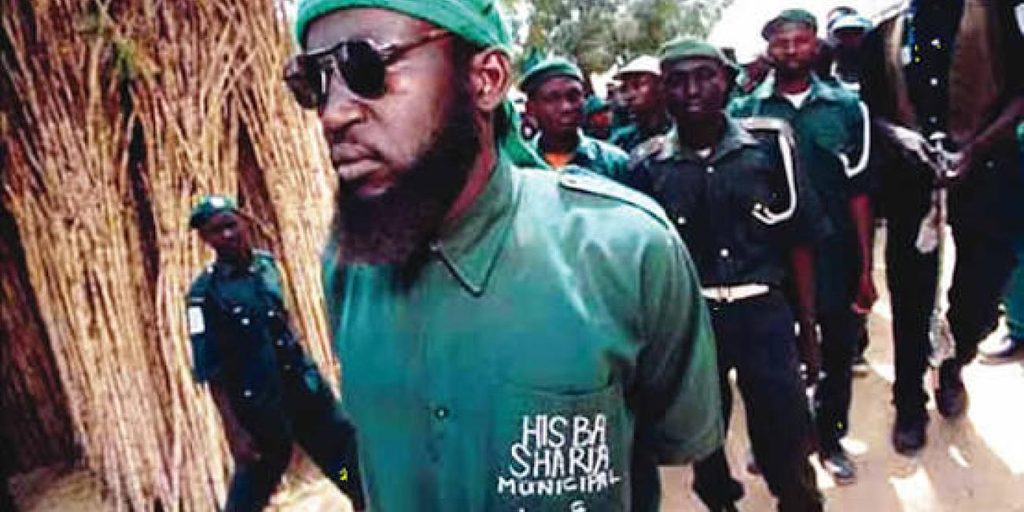
Human rights activist, Comrade Suleiman A. Abubakar, has called on the Adamawa State Government to consider suspending the activities of Hisbah groups operating in parts of the state pending a comprehensive review of their legal status, operational structures and impact on peaceful coexistence.
Abubakar, who described himself as a concerned citizen and liberal Muslim, said the reported proliferation of different Hisbah groups in communities, including Ngurore, Wauro Jabbe, Gombi and Mubi, had raised concerns about coordination, accountability, leadership and their potential implications for peace and security.
In a statement titled “Adamawa Must Not Become A Battleground Of Religious Factionalism: No To Hisbah, Yes To The Muslim Council, Peace And Freedom,” the activist urged the state government to work with the Muslim Council of Adamawa State and other stakeholders to address the concerns surrounding the groups.
“My position is clear: No To Hisbah In Adamawa State; Yes To The Muslim Council; And Yes To An Islam That Promotes Peace, Tolerance, Justice, And Mutual Respect,” he said.
Abubakar clarified that his position was not an attack on Islam or Muslims seeking to promote moral values, but a call for religious activities and organisations to respect constitutional rights and freedoms and operate within the limits of the law.
He argued that the existence of multiple groups operating under different arrangements could create uncertainty about their leadership, mandates, oversight and accountability, potentially increasing the risk of rivalry, conflicting directives, intimidation and confrontation.
“Where multiple groups operate without clearly established mandates, transparent leadership, effective oversight, and publicly understood limits, the risk of rivalry, conflicting directives, intimidation, and confrontation may increase,” he said.
The activist acknowledged, however, that the existence of different Hisbah factions did not automatically mean violence would occur. He maintained that their activities and organisational structures warranted scrutiny to determine whether they were compatible with the state’s legal framework and the interests of peaceful coexistence.
He called on the Adamawa State Government to consider a temporary suspension of Hisbah activities to allow an impartial and transparent assessment of their legal basis, operational structures, objectives and effects on communities.
According to him, the proposed suspension should serve as a preventive measure rather than a blanket condemnation of everyone associated with the groups.
“This proposed suspension should not be interpreted as a judgment against every individual associated with Hisbah. Rather, it should be a preventive measure aimed at clarifying responsibilities, protecting citizens, and determining whether such structures are necessary and appropriate within the legal and social context of Adamawa State,” he said.
Abubakar identified the need for clearly defined mandates, identifiable leadership, transparent procedures and effective mechanisms for receiving and investigating complaints as key considerations in reviewing organisations whose activities affect the public.
He also urged the authorities to examine whether the reported Hisbah groups were adequately coordinated and whether disagreements among them could contribute to wider community tensions.
The activist emphasised that Nigerians were entitled to constitutional protections, including freedom of religion, conscience, expression and association, adding that no religious organisation should intimidate citizens or impose beliefs through coercion.
“No religious group should be permitted to intimidate citizens, impose beliefs through coercion, or undertake enforcement activities without lawful authority,” he said.
He further called for credible allegations of harassment, discrimination, threats or attempts to control lawful private conduct associated with any of the groups to be investigated impartially, with appropriate action taken where wrongdoing was established.
Abubakar also expressed concern about what he described as the potential influence of exclusionary religious interpretations within some religious structures in the state.
He urged the Muslim Council to examine credible evidence of whether such influences could contribute to intolerance, sectarian divisions or attempts to dominate other Muslims.
However, he cautioned against treating religious affiliations or theological differences as evidence of wrongdoing.
“Not every person associated with Salafism or Wahhabism supports violence, and theological differences alone should not be treated as proof of wrongdoing,” he said.
“My objection is to coercion, intolerance, ideological domination, and any attempt to restrict the lawful freedoms of others—not to the peaceful religious beliefs of individuals.”
The activist maintained that Adamawa State belonged to people of different religious and cultural backgrounds, warning that religious divisions should not be allowed to undermine peaceful coexistence.
He urged the Muslim Council to strengthen dialogue among different Islamic traditions and promote cooperation between Muslim and Christian leaders, traditional institutions, youth groups, women and civil society organisations.
According to him, the council should prioritise education, mediation, community outreach and peaceful conflict resolution while establishing accessible channels through which residents could report intimidation, discrimination and alleged abuses of authority.
Abubakar said the Muslim Council should serve as a platform for unity and reconciliation rather than an instrument for domination or division.
“The Muslim Council should be a platform for unity, not a tool for domination; a voice for reconciliation, not division; and a defender of peaceful religious practice, not an instrument of coercion,” he said.
He also called for an independent assessment of Hisbah structures in the state, including their leadership, funding, activities, legal status, community acceptance and contribution to peace and security.
He urged the state government to investigate credible allegations of intimidation, harassment, unlawful enforcement and religious discrimination associated with any of the groups.
Abubakar further called on the Muslim Council to review its relationship with Hisbah and determine whether continued affiliation was consistent with its responsibility to promote unity, public confidence and peaceful religious practice.
He said the review should establish whether the groups had a lawful basis for their activities, appropriate oversight mechanisms and clearly defined limits on their authority.
“If the review establishes that existing Hisbah structures are unnecessary, inadequately accountable, or incompatible with applicable law and the interests of peaceful coexistence, I urge the relevant authorities to consider their formal discontinuation and, where appropriate, their delisting from the Muslim Council’s recognised structures,” he said.
He stressed that any decision to suspend or discontinue the groups should be based on credible evidence, applicable law and a fair process rather than hostility towards particular religious identities or beliefs.
Reiterating his position, Abubakar urged religious institutions in Adamawa State to promote understanding, tolerance and reconciliation instead of deepening divisions or seeking to dominate other groups.
“We need religious institutions that educate rather than intimidate, reconcile rather than divide, and encourage mutual understanding rather than impose domination,” he said.
He appealed to the Adamawa State Government and the Muslim Council to work with relevant stakeholders towards a peaceful, lawful and inclusive resolution of the concerns surrounding Hisbah activities in the state.