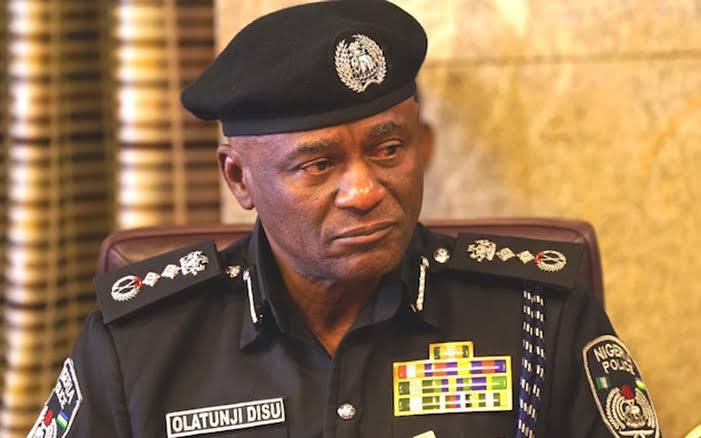
The Inspector-General of Police, Olatunji Disu, has challenged the President of the Nigerian Bar Association, Oyinkansola Badejo-Okusanya, SAN, over the legality, scope and limits of citizens recording police officers while carrying out their official duties.
Disu raised the issue during an engagement with the NBA President, questioning whether members of the public should be permitted to record police officers in the same manner they might record activities in other professional environments.
The IGP drew comparisons with legal practice and judicial proceedings, asking whether lawyers would accept people entering their offices to secretly record them or whether court proceedings could be recorded without restrictions.
According to Disu, the issue has become a growing concern within the Nigeria Police Force, particularly following a recent court judgment concerning the recording of police officers.
He said the judgment had jolted police officers and encouraged some Nigerians to routinely bring out their phones to record officers in different situations.
Disu described the development as “very, very demoralising” for police personnel, particularly officers deployed to dangerous locations such as highways, forests, bushes and other isolated areas to protect members of the public.
He said, “Can we come to your offices and record you in your offices? Can we come to your offices and record you in your offices? Can we record even in the courts? Can we record?”
The police chief disclosed that the matter had been extensively discussed within the force, including consideration of the legality of using concealed cameras to record people in professional environments.
He said the Deputy Inspector-General of Police in charge of planning had produced further legal submissions and cited several authorities which, according to him, could help determine the limits of the practice.
Disu also appealed to the NBA to send a representative to a police symposium scheduled to take place in Owerri, Imo State, where the recent judgment and the issue of recording police officers are expected to receive further attention.
“We’ll beg you whether you can send somebody to our symposium. We have one this month in Owerri. The recent judgment on recording of police officers. That one really jolted our officers and it became something of concern to us because the citizens started coming out with their phones to record police officers everywhere they saw them, and this can be embarrassing,” he said.
The IGP, however, clarified that the Nigeria Police Force was not necessarily opposed to citizens exercising their rights to record police officers in public places while they are performing their official duties.
Rather, he said the concern was that the practice should be exercised responsibly and with restraint, particularly where recordings are allegedly made for entertainment, skits or social media content.
“We are not saying they cannot exercise their right of recording officers in the public places while doing their jobs, but they should put restraint and not turn our police officers to content for their skits or anything,” Disu said.
He further expressed concern that the practice had, in some instances, extended beyond officers performing official duties in public spaces.
According to him, some Nigerians had begun recording police officers in restaurants and other places while they were eating.
“Some even went to restaurants to start recording police officers who are eating. Everywhere you see a policeman, you start recording the policeman. So this is something that was very, very demoralising to us,” he said.
Disu appealed for greater consideration of the conditions under which police personnel carry out their duties, particularly officers deployed to checkpoints and other operational locations.
He explained that some officers spend long hours in isolated and potentially dangerous environments, including thick forests, bushes and highways, often remaining at their posts from morning until night to protect other citizens.
“If you look at where we have our officers on checking points, there are dangerous areas, thick in the forest, thick in the bushes, on the highways, middle of nowhere, and these officers will stay there morning and night to do their job to keep other people safe,” the IGP said.
His comments have brought renewed attention to the delicate balance between citizens’ rights to document the conduct of law-enforcement officers in public and the need to prevent such recordings from being misused, particularly where they could interfere with police operations or turn officers into material for online entertainment.
The planned police symposium in Owerri is expected to provide another platform for legal practitioners and police authorities to examine the implications of the recent court judgment and clarify the circumstances under which citizens may lawfully record police officers.