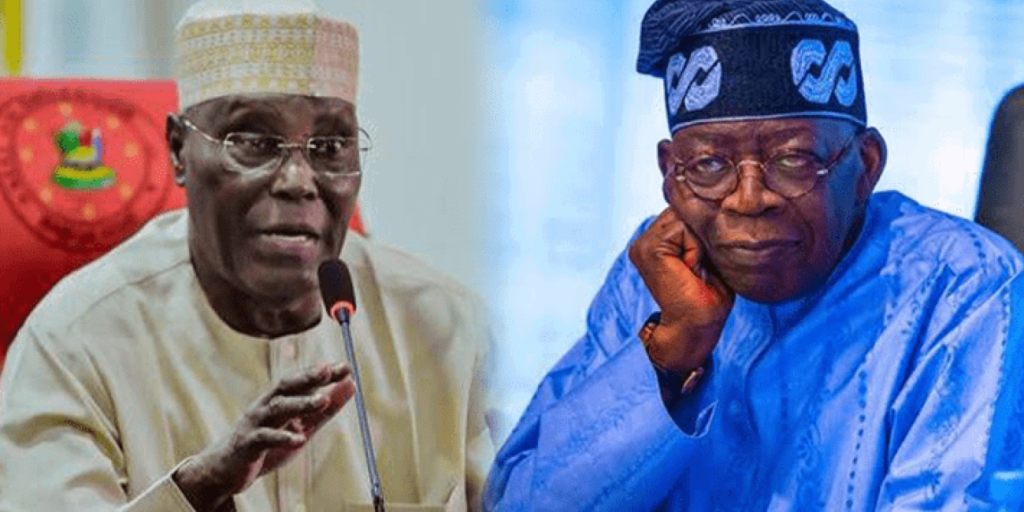
The Presidency has accused former Vice-President Atiku Abubakar of political opportunism and policy confusion over his recent comments on petrol subsidy, alleging that the African Democratic Congress (ADC) presidential candidate for the 2027 general elections has offered Nigerians three different positions on the controversial policy within one week.
The accusation was contained in a statement issued on Wednesday by Bayo Onanuga, Special Adviser to President Bola Ahmed Tinubu on Information and Strategy.
Onanuga said the conflicting statements attributed to Atiku and his senior aides had raised serious questions about the former vice-president’s economic programme and whether his proposed petrol subsidy was a coherent policy or an attempt to exploit Nigerians’ economic difficulties for political advantage.
According to the presidential aide, the controversy began after Atiku’s spokesperson, Paul Ibe, stated that Atiku would restore petrol subsidy if elected president and subsequently phase it out.
Ibe reportedly presented the proposal as a temporary intervention intended to provide relief for Nigerians and businesses struggling with the effects of economic hardship.
However, Onanuga said another senior Atiku aide, Phrank Shaibu, subsequently rejected that explanation, describing Ibe’s statement as an “unauthorised and misleading characterisation” of Atiku’s position.
Shaibu, according to the Presidency, argued that Atiku would not impose a predetermined deadline for ending the subsidy.
Instead, he said the policy would remain until domestic refining capacity increased, fuel supply stabilised, competition deepened and market conditions became capable of delivering affordable petrol without government support.
The Presidency said Atiku later intervened and reaffirmed the position initially attributed to him.
Atiku was quoted as insisting that his position “has not changed” and promising to restore what he described as a “targeted subsidy” if elected president.
“I will restore targeted subsidy and put purchasing power back in the hands of Nigerians,” Onanuga quoted the former vice-president as saying.
The presidential aide described the sequence of statements as a major policy contradiction and demanded an explanation for the apparent disagreement among Atiku’s senior aides.
“If Atiku’s position has not changed, why did one of his principal aides say the subsidy would be temporary and phased out?” Onanuga asked.
“Why did another senior aide have to publicly disown that explanation and introduce a completely different framework based on market conditions? And why did Atiku then step in to reaffirm the original position?”
Onanuga said Nigerians deserved clarity rather than what he described as “policy by trial and error.”
He also challenged the economic argument behind Atiku’s proposal, insisting that petrol prices are influenced by factors far beyond government subsidy.
According to him, international crude oil prices, foreign exchange rates, refining costs, transportation, distribution and other market forces all contribute to the final price paid by consumers.
While acknowledging that greater competition could improve efficiency and reduce some costs, Onanuga argued that competition alone could not completely protect Nigerian consumers from fluctuations in global crude oil prices and other production and distribution costs.
He also rejected the argument that petrol prices are solely responsible for Nigeria’s food inflation.
The presidential aide acknowledged that energy and transportation costs affect food prices but argued that Nigerians had also experienced significant increases in food prices during periods when petrol subsidy was still in place.
“Agricultural productivity, insecurity, exchange rates, logistics, storage, flooding, input costs, money supply and supply constraints also matter,” he said.
Onanuga maintained that a serious economic programme must address those structural factors rather than reduce Nigeria’s cost-of-living crisis to petrol prices alone.
He credited the Tinubu administration with working on what he described as broader economic reforms over the past three years.
The Presidency also challenged Atiku to provide details of his proposed “targeted subsidy”, asking how much the policy would cost, who would benefit, how beneficiaries would be identified and how the programme would be financed.
Onanuga further demanded that Atiku explain what economic conditions would trigger the eventual termination of the subsidy.
He warned that Nigerians could not afford another expensive and opaque subsidy regime operating under a different name.
The presidential aide also questioned Atiku’s understanding of crude oil refining and the relationship between crude oil prices and refined petroleum products.
“Atiku says his subsidy will follow the barrel of crude. Is he aware that refined petrol only constitutes 45 per cent of the by-products of a refined barrel of crude?” Onanuga asked.
He explained that a barrel of crude oil produces several products, including petrol, diesel, aviation fuel, kerosene, petrochemical feedstocks, asphalt, hydrocarbon gases, lubricants, waxes, petroleum coke and sulphur.
According to Onanuga, diesel accounts for roughly 25 per cent of the products obtained from a barrel and was deregulated in 2004 during the administration in which Atiku served as vice-president.
He added that jet fuel and kerosene account for about nine per cent of the barrel, noting that kerosene and jet fuel were deregulated in 2009, while subsidies were removed in 2016.
Another 10 to 15 per cent, he said, produces base ingredients used in manufacturing synthetic rubber, nylon, polyester and plastics.
Asphalt accounts for about two to four per cent, while hydrocarbon gas liquids such as propane and butane account for about four per cent. Lubricants and waxes constitute roughly one to two per cent, according to the presidential aide.
Onanuga therefore questioned whether Atiku’s proposed subsidy would cover other petroleum products generated from crude oil.
“Will Atiku subsidise all these by-products of the barrel as well, since kerosene is used by the underprivileged to cook, and many homes and factories use diesel to power generators and delivery trucks?” he asked.
“And will he allow the refineries to supply discounted crude oil to profit from 55 per cent of the by-products, while focusing subsidy only on petrol, his obsession?”
The Presidency’s attack adds a fresh political dimension to the increasingly contentious debate over petrol pricing, subsidy and the direction of Nigeria’s economic policy ahead of the 2027 elections.
Onanuga ultimately accused the former vice-president of lacking a clear understanding of the policy he has recently placed at the centre of his economic pitch, declaring that Atiku was “definitely suffering from a lack of basic understanding of his newfound policy prescription.”