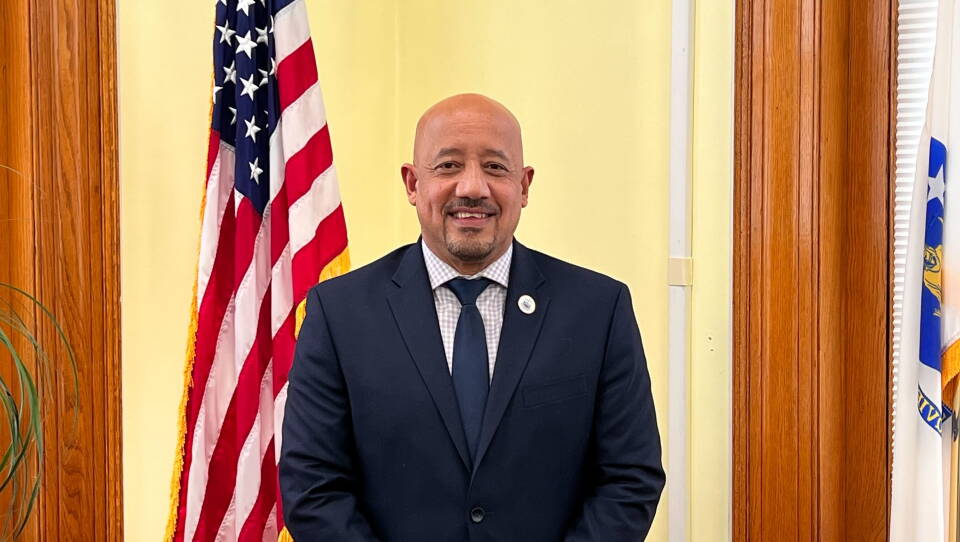
The Mayor of Lawrence, Massachusetts, Brian DePeña, has been arrested by the FBI and charged with allegedly fraudulently obtaining more than $1.5 million in COVID-19 small-business loans and using the money for personal and political purposes.
Federal prosecutors allege that DePeña obtained the pandemic relief funds through his tire and automotive business, Tenares Tire Services Inc., but diverted substantial amounts away from the business for expenses unrelated to its legitimate operations. He faces federal charges of wire fraud and money laundering.
According to the U.S. Department of Justice, DePeña initially received a $150,000 disaster loan in 2020. Prosecutors allege that he later sought increases to the loan as his financial pressures grew, eventually obtaining more than $1.5 million.
Authorities allege that approximately $90,000 was transferred into his mayoral campaign fund, while about $85,000 was used to pay personal tax debts. Prosecutors further allege that $883,293 in government-backed loan proceeds was used to pay down high-interest mortgages on properties he owned in Lawrence.
The allegations have given the case an especially political dimension. DePeña became mayor in November 2021, around the same period prosecutors say some of the pandemic-loan money was used to support his campaign. He was subsequently re-elected in November 2025. Before becoming mayor, he served on the Lawrence City Council from 2016 to 2021.
Federal officials have accused DePeña of exploiting a programme created to help businesses survive the economic devastation caused by the COVID-19 pandemic.
Ted Docks, special agent in charge of the FBI’s Boston Division, said the mayor allegedly used a programme intended to keep struggling businesses afloat as a source of money for personal and political expenses. U.S. Attorney Leah B. Foley similarly accused DePeña of betraying the trust placed in him by Lawrence residents.
The mayor appeared in federal court in Boston following his arrest and was released under conditions that included surrendering his passport and restrictions on obtaining new loans without court approval. His lawyer, Carlos Apostle, repeatedly declined to comment when approached by reporters.
When DePeña was asked whether he would resign, he reportedly responded, “God bless.”
If convicted, DePeña could face up to 20 years in prison for wire fraud and up to 10 years for money laundering, alongside possible financial penalties.
The case, however, remains an allegation at this stage. DePeña has not been convicted and is presumed innocent unless proven guilty in court.
But beyond the criminal proceedings, the arrest has opened a wider debate over political accountability and the safeguards surrounding public money.
The COVID relief programmes were established during an extraordinary crisis to provide struggling businesses with a financial lifeline. Prosecutors now allege that more than $1.5 million intended for that purpose was instead used to address campaign expenses, personal tax liabilities and property debts.
For Lawrence residents, the question is no longer simply what happened to the money. It is also how an elected public official accused of such conduct managed to remain politically successful and win another term before the federal allegations became public.
The criminal case will ultimately be decided by the courts. But the controversy has already placed a difficult question before the city: when public officials are entrusted with public money, who is watching closely enough to make sure that trust is not abused?