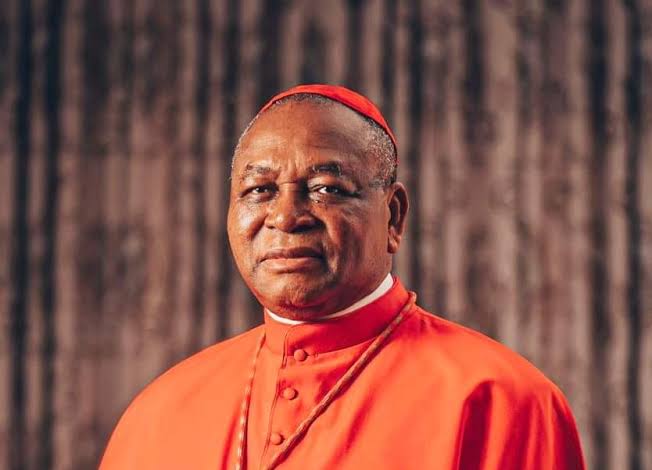
Emeritus Archbishop of Abuja, Cardinal John Onaiyekan, has fired back at criticisms from the Presidency following his recent appearance on Arise News, declaring that he is neither embarrassed nor intimidated by the reaction to his comments about Nigeria’s worsening economic hardship and governance challenges.
The 82-year-old Catholic cleric said he appeared on national television to speak the truth about the realities confronting Nigerians, insisting that he had no intention of pleasing the government or seeking approval from those in power.
“I didn’t go to Arise TV to please government or to just please people, but to tell the truth. That’s all I stand for,” Onaiyekan said.
The Cardinal delivered the remarks while speaking with journalists after an event, in a video seen by SaharaReporters, amid the controversy generated by his television appearance and the subsequent responses from presidential aides and government supporters.
Onaiyekan rejected suggestions that the criticism could embarrass him or force him into silence, stressing that he had reached an age where intimidation no longer influenced his decisions.
“I cannot be embarrassed. I’m 82 years old. Nobody can embarrass me. And I’m not afraid of anybody. At this stage, are they going to arrest me and carry me to where?” he asked.
His comments have added a fresh dimension to the growing public debate over criticism of the Federal Government, particularly as religious leaders, civil society organisations and opposition figures continue to raise concerns about poverty, inflation and the rising cost of living.
Rather than engage in a prolonged exchange with those who criticised him after the broadcast, Onaiyekan said he was content to allow other Nigerians to respond to the controversy.
“I don’t have to [feel embarrassed], because there were other voices now on the social media,” he said. “So I didn’t even have to reply to anything. Other people have spoken on my behalf.”
The Cardinal also warned Nigerians not to take the country’s remaining space for public criticism for granted, noting that religious leaders in some other African countries would face far more serious consequences for openly challenging government policies.
“We are still lucky in this Nigeria, we can still talk. We shouldn’t take that for granted,” he said.
“There are many countries in Africa where no bishop dares to talk like we do here. That we can still talk, and all they do is to insult you. They don’t carry you and lock you up in an unknown dungeon. That means we are not doing badly.”
However, Onaiyekan made it clear that his comments on Arise News were not simply a personal expression of dissatisfaction with the government.
According to him, the issues he raised were contained in a statement collectively prepared by the leadership of the Catholic Bishops’ Conference of Nigeria, meaning that his televised remarks reflected the position of the wider Catholic episcopate.
“Mind you, I didn’t talk on my own now. I spoke on behalf of my fellow bishops,” he said.
“We drafted a statement which contained all that I said in the interview. So all the bishops of Nigeria spoke that way. It was their voice I was echoing. And each of them is free to say the same thing in their dioceses. And they are doing it.”
The declaration could further intensify the controversy surrounding the Cardinal’s comments, as it suggests that the criticism directed at him following the broadcast was not aimed at an isolated personal opinion but at concerns shared by Catholic bishops across the country.
Onaiyekan also pointed out that concern over the economic condition of Nigerians extends beyond the Catholic Church.
Although he said he could not speak officially for other religious organisations, he noted that Muslim leaders and non-Catholic Christian leaders had also expressed concerns about the suffering being experienced by citizens.
“I cannot speak on behalf of other religious leaders. Everybody has their own job to do. But many of the other religious leaders have supported us,” he said.
“Non-Catholic leaders, Muslim leaders, they have all spoken. When it comes to what is happening to Nigeria, the poverty, the suffering, we are all in the same boat now.”
The controversy comes against the backdrop of intense national discussions over economic reforms, inflation, food prices, unemployment, declining purchasing power and the wider impact of government policies on households.
Religious organisations, including the Catholic Bishops’ Conference of Nigeria, have repeatedly called for policies that would protect vulnerable Nigerians and reduce the burden of economic hardship.
The Presidency’s response to Onaiyekan’s television appearance subsequently generated significant debate across social media and traditional news platforms, with Nigerians divided over whether religious leaders should openly criticise government policies or concentrate on their spiritual responsibilities.
Supporters of the Cardinal argue that religious leaders have a responsibility to speak when citizens are suffering, while his critics have questioned the manner and platform through which some of his concerns have been expressed.
But Onaiyekan’s latest response suggests he has no intention of retreating from his position.
At 82, the Cardinal says he is not afraid of criticism, government pressure or attempts to embarrass him, insisting that his priority remains speaking about what he believes to be the truth.
His blunt declaration — “Nobody can embarrass me” — is likely to keep the controversy alive as the debate over economic hardship, government accountability and freedom of expression continues across Nigeria.