There is a question that the people of Gwagwalada Area Council deserve to have answered — and it is not a political question. It is a question of public accountability, custody of government records and the rule of law.
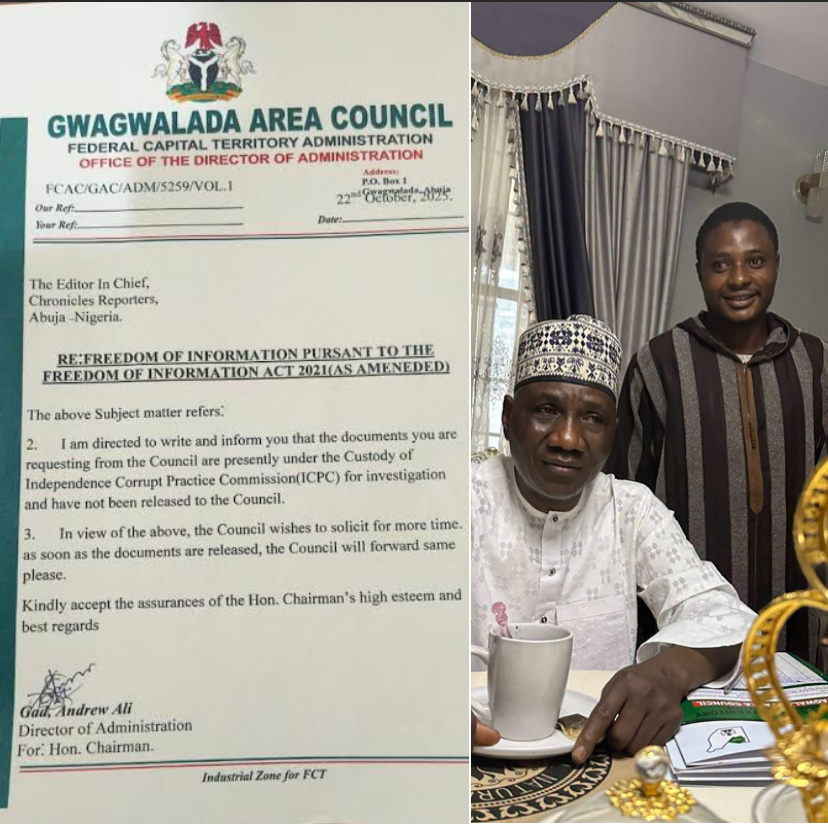
Former Chairman of Gwagwalada Area Council, Alhaji Abubakar Jibrin Giri, has reportedly been photographed in possession of documents appearing to bear the identity or markings of the council.
That raises a simple but serious question: If Giri previously maintained that the records of his administration were already before the Independent Corrupt Practices and Other Related Offences Commission (ICPC), how did another substantial collection of apparent council documents subsequently find its way into his possession?
There cannot be two contradictory realities.
If the records were handed over to investigators, what are these documents?
If they are genuine council records, who authorised their removal from government custody?
If they are not council records, then what exactly are they?
And if they contain information capable of shedding light on the financial and administrative activities of the former administration, then Nigerians — particularly residents of Gwagwalada — deserve to know why such documents were outside the council’s custody.
This is not a declaration that Giri has committed a crime. Photographs alone cannot establish criminal liability. But the law does not require citizens to remain silent when circumstances surrounding public records raise legitimate questions.
There is also the broader issue of government property and accountability after leaving office. Any allegation that former public officials retain council vehicles, documents or other government property after their tenure should be properly investigated and, where established, dealt with according to law.
Public office is not private inheritance.
Council vehicles are not personal possessions. Council files are not family documents. Government records belong to the government and, ultimately, to the people.
Therefore, if there are still council vehicles or other public assets allegedly in the possession of the former chairman, the appropriate authorities should establish their status and demand their lawful return where necessary.
As a concerned resident, I am not asking anyone to convict Giri through social media. I am demanding something more fundamental: investigation, transparency and accountability.
If the documents are innocent, let them be authenticated.
If they belong to the council, let their custody be explained.
If they are connected to any investigation, let the competent authorities examine them.
And if there is evidence of wrongdoing, let the law take its course.
Gwagwalada does not need political persecution, but neither does it need political protection for anyone who may have questions to answer.
Nobody should be above investigation. Nobody should be above the law. And public records should never become private souvenirs of public office.
The people are watching. The documents should speak for themselves.