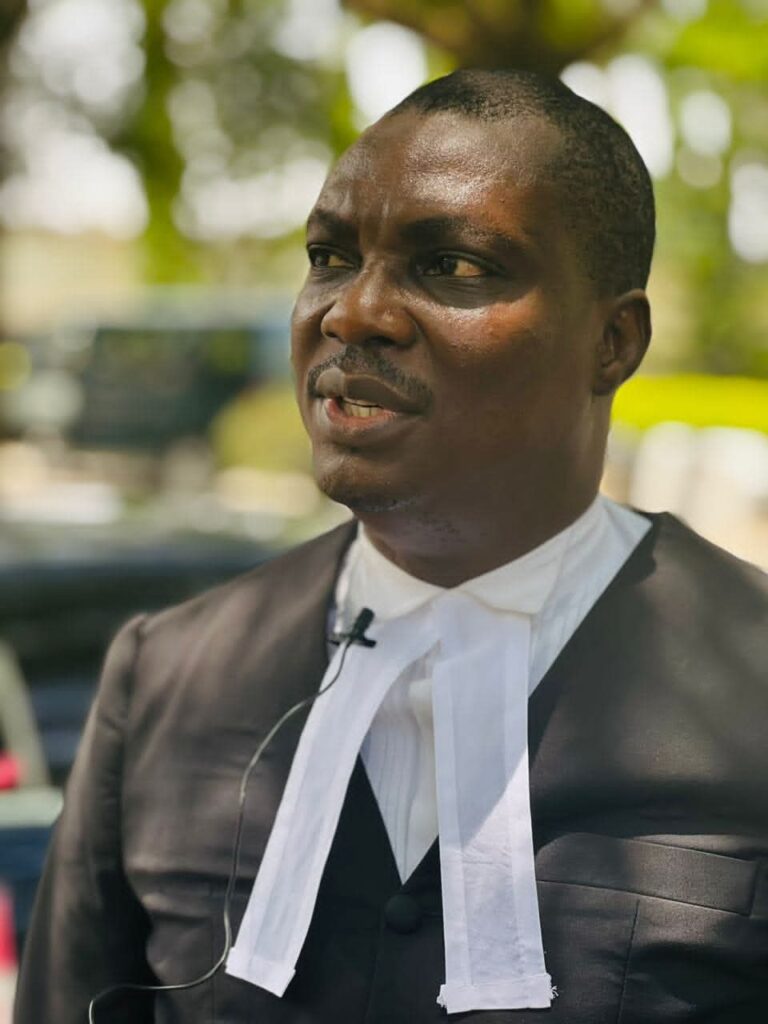
Human rights lawyer and public advocate, Tope Temokun, has demanded that the Department of State Services (DSS) completely withdraw its criminal case against African Action Congress (AAC) presidential candidate, Omoyele Sowore, over his description of President Bola Ahmed Tinubu as a “criminal.”
Temokun said the DSS should not merely suspend the case until after the 2027 presidential election but should withdraw it entirely, arguing that Sowore’s statement should be understood within the context of political criticism and accountability.
In a statement issued on Sunday, the lawyer said that if the DSS refuses to discontinue the case, the Attorney General of the Federation (AGF) should intervene and terminate the prosecution.
“The wise thing for the DSS to do is to withdraw this case entirely. If they do not, the Attorney General of the Federation should intervene and discontinue it,” Temokun said.
He argued that Sowore’s description of Tinubu was political speech and did not justify the level of state prosecution that had been built around it.
“The statement credited to Omoyele Sowore describing President Bola Ahmed Tinubu as a criminal should in my view be understood within the context of political criticism and accountability. It is simply not as grave as the national prosecution that has been built around it,” he said.
Temokun’s statement came after the DSS reportedly directed its lawyers to suspend the prosecution of Sowore until after the 2027 presidential election.
The case arose from social media posts made by Sowore in 2025 in which he referred to President Tinubu as a “criminal.”
The DSS decision reportedly followed the Independent National Electoral Commission’s (INEC) lifting of the ban on presidential campaign activities on August 19, 2026.
Sowore subsequently mocked the decision, describing it as a victory for resistance and accusing the security agency of being forced to “eat humble pie.”
Reacting to the suspension, Temokun questioned why Sowore’s status as a presidential candidate should be the reason for delaying the case, arguing that the same political status should instead strengthen the argument for dropping the charge.
“Does the DSS only now realise that Sowore is a political opponent? If his participation in the election is sufficient reason to suspend the trial then it is an even stronger reason to withdraw the charge entirely,” he said.
“The DSS should tarry no further. It should withdraw the case outright.”
The human rights lawyer also questioned the government’s decision to devote prosecutorial resources to Sowore’s case while Nigerians continue to face serious security challenges across the country.
He cited banditry, kidnapping, illegal mining and killings in different parts of Nigeria, arguing that greater attention should be given to threats directly affecting the lives and safety of citizens.
“Look around the country. Banditry and kidnapping continue across the North and other parts of Nigeria. Illegal mining is destroying communities and there are allegations that some acts of banditry provide cover for dangerous and dubious capitalists involved in illegal mining,” Temokun said.
He also pointed to killings in the Southeast, Benue and other parts of the country, questioning why many people responsible for such violence are rarely brought to justice.
“Our roads have become death traps. Once a loved one sets out on a Nigerian road no relative is completely at peace until the news comes that the person has arrived safely. Sadly many who set out never arrive,” he said.
According to Temokun, the worsening security situation has become so widespread that Nigerians are gradually becoming desensitised to killings, disappearances and kidnappings.
“Perhaps the most frightening part is that our skin as Nigerians has become so thick that we are getting used to these things,” he said.
“People are murdered on the roads. Bodies are abandoned in the bushes. Citizens disappear into kidnappers’ dens. We grieve and move on as though these deaths have become too ordinary to provoke us into demanding greater accountability from those entrusted with the security of the country.”
The lawyer questioned whether President Tinubu should not be subjected to political accountability over the security situation under his administration.
“Did the President not swear an oath to protect us?” he asked.
Temokun rejected arguments that insecurity predates the Tinubu administration, insisting that the fact that the problem existed before his government does not absolve the current administration of responsibility.
“Party loyalists will quickly remind us that insecurity did not start under this President. Fine. But that cannot be an excuse,” he said.
“That it did not start under him does not absolve his government of responsibility. That it has not stopped under him is enough reason for outrage. A government does not inherit insecurity as an excuse. It inherits the responsibility to confront it.”
He further raised concerns about the safety of young Nigerians participating in the National Youth Service Corps (NYSC), noting that corps members are routinely required to travel across the country.
“Even the NYSC scheme is administered under the Presidency. Young Nigerians answer the national call and are sent across a country whose roads the government cannot sufficiently secure,” he said.
Temokun maintained that political opponents must be allowed to criticise the government’s handling of insecurity, even when their language is harsh, provocative or offensive.
“If the President cannot be held politically accountable for the insecurity and crimes suffered by citizens under his watch, who else should political opponents hold accountable?” he asked.
He said the President, as head of the Federal Government, carries significant constitutional responsibility for national security and should therefore expect political criticism over the country’s security challenges.
“The President heads the Federal Government and bears enormous constitutional responsibility for national security. Political opponents are entitled to hold him politically accountable for the insecurity and lawlessness and organised criminality confronting the country,” Temokun said.
The lawyer further argued that harsh political speech should ordinarily be countered through public debate rather than criminal prosecution.
“Whether one agrees with Sowore’s choice of words or considers them excessive is beside the point. Political speech is sometimes unpleasant. It can be provocative. It can even be offensive,” he said.
“The answer to harsh political criticism should ordinarily be more speech and public debate rather than deploying the prosecutorial power of the State against a political opponent.”
Temokun maintained that anyone occupying Nigeria’s highest political office should be prepared to face strong criticism over the conditions confronting citizens.
“You cannot preside over a country where citizens are kidnapped from the roads and murdered in the bushes and communities live at the mercy of armed criminals then expect political opponents to describe your leadership only in flattering language,” he said.
He therefore called on the DSS and the Attorney General of the Federation to bring the matter to a permanent end by withdrawing the case against Sowore rather than leaving the prosecution hanging over him throughout the 2027 election period.