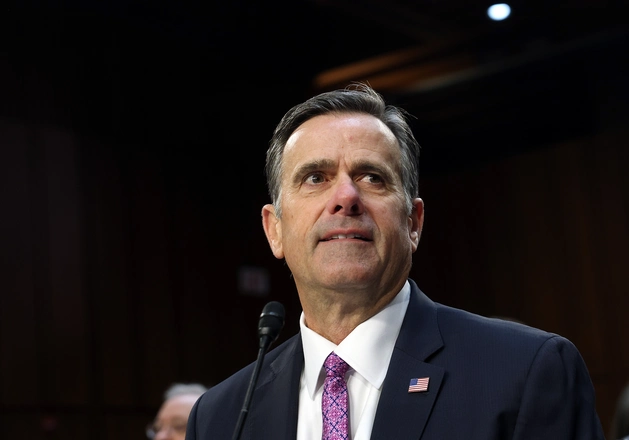
CIA Director John Ratcliffe has reportedly delivered a blunt warning to Moscow during a rare four-hour visit to Russia, urging the Kremlin to avoid any escalatory action against NATO’s Baltic members while simultaneously pressing Russia to halt military and economic support for Iran.
The highly sensitive mission reportedly centred on Estonia, Latvia and Lithuania — three former Soviet republics that are now members of NATO and enjoy the alliance’s collective-defence guarantee.
Two people familiar with the discussions said Ratcliffe’s primary message was aimed at preventing Russia from taking escalatory action against the Baltic states, amid growing concern in Washington and European capitals over Moscow’s intentions toward NATO’s eastern flank.
The warning carries enormous implications. Any Russian attack on Estonia, Latvia or Lithuania could potentially trigger NATO’s collective-defence mechanism and risk turning a regional confrontation into a direct conflict between Russia and the United States and its European allies.
But Ratcliffe reportedly had another demand for Moscow: stop strengthening Iran’s military capabilities.
A source familiar with the matter and a British official said Ratcliffe urged Russia to cut its military and economic support for Tehran, including the sharing of weapons and defence technology.
The British official also said the CIA director advised Moscow against overreacting to new sanctions.
U.S. concerns over the Russia-Iran relationship have intensified as Moscow has reportedly provided material capable of strengthening Iran’s drone arsenal. American officials have also raised concerns about possible Russian assistance that could improve Tehran’s ability to target U.S. military facilities and personnel in the Middle East.
The message from Washington, therefore, was reportedly two-pronged: do not test NATO in Europe and do not help Iran build the military capability to threaten American interests.
The secrecy surrounding Ratcliffe’s trip has added to the drama.
A U.S. C-17 military transport aircraft reportedly flew from Latvia to Moscow and later returned toward the Baltic region. The aircraft’s movements drew particular attention because Latvia was one of the countries reportedly at the centre of Ratcliffe’s discussions with Russian officials.
President Donald Trump has attempted to play down the significance of the visit, describing it as “semi-routine” and saying he would like to see the war in Ukraine brought to an end.
Yet the historical context surrounding the journey makes the episode particularly striking.
In late 2021, then-CIA Director William Burns travelled to Moscow and warned Russian President Vladimir Putin against invading Ukraine. Three months later, Russian forces launched their full-scale invasion.
Ratcliffe’s journey has consequently revived uncomfortable memories in Washington and across Europe.
The central concern now is whether the CIA chief was simply conducting high-level intelligence diplomacy — or delivering a warning based on intelligence indicating that Moscow could be considering another dangerous move.
Estonia, Latvia and Lithuania occupy a strategically critical position on NATO’s eastern frontier. All three were once part of the Soviet Union but joined NATO after regaining independence. Their membership has made the Baltic region one of the most sensitive potential flashpoints between Russia and the Western alliance.
For Moscow, the region is equally strategic, bordering Russia and lying close to the heavily militarised Kaliningrad exclave.
Any military confrontation there could rapidly escalate beyond the Baltic states themselves.
It could place Russian and NATO forces in direct combat and create one of the most dangerous military crises in Europe since the Cold War.
The Iran dimension makes Ratcliffe’s mission even more consequential.
Russia and Iran have significantly strengthened their strategic relationship, particularly in defence and security. Washington has become increasingly concerned that Russian assistance could give Tehran access to technologies, weapons and military expertise that could strengthen its ability to threaten U.S. forces and American allies.
Moscow has not publicly accepted the reported demands, and officials have provided only limited details about the intelligence discussions.
But the message reportedly delivered by Ratcliffe was unmistakably serious.
Washington is watching the Baltic frontier. It is watching Russia’s relationship with Iran. And it is warning Moscow against actions that could transform existing tensions into a much larger confrontation.
The last CIA director to personally carry a major warning to Moscow was William Burns.
Russia ignored that warning.
Three months later, tanks crossed into Ukraine.
Now another CIA director has travelled to Moscow carrying another warning.
The question hanging over Europe is whether this time the Kremlin will listen — or whether Ratcliffe’s four-hour mission will one day be remembered as another warning that Moscow chose to ignore.