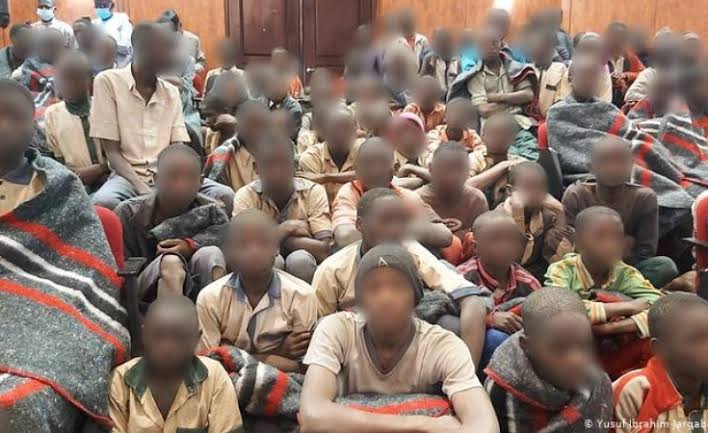
Nigeria recorded 7,825 abduction victims and at least 1,142 deaths during the latest reporting cycle, with the North accounting for 93.7 per cent of all people abducted, according to a security report.
The figures reveal a significant worsening of Nigeria’s kidnapping crisis, with 7,334 victims recorded across northern states compared with 491 in the South.
The report noted that the North’s share of all abducted persons stood at 93.7 per cent, while the South accounted for only 6.3 per cent.
Sokoto was among the worst-affected states, recording 179 kidnapping incidents involving 1,157 victims.
The report attributed the high number of abductions in the state to the presence of what it described as a “mixed multitude of actors” comprising bandits, very small kidnapping gangs and, importantly, the Islamist group Lakurawa.
Kaduna ranked fourth nationally, with 134 incidents involving 814 victims.
The figures indicate that kidnapping remains heavily concentrated in northern Nigeria, where communities continue to face threats from different criminal and armed groups operating across difficult-to-secure territories.
Beyond the number of victims, the report also documented ransom demands and payments across the country.
The Northeast recorded the highest ransom collection rate at 85.7 per cent, with the figure significantly influenced by the ransom associated with the Ngoshe case.
However, the report’s ransom figures are not limited to the North. Its assessment covers ransom demands and payments across Nigeria, with substantial differences recorded between the various regions.
The Southeast recorded the lowest collection rate at 1.3 per cent, while the South-South recorded 1.8 per cent.
The report explained that the amount initially demanded by kidnappers often differs considerably from the amount eventually paid by victims’ families.
Its methodology captures the first ransom demand made after kidnappers establish contact with the families of victims. According to the report, these initial demands are often extremely high before negotiations eventually bring the amount down to a figure considered acceptable by both sides.
The final amount paid can also be affected by the financial circumstances of victims’ families, while exceptional cases involving unusually large or small payments can distort the overall figures.
The report further noted that dwindling financial resources have, in some cases, resulted in families sweetening hostage-release negotiations with food and other items when they are unable to meet cash demands.
The kidnapping crisis was also accompanied by a high number of deaths.
At least 1,142 people were killed during the reporting period. Civilians accounted for 895 of those deaths, representing 78.3 per cent of the total.
The report also recorded the deaths of 179 kidnappers and 68 security personnel.
It described kidnapping for ransom as “a deadly business for nearly all participants,” highlighting the risks faced not only by victims and their families but also by security personnel and even members of criminal groups.
The latest figures represent a major increase compared with the previous reporting cycle.
During the previous cycle, 4,722 people were abducted, while 762 people were killed. Kidnappers reportedly demanded N48 billion in ransom but received N2.56 billion, representing a collection rate of 5.35 per cent.
The latest cycle therefore represents a 66 per cent increase in the number of people abducted and a 50 per cent increase in deaths.
Ransom payments also more than tripled compared with the previous cycle, while the ransom collection rate increased more than sixfold.
The latest figures paint a troubling picture of Nigeria’s security situation, particularly in the North, where nearly nine out of every ten recorded kidnapping victims were abducted.
The combination of rising abductions, increasing deaths and higher ransom payments underscores the continuing challenge faced by authorities in dismantling kidnapping networks and preventing criminal and extremist groups from exploiting vulnerable communities.
The figures also demonstrate the growing financial dimension of the kidnapping crisis, as families across the country continue to negotiate with abductors for the safe release of relatives while security agencies struggle to contain the threat.