United States President Donald Trump has categorically ruled out any prospect of a renewed ceasefire with Iran, delivering one of his most scathing attacks yet on the country’s leadership as tensions between Washington and Tehran threaten to plunge the Middle East deeper into instability.
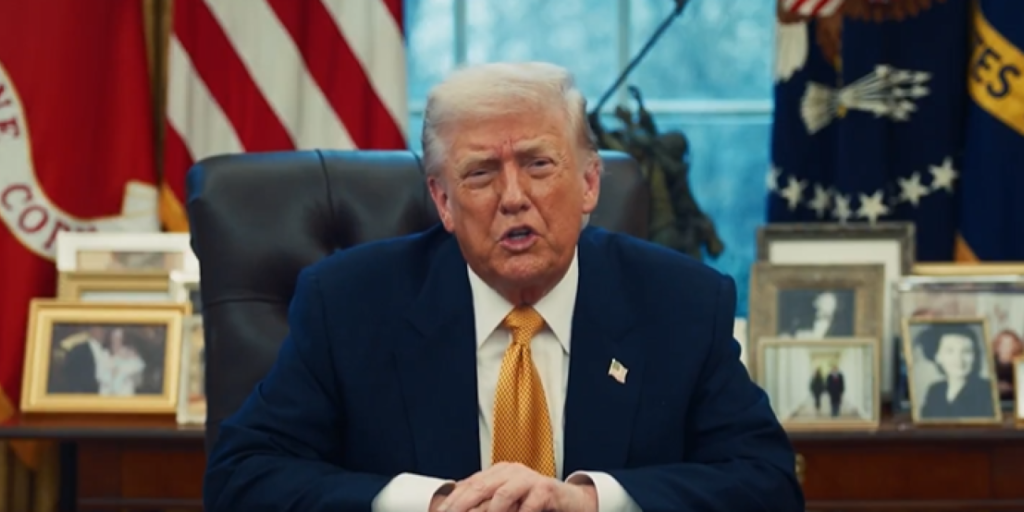
Speaking to reporters at the White House following high-level national security briefings, Trump declared that negotiations with Iran had effectively come to an end, insisting that he had no interest in reviving diplomatic engagement with a government he described as being run by “sick people.”
“I don’t want to talk to them. They are sick people. They’re scum. They’re led by sick people,” Trump said, dismissing calls from some international leaders for a return to negotiations after the collapse of a fragile ceasefire.
The remarks signal a significant hardening of the Trump administration’s position following weeks of escalating military confrontations between the United States and Iran, including American strikes on Iranian military and nuclear-related facilities and retaliatory missile attacks by Tehran on U.S. assets in the Gulf region.
The ceasefire, which had briefly raised hopes of preventing a wider regional war, unraveled after both sides accused each other of violating its terms. Washington maintained that Iran continued to sponsor attacks through allied militant groups and posed an unacceptable threat to regional security, while Tehran accused the United States of carrying out unlawful military aggression against its territory.
Trump insisted that the era of “temporary pauses” was over, arguing that the Iranian government had repeatedly demonstrated bad faith.
“We’re not looking for a ceasefire. We’re looking for something much bigger than a ceasefire,” he said, reiterating that his administration’s objective remained ensuring that Iran could never develop or possess a nuclear weapon.
The U.S. President further defended recent military operations against Iran, describing them as necessary measures to protect American interests and allies in the Middle East. He claimed the strikes had inflicted severe damage on Iran’s military capabilities, although Iranian officials have disputed the extent of the destruction.
Iranian authorities, meanwhile, condemned Trump’s comments as inflammatory and provocative, accusing Washington of sabotaging diplomatic efforts while violating international law through continued military attacks.
The renewed hostilities have triggered widespread international concern. The United Nations, the European Union, and several world leaders have repeatedly urged both nations to exercise restraint, warning that an expanded conflict could destabilise the entire Middle East, disrupt global oil supplies, and worsen an already fragile humanitarian situation across the region.
Security analysts say the latest collapse of diplomacy significantly raises the risk of prolonged confrontation, particularly as tensions continue to simmer around the Strait of Hormuz—the strategic waterway through which nearly one-fifth of the world’s oil passes. Any sustained military conflict in the area could have far-reaching consequences for global energy markets and international trade.
The latest escalation also comes against the backdrop of years of hostility between Washington and Tehran, marked by economic sanctions, proxy conflicts, disputes over Iran’s nuclear programme, and repeated military confrontations involving U.S. forces and Iran-backed groups across Iraq, Syria, Lebanon and Yemen.
Despite mounting international pressure for renewed dialogue, Trump’s latest remarks leave little indication that Washington is prepared to return to the negotiating table anytime soon. Instead, his administration appears determined to maintain maximum pressure on Tehran, even as fears grow that the region could be edging closer to another full-scale conflict.
The developments have dominated international headlines, with observers warning that unless diplomatic channels are urgently restored, the fragile security balance in the Middle East may deteriorate even further, carrying profound consequences not only for the region but for global peace and economic stability.