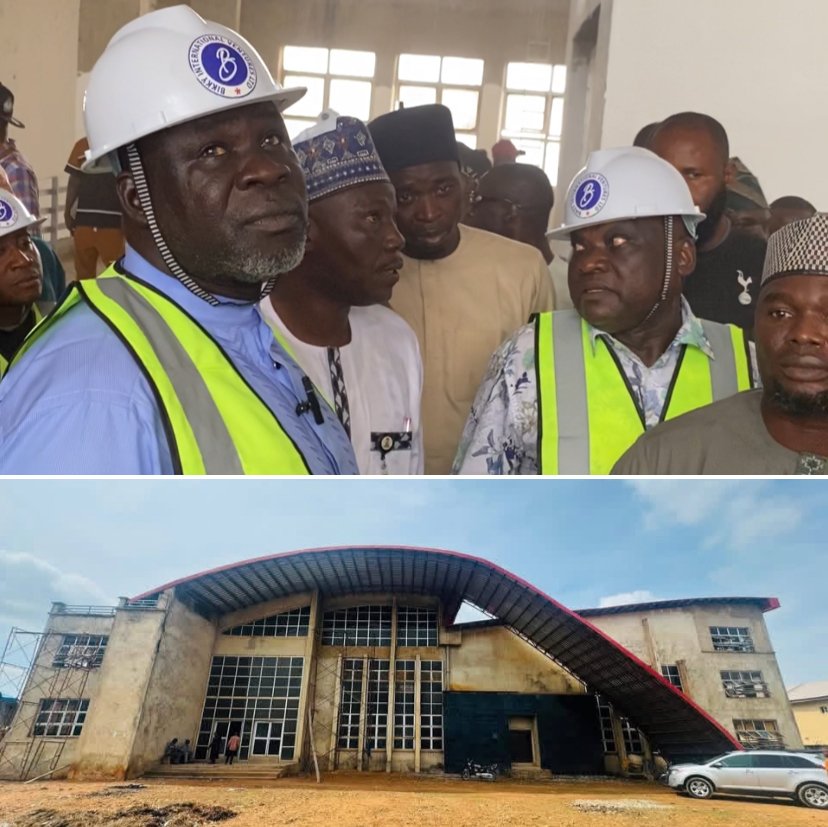
After spending more than 16 years as one of Gwagwalada’s most visible abandoned public projects, the Gwagwalada Town Hall is finally on course for completion following renewed efforts by the administration of the Chairman of Gwagwalada Area Council, Mohammed Kasim Ikwa.
The project, which has become a symbol of failed governance, abandoned contracts and policy discontinuity in the Federal Capital Territory (FCT), is now back under construction after years of neglect by successive administrations.
During an inspection of the project today, Chairman Kasim declared that his administration would not continue the culture of abandoning public infrastructure, insisting that every inherited project would be reviewed and completed where it is financially and technically feasible.
“There will be no abandoned project under this administration. We cannot continue to waste taxpayers’ resources by allowing public projects to rot away while the people suffer,” Kasim said during the inspection.
The Gwagwalada Town Hall project was initiated around 2010 during the administration of former Gwagwalada Area Council Chairman, Hon. Zakari Angulu Dobi, with the vision of providing a modern civic centre for government functions, community meetings, conferences, cultural events and public engagements.
However, despite the groundbreaking ceremony and public funds reportedly committed to the project, construction stalled before completion.
Following Dobi’s exit from office, the project passed through successive administrations, including the tenure of former chairman Adamu Mustapha Danze, popularly known as Obama, and two separate administrations led by former Chairman Abubakar Jibrin Giri (popularly known as Abu Giri).
Despite repeated promises over the years, the Town Hall remained abandoned, with no meaningful progress recorded, leaving the structure exposed to deterioration while residents watched one of the council’s biggest infrastructure projects decay.
The prolonged abandonment became a recurring source of public criticism and frustration among residents who questioned why successive administrations failed to complete a project that had already consumed significant public resources.
The neglect of the Town Hall did not go unnoticed.
Civil society organisations, including the Take It Back (TIB) Movement founded by human rights activist Omoyele Sowore, alongside other concerned Nigerians and community advocates, repeatedly demanded that the project be completed.
Their advocacy reportedly included protests, petitions to relevant authorities, public statements and sustained social media campaigns highlighting what they described as waste of public resources and lack of accountability over the abandoned facility.
The campaigns kept public attention on the project and intensified calls for transparency regarding government spending on the Town Hall.
Following his election as Chairman of the Gwagwalada Area Council earlier this year, Kasim made the abandoned Town Hall one of the priority infrastructure projects for his administration.
According to information obtained by ChroniclesReporters, one of the chairman’s first major interventions was to invite the contractor handling the project for discussions aimed at resolving the issues that had stalled construction for years.
After negotiations, both parties reportedly reached fresh terms that paved the way for construction to resume.
Work has since recommenced on the project, with engineers and contractors now back on site.
Sources familiar with the development said the administration has set an ambitious target of completing and opening the Town Hall within the next three months, provided work continues according to schedule.
Speaking during the inspection, Kasim described the Town Hall as a painful reminder of years of poor project management, policy inconsistency and lack of continuity in governance.
He stressed that public infrastructure must serve the people rather than become monuments to abandoned promises.
The chairman said ongoing technical assessments would determine the extent of work already executed and the additional resources required to deliver the project to an acceptable standard.
According to him, his administration is committed to restoring public confidence through accountability, strict project monitoring and continuity in governance.
“The people deserve to see value for every kobo spent. Public infrastructure must serve the people and not become monuments of abandoned promises,” he said.
The renewed activity at the Town Hall has generated optimism among residents, many of whom say they had almost given up hope of ever seeing the project completed.
Some residents who accompanied the chairman during the inspection described the development as a significant step towards correcting years of neglect and ensuring that taxpayers finally benefit from an investment that had remained idle for over a decade.
If completed within the projected timeline, the Gwagwalada Town Hall would finally provide the council with a functional civic centre for official events, stakeholder engagements and community activities, ending more than sixteen years of uncertainty surrounding one of the area’s most controversial abandoned public projects.