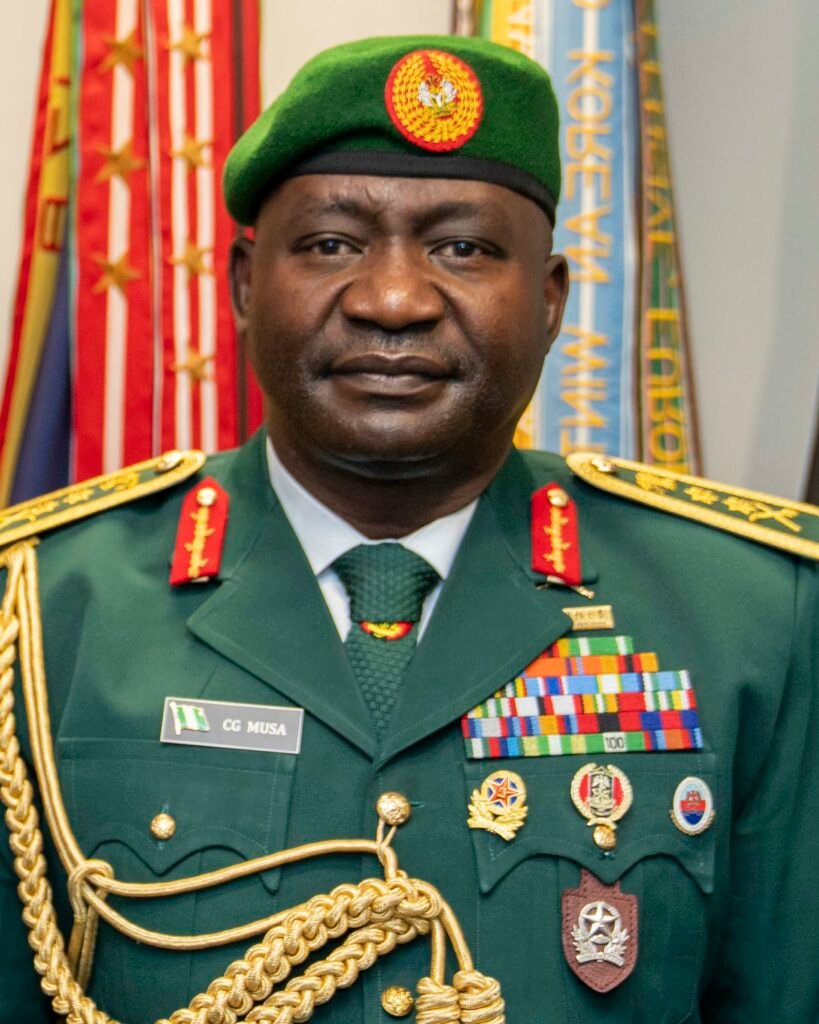
Nigeria’s Minister of Defence, General Christopher Gwabin Musa (Rtd), has identified local informants and suppliers as some of the greatest obstacles to the nation’s fight against terrorism, banditry and kidnapping, warning that criminal groups continue to thrive because of support networks embedded within communities.
Musa said terrorists and bandits rely heavily on collaborators who provide intelligence, food, fuel, logistics and information on security operations, enabling them to evade military offensives and sustain their campaigns of violence across the country.
The Defence Minister noted that despite intensified military operations that have led to the elimination of numerous insurgents, destruction of camps and recovery of weapons, the battle against insecurity remains complicated by individuals who secretly aid criminal elements for financial gain and other motives.
According to him, no terrorist network can survive for long without a steady flow of information and supplies, stressing that the hidden network of collaborators often poses as much danger as the gunmen themselves.
He urged Nigerians to regard security as a collective responsibility and called on communities to expose those assisting terrorists, bandits and kidnappers, emphasizing that timely intelligence remains one of the most effective weapons in modern security operations.
Musa warned that as long as criminal groups continue to receive assistance from informants and suppliers, efforts to restore peace and stability will face significant challenges.
His remarks come amid ongoing military offensives across several parts of the country, particularly in regions plagued by insurgency, banditry and mass abductions.
The minister’s warning has once again drawn attention to what security experts describe as the invisible infrastructure of terror — the network of informants, financiers and suppliers whose support enables violent groups to remain operational despite sustained military pressure.
For many Nigerians, the message was clear: defeating terrorism requires not only confronting gunmen on the battlefield but also dismantling the shadowy networks that keep them alive.