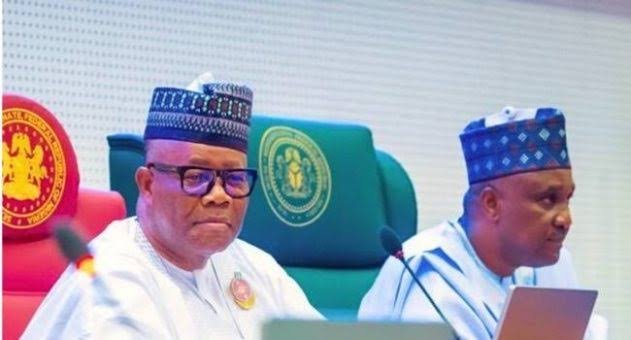
The Socio-Economic Rights and Accountability Project (SERAP) has issued a seven-day ultimatum to Senate President Godswill Akpabio and Speaker of the House of Representatives Tajudeen Abbas, demanding immediate refund of all monies, allowances, and benefits linked to the controversial N110 billion lawmakers’ vehicle procurement and support scheme, following a Federal High Court judgment that declared the expenditure unlawful.
SERAP, a leading anti-corruption watchdog Socio-Economic Rights and Accountability Project, said the lawmakers must ensure full restitution of funds already disbursed, insisting that no public official should be allowed to retain benefits derived from spending already adjudged to have breached procurement laws, constitutional provisions, and public trust.
The demand is anchored on the ruling of the Federal High Court in Lagos in Suit No. FHC/L/CS/1606/2023, delivered by Justice Yellim Bogoro, which found that the National Assembly’s expenditure of N40 billion on 465 official vehicles and an additional N70 billion in “support allowances” for newly elected legislators violated due process, procurement regulations, and constitutional standards of accountability.
In a letter dated June 20, 2026, signed by SERAP deputy director Kolawole Oluwadare, the organisation stated that the judgment creates both a legal and moral obligation for immediate restitution, arguing that failure to recover the funds would amount to legitimising unlawful enrichment at the expense of Nigerian taxpayers.
“Flowing from Justice Bogoro’s judgment, there must be consequences and full restitution for the lawmakers’ failure to comply with their constitutional and statutory obligations, particularly in relation to the unlawful expenditure of the N110 billion, as found by the Court,” the letter read.
SERAP further warned that allowing lawmakers to retain benefits arising from what has now been declared unlawful expenditure would weaken public confidence in democratic institutions and directly contradict constitutional commitments to eliminate corruption and abuse of power.
The organisation stressed that restitution is not optional but essential, adding that where public funds are spent in breach of procurement laws and constitutional safeguards—especially in cases involving self-interest and conflicts of duty—the rule of law requires reversal and full accountability.
Although the court judgment did not explicitly order a refund of the N110 billion, SERAP maintained that it provides sufficient legal foundation for restitution when read alongside Nigeria’s Constitution, anti-corruption statutes, and international obligations on transparency and governance.
SERAP also called on the leadership of the National Assembly to urgently establish strict oversight mechanisms to prevent future abuses, including ensuring that all procurement and public spending processes comply with due process, transparency, and value-for-money principles.
It further demanded the institutionalisation of public hearings on the National Assembly’s budget during every budget cycle, alongside proactive publication of detailed expenditure reports to enhance accountability and restore public trust in legislative governance.
“If these demands are not met within seven days of receipt or publication of this letter, SERAP will take appropriate legal action against Mr Akpabio, Mr Abbas, and other responsible lawmakers to ensure recovery of the funds,” the organisation warned.
SERAP maintained that the court’s findings of self-dealing, conflict of interest, and disregard for public interest leave no room for discretionary retention of the contested benefits, insisting that accountability must now follow judicial determination.