The Nigerian Army has concluded plans to recruit and train an additional 28,000 personnel in one of the most ambitious manpower expansion drives in recent years, as authorities intensify efforts to confront the country’s deepening security crisis and restore stability across troubled regions.
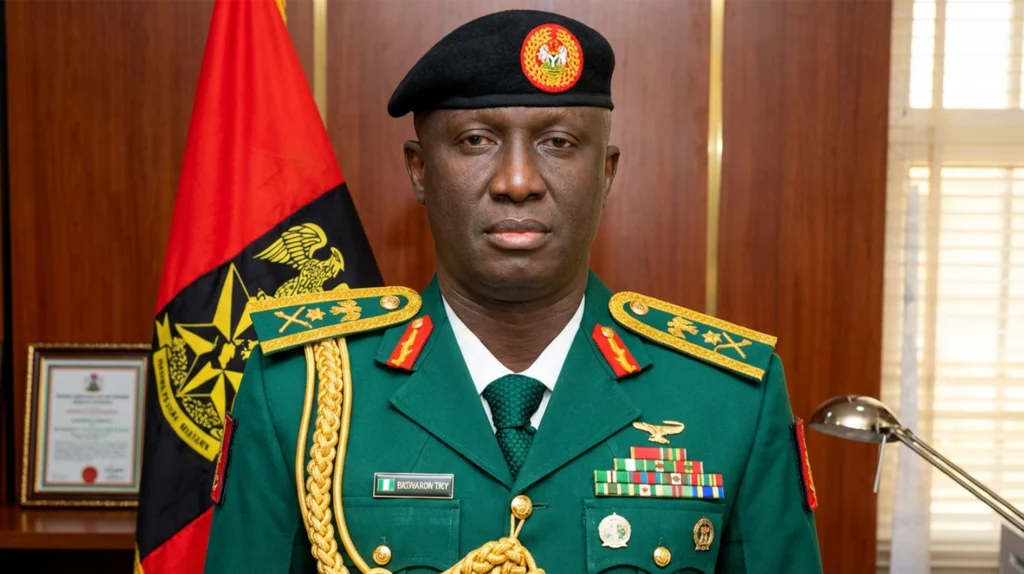
The Chief of Army Staff (COAS), Lieutenant General Waidi Shaibu, announced the initiative on Friday during a press conference ahead of the 163rd Nigerian Army Day Celebration (NADCEL 2026), declaring that the military was expanding its force structure, improving deployment strategies and embracing modern technology to tackle evolving security threats nationwide.
Represented by the Chief of Policy and Plans (Army), Major General Bamidele Alabi, the Army Chief said manpower remained a critical pillar of military effectiveness, stressing that no amount of sophisticated equipment could substitute for adequately trained personnel in the battle against insurgency, banditry, kidnapping and other forms of organised violence.
According to him, the Army has established a new training depot at Amasiri Edda, Ebonyi State, bringing the total number of recruit-training institutions to three and creating the capacity to absorb thousands of additional recruits into military service.
“We are also improving our deployment strategies and employing modern technology as a force multiplier in our efforts to quickly degrade all forms of criminality across the country,” Shaibu stated.
Emphasising the strategic importance of the expansion, he added: “Manpower is as important as the equipment required to fight insecurity. To this end, we have expanded our recruitment scope by establishing another training depot at Amasiri Edda, making it the third institution to train able-bodied civilians for the Nigerian Army.
“With this action, the Nigerian Army is expected to recruit and train an additional 28,000 troops to help stem the tide of insecurity across the country.”
The planned recruitment comes at a time when Nigeria continues to grapple with multiple security challenges, including the Boko Haram and ISWAP insurgency in the North-East, rampant banditry and mass kidnappings in the North-West, violent attacks in the North-Central region, separatist agitations in the South-East and crude oil theft in the Niger Delta.
Lieutenant General Shaibu maintained that the Nigerian Army remains firmly committed to denying criminal and subversive elements freedom of operation while ensuring that all military activities are conducted in strict adherence to the rules of engagement, international humanitarian law and constitutional provisions protecting human rights.
According to him, troops deployed across various theatres of operation have continued to record successes against terrorists, bandits, kidnappers, separatist groups and other non-state actors threatening the country’s peace, sovereignty and territorial integrity.
Beyond expanding personnel strength, the Army Chief disclosed that the Service has continued to establish additional brigades and operational units while constantly reviewing its force structure to bridge identified gaps and respond more effectively to emerging threats.
He further revealed that the Army has strengthened its combat capabilities through the acquisition and induction of modern platforms, advanced force multipliers and strategic partnerships aimed at improving operational effectiveness and battlefield readiness.
The military leadership, he said, has also prioritised the welfare of officers and soldiers under what he described as a “Soldier-First” culture, which places the well-being of personnel and their families at the centre of operational planning and institutional reforms.
According to Shaibu, troop welfare remains a fundamental requirement for maintaining morale, professionalism and combat effectiveness, particularly in the face of increasingly complex security challenges confronting the nation.
The Army has also institutionalised measures to honour acts of bravery and preserve the memories of fallen heroes, while simultaneously embarking on extensive infrastructure projects across formations and units nationwide as part of broader efforts to improve living and working conditions for personnel.
Reaffirming the military’s commitment to human rights and the rule of law, the Army Chief insisted that soldiers would continue to carry out their constitutional responsibilities within the boundaries of both domestic and international legal frameworks governing armed conflicts.
“Accordingly, we shall continue to discharge our constitutional duties in tandem with the rules of engagement, with respect for all aspects of human rights as enshrined in the Constitution of the Federal Republic of Nigeria, as well as other international principles and guidelines,” he said.
Despite the increasingly dynamic nature of Nigeria’s security environment, Shaibu expressed confidence in the Army’s ability to adapt, modernise and sustain its constitutional mandate of protecting the nation and its citizens.
He noted that the forthcoming 163rd Nigerian Army Day Celebration would serve not only as an opportunity to showcase the Service’s operational achievements but also to honour fallen heroes and reaffirm its unwavering commitment to defending Nigeria’s sovereignty and territorial integrity.
The large-scale recruitment initiative is widely seen as part of broader efforts by the Federal Government to strengthen the country’s security architecture amid growing public concerns over persistent attacks by terrorists, bandits and other armed groups despite years of military operations and increased defence spending.