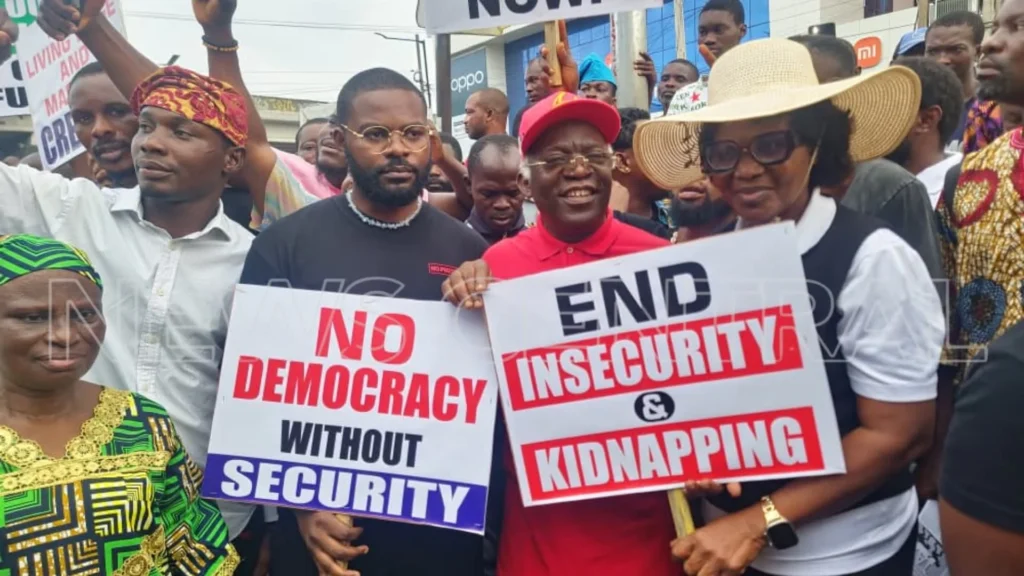
Democracy Day in Lagos on Friday was marked by a wave of protest as human rights lawyer Femi Falana (SAN), his son and activist artiste Falz, and members of the Take-It-Back Movement joined hundreds of demonstrators in a coordinated march against insecurity, economic hardship and what they described as worsening governance failures in Nigeria.
The protest, which drew civil society organisations, youth groups, labour activists and pro-democracy campaigners, saw participants take to major streets across the city carrying placards with inscriptions such as “End Hunger Now,” “Stop Insecurity,” and “Democracy Must Work for the People.”
Prominent among the mobilising forces was the Take It Back Movement, which has consistently positioned itself at the forefront of nationwide demonstrations demanding accountability, transparency and improved living conditions for citizens.
The presence of Falana, a veteran advocate of civil liberties, alongside Falz—who gained widespread recognition for his outspoken role during the #EndSARS protests—added renewed attention and energy to the procession as chants of frustration and demands for reform echoed through Lagos streets.
Protesters accused authorities of failing to address rising insecurity, citing persistent cases of kidnappings, banditry and violent attacks across different parts of the country. They also decried soaring food prices, unemployment and inflation, which they said have pushed millions of Nigerians into deeper hardship.
Addressing the crowd, Falana maintained that Democracy Day should not be reduced to ceremonial observance, stressing that democracy must be measured by the welfare, safety and dignity of citizens. He called for urgent reforms to tackle insecurity and economic decline.
Falz stood in solidarity with the protesters, joining chants and expressing support for calls demanding accountability and better governance, as demonstrators insisted that democratic rule must translate into real-life improvements for ordinary Nigerians.
Security operatives were seen monitoring the procession as it moved through designated routes, with the protest largely peaceful despite its strong messages against government policies and performance.
The Lagos march reflected similar sentiments expressed in other parts of the country, underscoring growing public concern over economic distress and insecurity as Nigeria marked another Democracy Day anniversary.
Organisers maintained that the struggle was not against democracy itself, but for a system that delivers security, justice and economic relief to the people it is meant to serve.