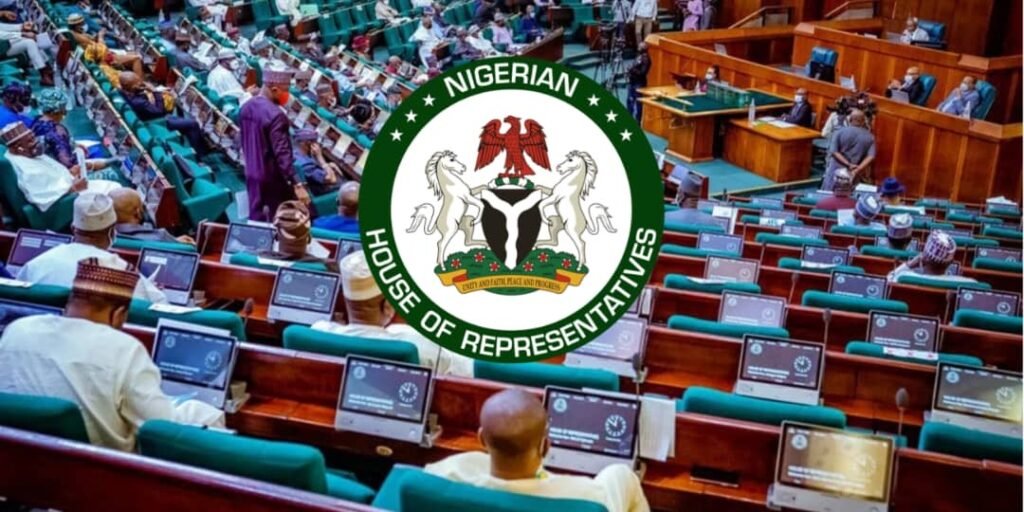
A dramatic confrontation unfolded on the floor of the House of Representatives on Thursday after allegations emerged that some opposition lawmakers were offered $50,000 each to support the emergence of Ikenga Imo-Ugochinyere as Minority Leader-designate.
The controversy triggered a heated and chaotic session during plenary as lawmakers exchanged sharp words over claims of bribery and the authenticity of signatures attached to a letter endorsing Ugochinyere for the minority leadership position.
The tension escalated when Deputy House Spokesperson, Philip Agbese, raised a point of order, alleging that his signature had been fraudulently included among lawmakers who endorsed Ugochinyere’s candidacy.
Agbese told the House that he never consented to the endorsement and demanded a thorough investigation into the circumstances surrounding the document, insisting that the integrity of the legislature must be protected from any form of manipulation or forgery.
His allegation immediately sparked outrage across the chamber, dividing lawmakers along party lines and provoking a shouting match that disrupted proceedings.
Members of the ruling All Progressives Congress (APC) swiftly called for Ugochinyere to be referred to the House Committee on Ethics and Privileges for investigation, arguing that the allegations were serious enough to warrant immediate disciplinary scrutiny.
However, opposition lawmakers resisted the move, maintaining that no action should be taken against Ugochinyere without first allowing him the opportunity to respond to the accusations publicly.
Despite repeated attempts by Speaker Tajudeen Abbas to restore calm, lawmakers continued trading accusations and counter-accusations, turning the session into one of the most turbulent moments witnessed in the chamber in recent months.
Following sustained pressure from both sides, the Speaker eventually permitted Ugochinyere to address the House.
Responding to the allegations, the lawmaker dismissed the claims against him and insisted that Agbese was among the 61 lawmakers who endorsed his emergence as Minority Leader-designate.
Ugochinyere further stated that evidence would be produced at the appropriate time to demonstrate that Agbese personally signed the endorsement register.
He also questioned the intense interest shown by members of the ruling APC in what he described as an internal matter of the minority caucus, arguing that the process leading to his endorsement complied fully with parliamentary procedures and established democratic norms.
While maintaining his innocence, Ugochinyere pledged to comply with the Speaker’s directive that the matter be handled internally pending further review.
As demands intensified for the immediate referral of the matter to the Ethics and Privileges Committee, Speaker Abbas ruled that the allegations would be examined in line with the House’s established procedures and rules.
The crisis followed the formal submission of a letter endorsing Ugochinyere as Minority Leader-designate. The document, reportedly signed by 61 out of the 81 minority lawmakers in the House, was presented to the Speaker earlier on Thursday for official recognition.
The leadership tussle emerged in the wake of the resignation of former Minority Leader Kingsley Chinda, a longtime ally of the Minister of the Federal Capital Territory, Nyesom Wike.
Chinda formally stepped down after defecting from the Peoples Democratic Party (PDP) to the APC following his emergence as the APC governorship candidate in Rivers State.
His resignation was officially announced during Tuesday’s plenary session when Speaker Abbas read a letter informing the House of Chinda’s decision to leave the PDP.
Thursday’s dramatic proceedings have now cast a shadow over the process of selecting a new minority leadership team, with lawmakers awaiting the outcome of any investigation that may determine the authenticity of the disputed endorsements and the validity of the bribery allegations.
The unfolding controversy has further exposed growing tensions within the opposition bloc while raising fresh concerns about transparency, internal democracy, and political influence in the leadership structure of the House of Representatives.