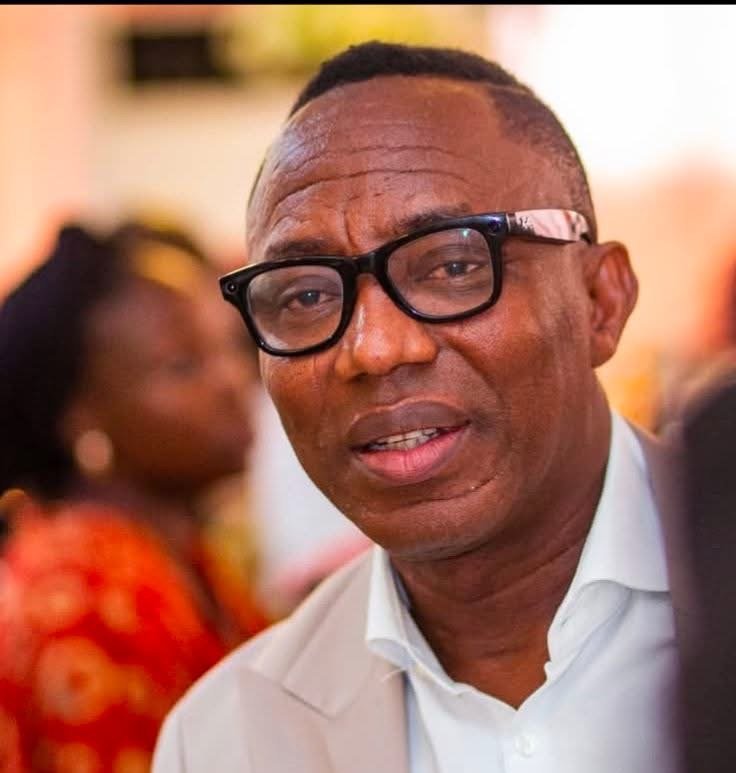
There was palpable tension at the Federal High Court, Abuja, on Thursday as Justice Mohammed Umar ordered human rights activist and former presidential candidate, Omoyele Sowore, to immediately commence his defence in the alleged defamation and cyberbullying case instituted by the Department of State Services (DSS) on behalf of President Bola Ahmed Tinubu.
The proceedings took a dramatic turn after the prosecution informed the court that the Chief Judge had declined Sowore’s request seeking the reassignment of the matter to another judge over allegations of bias.
At the previous sitting, Justice Umar had suspended further proceedings and adjourned the matter to allow the court receive and consider the decision of the Chief Judge regarding Sowore’s petition challenging the continued handling of the case by the trial judge.
When the matter resumed on Thursday, counsel to the DSS, Akinlolu Kehinde, disclosed that the prosecution had received an official communication from the office of the Chief Judge rejecting the request for transfer of the case.
Relying on the communication, the prosecution urged the court to proceed with the trial and direct the defendant to open his defence without further delay. Justice Umar aligned with the position of the prosecution and insisted that the matter should continue on a day-to-day basis.
The judge further warned that failure by Sowore to commence his defence could compel the court to foreclose his right to do so, a position that immediately generated concern within the defence team.
Sowore’s counsel subsequently sought an adjournment until after the annual court vacation, arguing that adequate time was required for the preparation of the defence. The request, however, was not granted.
The court instead adjourned the matter to Friday, June 5, 2026, with Justice Umar maintaining that proceedings must continue without unnecessary delay.
Sources present during the proceedings observed that the atmosphere in court became increasingly tense as arguments over fair hearing, judicial discretion and constitutional rights dominated discussions between both parties.
A letter dated May 22, 2026, and signed by Joshua Ibrahim Aji, Special Assistant to the Honourable Chief Judge, reportedly conveyed the decision of the Chief Judge after considering submissions from both the defendant and the prosecution regarding the request for reassignment of the case.
Reacting to the development, Sowore’s lawyer, Abubakar Marshal, expressed dissatisfaction with the court’s position, insisting that the constitutional rights of the defendant must remain paramount throughout the proceedings.
According to him, Section 36 of the Constitution guarantees every accused person adequate time and facilities to prepare a defence, warning that any attempt to rush the process could undermine the principles of fair hearing and justice.
He argued that the court’s decision suggested an unwillingness to provide the defendant sufficient opportunity to adequately prepare his case, stressing that criminal proceedings must not create the impression of a predetermined outcome.
Marshal further clarified that the application challenging the conduct of the trial had not been completely dismissed, noting that the Chief Judge merely directed that the issue be formally presented before the trial court in line with legal procedure, thereby preserving the right of any dissatisfied party to seek appellate intervention.
The defence lawyer stated that Sowore’s legal team would carefully review the court’s ruling and explore all lawful options available to protect the constitutional rights of the defendant as the trial progresses.
The case has continued to attract significant public attention, with observers closely monitoring the legal battle amid growing debates over freedom of expression, judicial independence and the protection of constitutional rights in Nigeria’s democratic system.