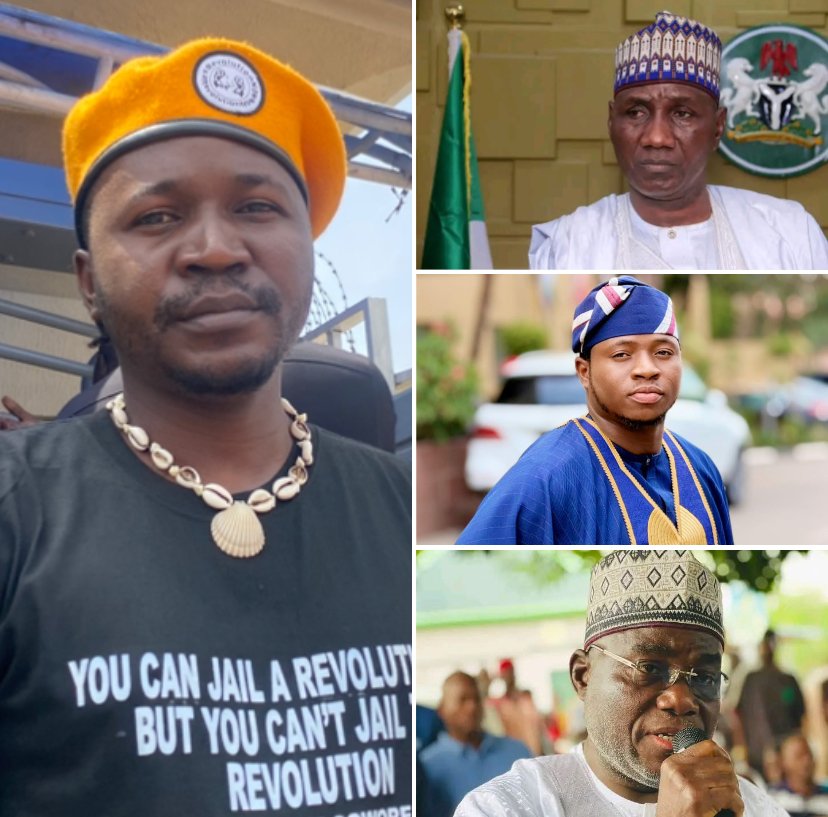
There was a time when the name Zakari Angulu echoed across Gwagwalada like that of a political messiah. Supporters lifted him above criticism, celebrated his influence, and defended him with fierce loyalty whenever questions were raised about his political decisions or leadership direction.
But according to Manasseh B.P, the recent political reactions surrounding Angulu only expose a deeper problem in Gwagwalada’s political culture — selective outrage and blind loyalty.
Speaking during an interaction with journalists over recent controversies surrounding political alignments in the area council, Manasseh stated that he had previously faced threats of lawsuits after publishing articles critical of Zakari Angulu, especially during periods when many saw the political figure as untouchable.
According to him, the same individuals who once praised Angulu endlessly are now attacking him because of his support for Usman Yahaya the Kano man they claim to reject, revealing what he described as “politics driven by emotions instead of principles.”
“Imagine if Zakari Angulu didn’t support Usman Yahaya,” Manasseh said. “The same people criticizing him today would still be singing his praises everywhere.”
The activist also referenced similar experiences involving Abu Giri, noting that when he criticized the political leadership at the time, many residents remained silent out of fear or political loyalty.
“When I spoke against Abu Giri’s leadership, I was insulted and attacked and even reminded at Kuje correctional center. Many people could not even come out boldly because their loyalty was tied to the leadership and not to the people,” he added.
Manasseh maintained that while Gwagwalada is rapidly developing and experiencing visible growth, leadership should never be judged solely by political alliances or praise campaigns.
“Gwagwalada is a fast-developing town, and in no time the changes here will be unimaginable. But we must admit that many leaders and their appointees have failed the people in several areas. Leadership is a continuous process. That is why we must push for people-oriented policies, not policies designed for the benefit of a few groups.”
Addressing questions surrounding his interaction with Nurudeen Angulu, son of Zakari Angulu, the Chronicles Reporters contributor clarified that the meeting was not politically motivated but strictly journalistic.
“I met Nurudeen Angulu because he chose to come with facts to defend claims against his father. Journalism is not built on emotions. A newspaper carries stories for the truth, not for anybody’s personal feelings,” he said.
Manasseh further explained that as a contributor within a registered newspaper structure, editorial decisions are guided by professional processes involving boards, editors, and writers.
“I do not have absolute control over a registered newspaper platform that has editors, writers, and a board. Our responsibility is to report facts and allow the public to make informed judgments.”
The comments have continued to generate debate among political observers in Gwagwalada, especially as conversations around accountability, loyalty, and leadership succession intensify ahead of future political developments in the area council.
For many residents, the controversy surrounding Zakari Angulu may no longer just be about one political figure, but about whether Gwagwalada’s evolving political consciousness is finally beginning to shift from personalities to policies.