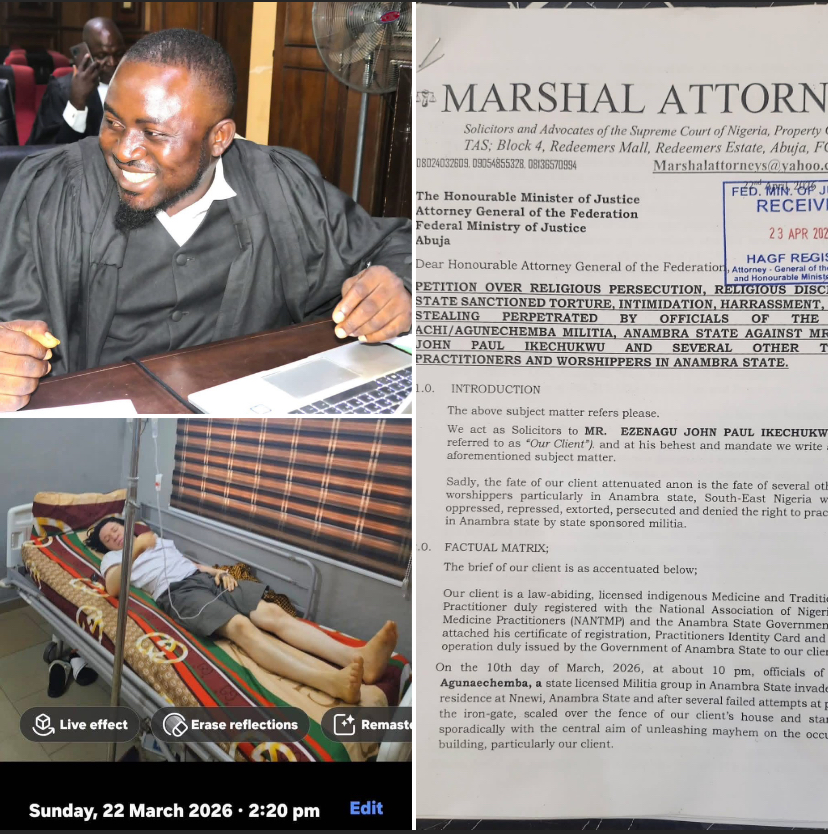
A fresh storm of controversy has erupted in Anambra State following explosive allegations that the administration of Charles Chukwuma Soludo is complicit in what critics describe as a systematic clampdown on adherents of traditional religion, an action now being framed as unconstitutional, oppressive, and dangerously divisive.
In a strongly worded Facebook statement that has begun to gain traction among civil rights circles, legal practitioner Barrister Marshal Abubakar condemned what he termed an “ignoble assault” on freedom of belief, pointing fingers at a state-backed militia group known as Agunechemba.
According to him, the group has allegedly been emboldened by state policy to harass, arrest, and detain individuals practicing indigenous spirituality across parts of the state.
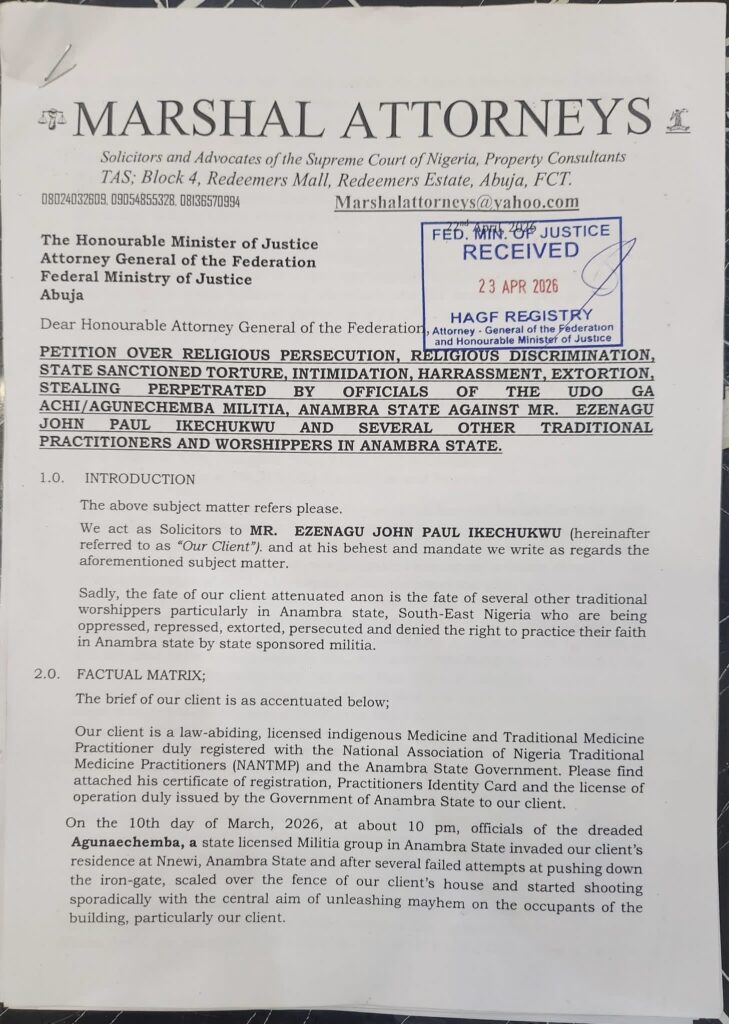
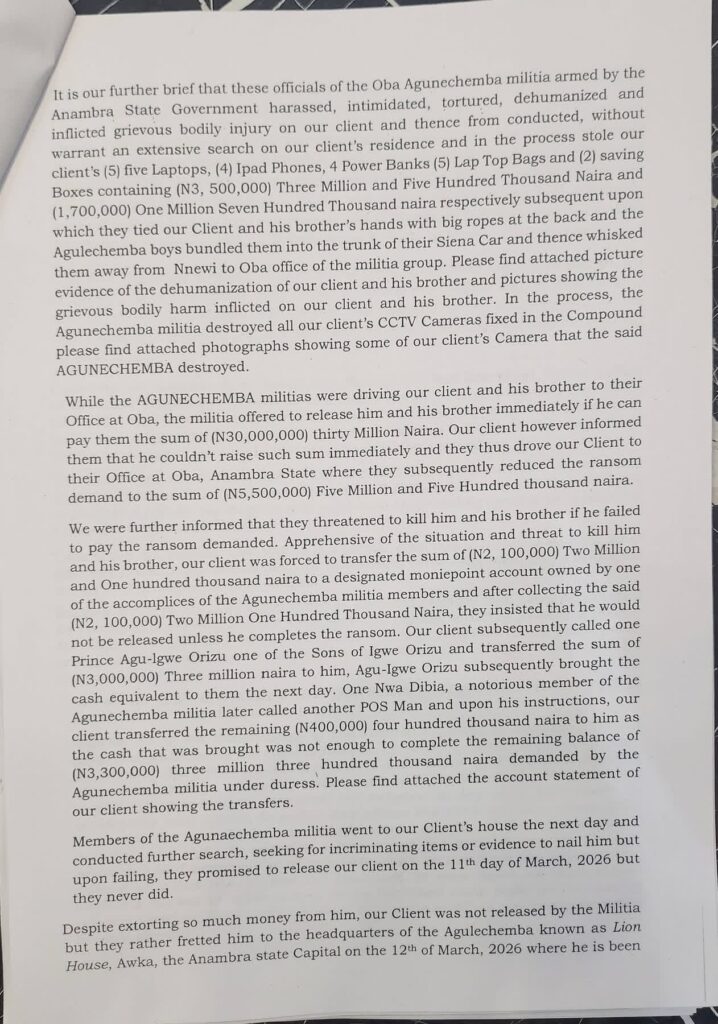
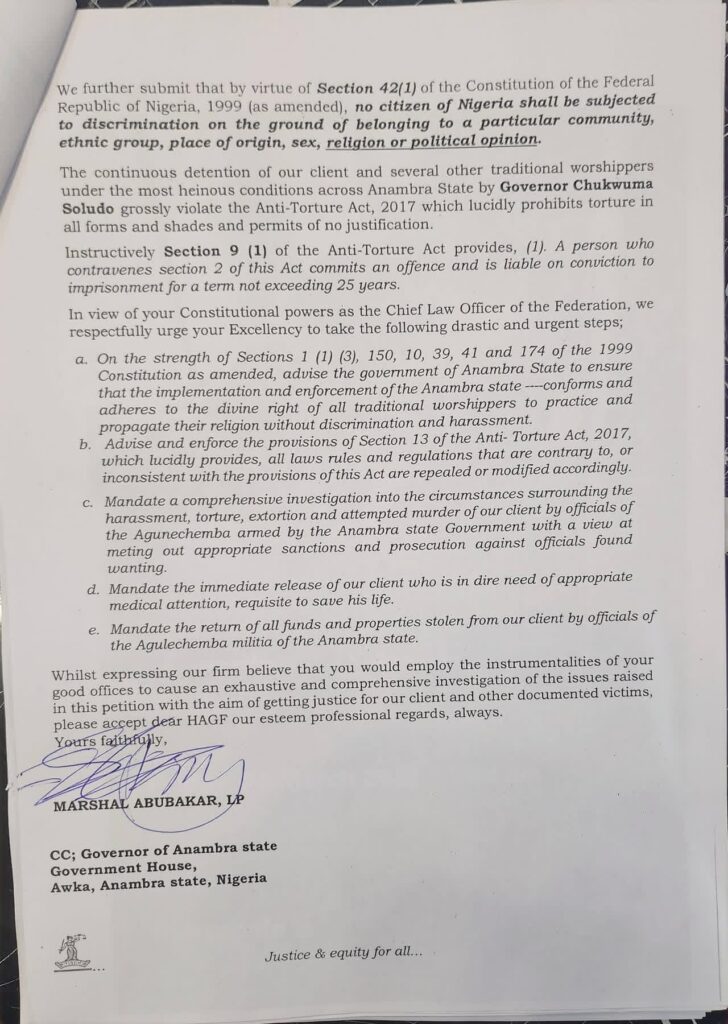
At the center of the controversy is the continued detention of one Ezenagu John Paul Ikechukwu, alongside several others described as traditional worshippers. Their arrest, Abubakar argues, is not just a violation of human dignity but a direct assault on Nigeria’s constitutional framework.
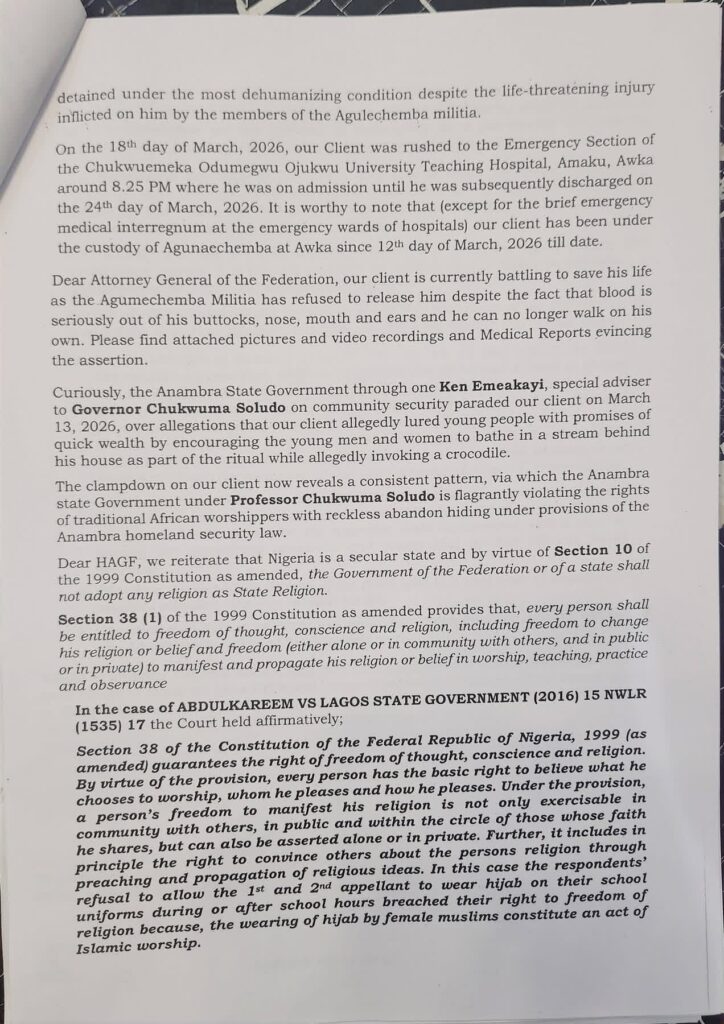
Citing Section 10 of the 1999 Constitution (as amended), he emphasized that no government—federal or state—has the authority to adopt or promote any religion as state doctrine. He further referenced Section 38, which guarantees every Nigerian the fundamental right to freedom of thought, conscience, and religion, including the right to practice and propagate one’s beliefs publicly or privately.
The legal argument did not stop there. Abubakar anchored his position on judicial precedent, referencing the case of AbdulKareem v. Lagos State Government (2016) 15 NWLR (1535) 17 to reinforce the sanctity of religious freedom under Nigerian law.
Beyond constitutional breaches, the situation is also being framed as a human rights emergency. The continued detention of the accused individuals, he argued, contravenes multiple provisions of the law, including Sections 1, 10, 38, 42, and 174 of the Constitution, as well as Sections 1, 9, and 13 of the Anti-Torture Act 2017—legislation specifically enacted to protect citizens from cruel, inhuman, and degrading treatment.
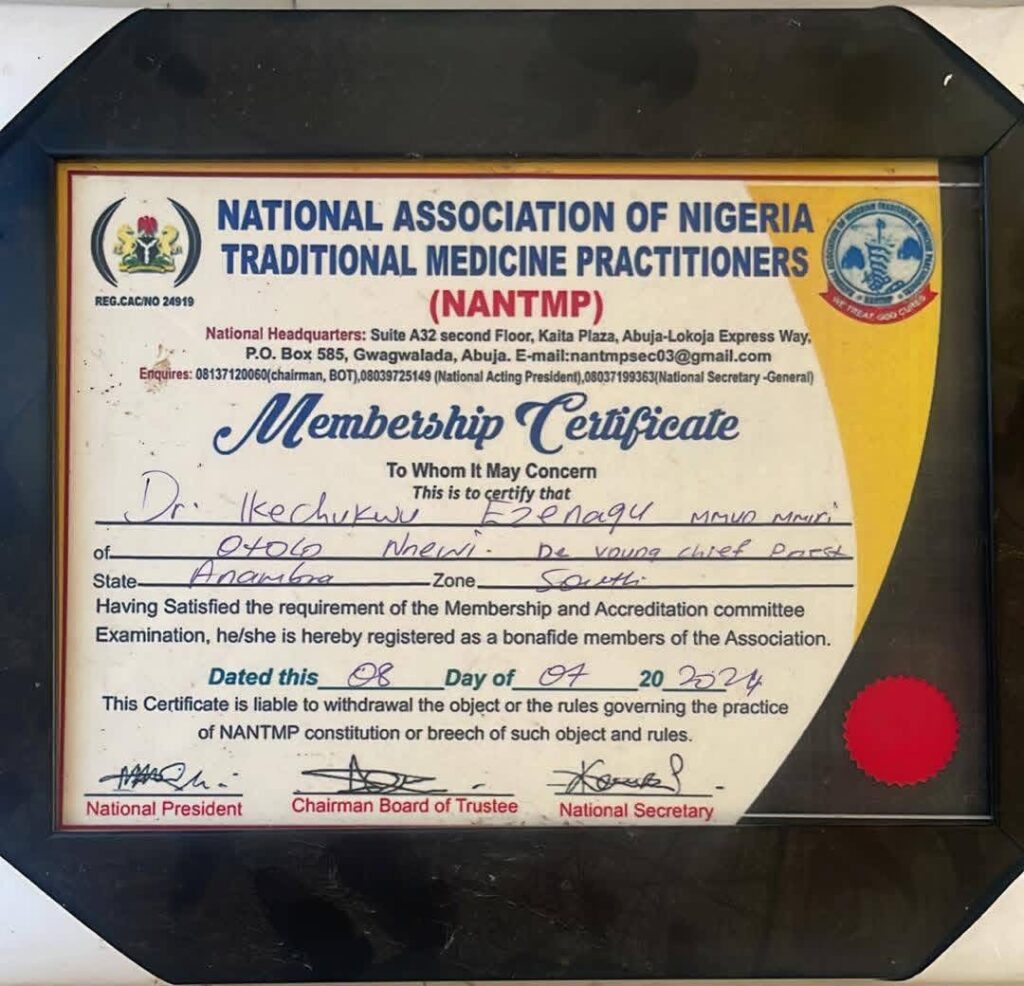
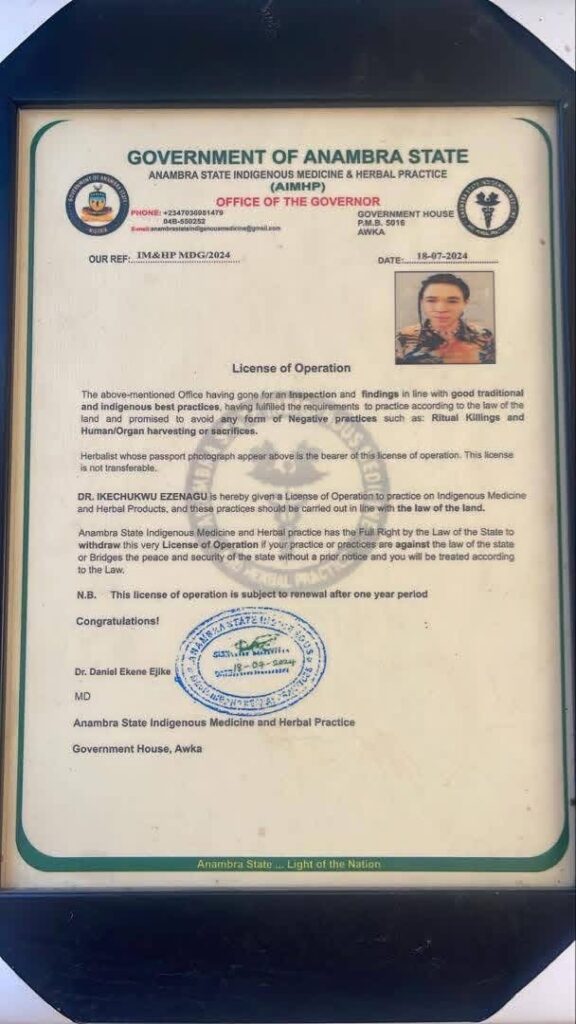



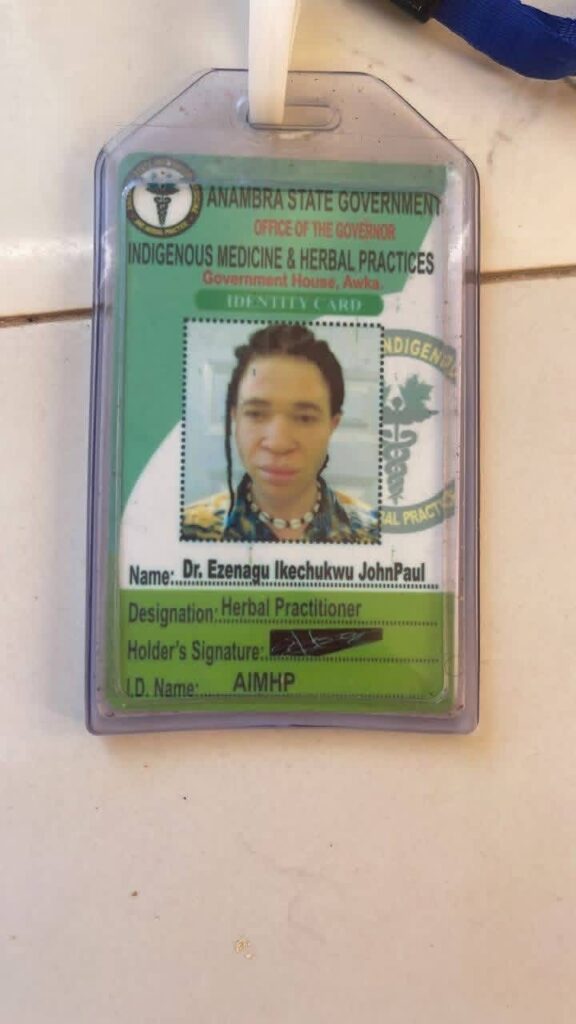
The implications of these allegations are far-reaching. Observers warn that if left unchecked, the situation could ignite deeper socio-religious tensions in a region already grappling with insecurity and political distrust. For many, the crackdown represents not just a policy failure but a dangerous precedent that could embolden similar actions in other states.
Barrister Abubakar, in his closing remarks, issued a direct and uncompromising demand: the immediate and unconditional release of Ezenagu John Paul Ikechukwu and all others allegedly detained for practicing their traditional beliefs.
As of press time, the Anambra State Government has yet to issue an official response to the growing backlash. However, pressure continues to mount, with civil society groups, legal analysts, and religious stakeholders now watching closely.
For a nation built on constitutional democracy and pluralism, the unfolding events in Anambra may well become a defining test of Nigeria’s commitment to religious freedom or a troubling signal of its erosion.