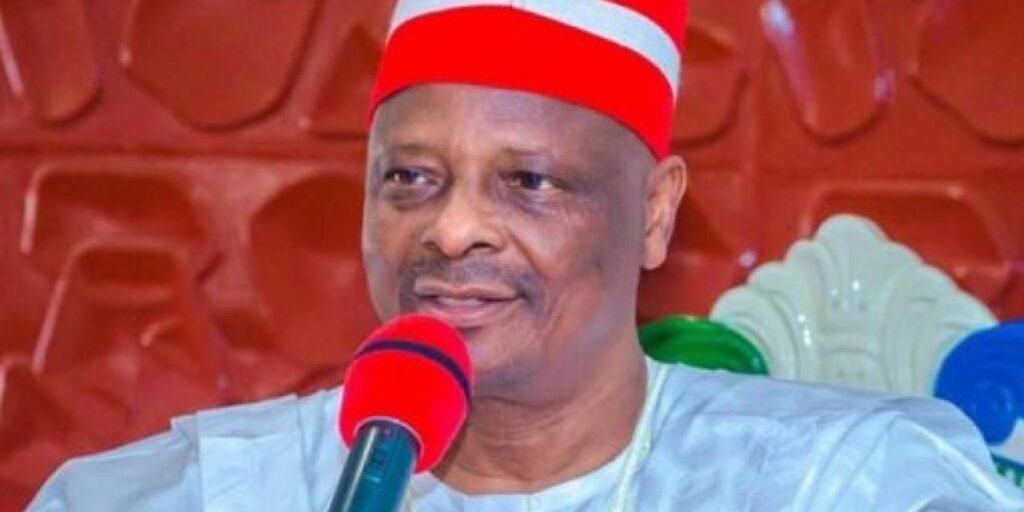
Former Kano State governor, Rabiu Musa Kwankwaso, has announced his resignation from the New Nigeria People’s Party (NNPP), citing the need for what he described as a “strategic realignment” in Nigeria’s changing political environment.
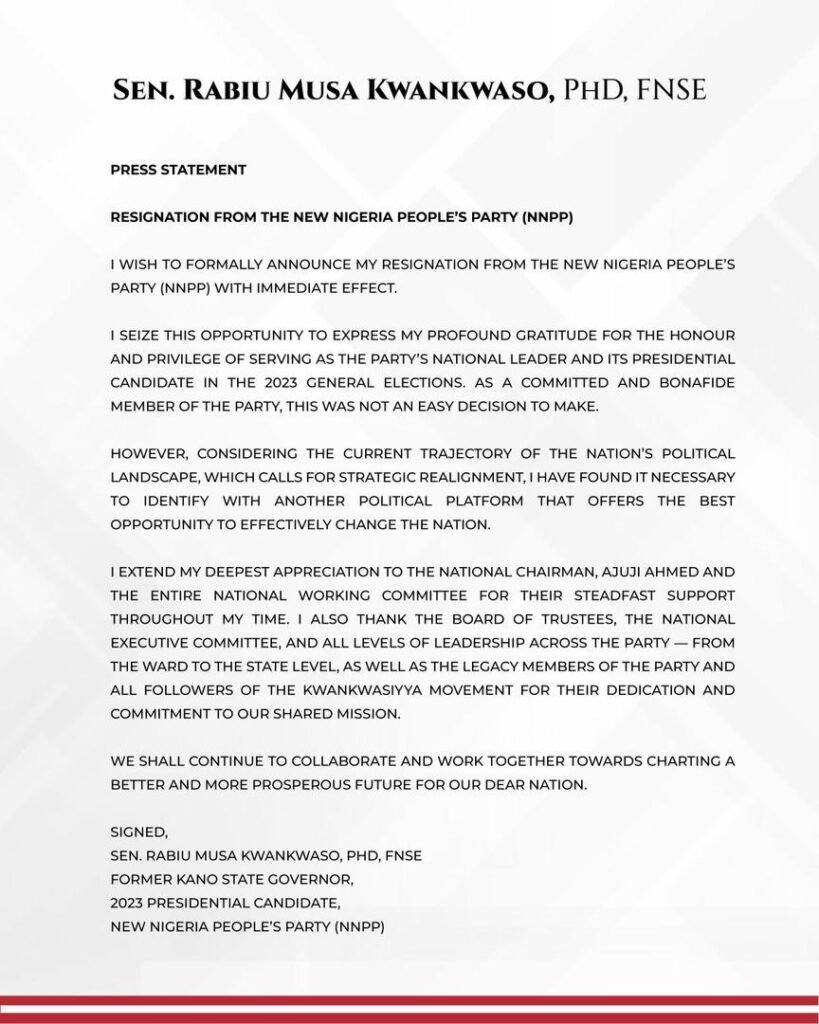
Kwankwaso, who was the party’s presidential candidate in the 2023 general election and also served as its National Leader, confirmed his exit in a statement released on Sunday, March 29. He noted that the decision takes immediate effect.
According to him, leaving the party was not easy but had become necessary in view of current political realities. He explained that his next move would involve aligning with a platform he believes offers a stronger opportunity to drive meaningful change in the country.
“I wish to formally announce my resignation from the NNPP with immediate effect,” he said, adding that the direction of Nigeria’s politics requires fresh positioning.
His departure comes amid growing political tension in Kano State, particularly his reported rift with the state governor, Abba Kabir Yusuf, although Kwankwaso did not directly address the issue in his statement.
Despite his exit, the former governor expressed gratitude to the party’s leadership, including National Chairman Ajuji Ahmed, and other key organs such as the National Working Committee and Board of Trustees for their support during his time in the party.
He also acknowledged members of the Kwankwasiyya Movement, a political bloc widely regarded as one of the most influential grassroots movements in northern Nigeria, assuring them that his commitment to national development remains unchanged.
“We shall continue to work together towards building a better and more prosperous Nigeria,” he said.
Although Kwankwaso has yet to officially declare his next political destination, recent engagements with prominent figures have fueled speculation about a broader opposition alliance ahead of the 2027 elections.
Among those he has reportedly held talks with are Rauf Aregbesola, Peter Obi, Seyi Makinde, and Seriake Dickson.
Political observers believe the move could be part of ongoing efforts by opposition figures to form a strong coalition capable of challenging the ruling All Progressives Congress (APC) in the next general elections.