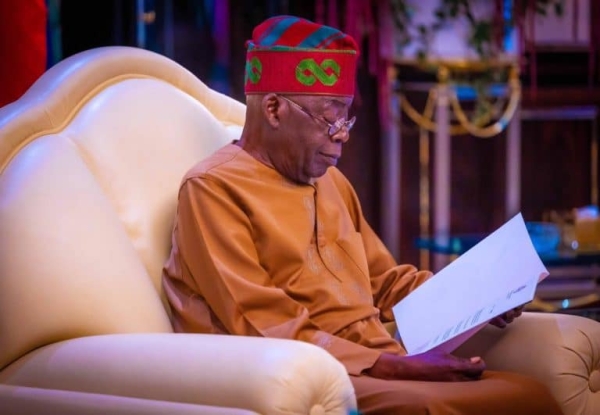
President Bola Ahmed Tinubu on Wednesday signed the contentious Electoral Act, 2022 (Repeal and Re-Enactment) Bill 2026 into law, sparking protests in Abuja and intense debate across the National Assembly. The legislation, which had been the subject of months of scrutiny, has divided lawmakers and the public, particularly over provisions governing electronic transmission of election results.
Tensions peaked in the Senate when Senator Enyinnaya Abaribe demanded a division on Clause 60(3), challenging the clause that allows manual transmission of results if electronic systems fail. Despite objections from Senate leadership, 55 senators voted to retain the provision, while 15 opposed it, effectively keeping the clause intact. The debate highlighted deep divisions on the future of electronic voting in Nigeria.
The House of Representatives also descended into chaos as opposition members staged a walkout over similar concerns. Members protested what they described as procedural irregularities and bias in approving the bill, chanting slogans and blocking Deputy Speaker Benjamin Kalu from continuing proceedings. Speaker Tajudeen Abbas ruled the motion in favour of the bill, though the voice vote reportedly reflected strong dissent, prompting widespread frustration.
Opposition lawmakers and civil society groups argued that Clause 60 is crucial for ensuring transparency and curbing electoral fraud, while critics claim the law could undermine accountability by allowing manual overrides. Stakeholders also raised concerns about discrepancies in multiple clauses, potential conflicts with election timelines, and the impact on voter participation, especially during Ramadan next year.
Despite protests and public outcry, President Tinubu enacted the bill, affirming the law’s immediate effect. Demonstrations continued outside the National Assembly as Nigerians debated the implications of the new electoral framework for the 2027 general elections. The law is expected to reshape electoral processes and remains a flashpoint for controversy in the lead-up to Nigeria’s next presidential vote.