
A review of Borno State’s 2025 budget performance has shown that the state government spent N4.3 billion on livelihood support for former Boko Haram fighters under its reintegration programme, a figure that exceeded allocations to major health institutions during the same period.
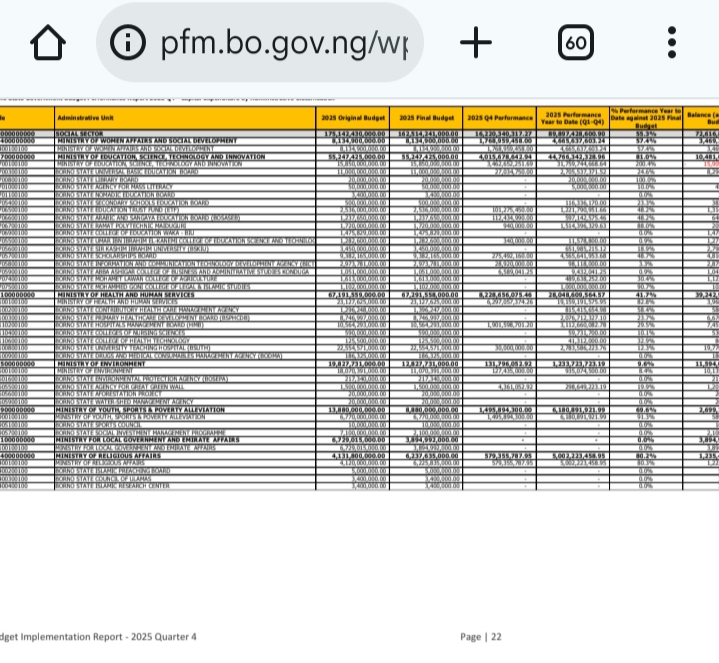
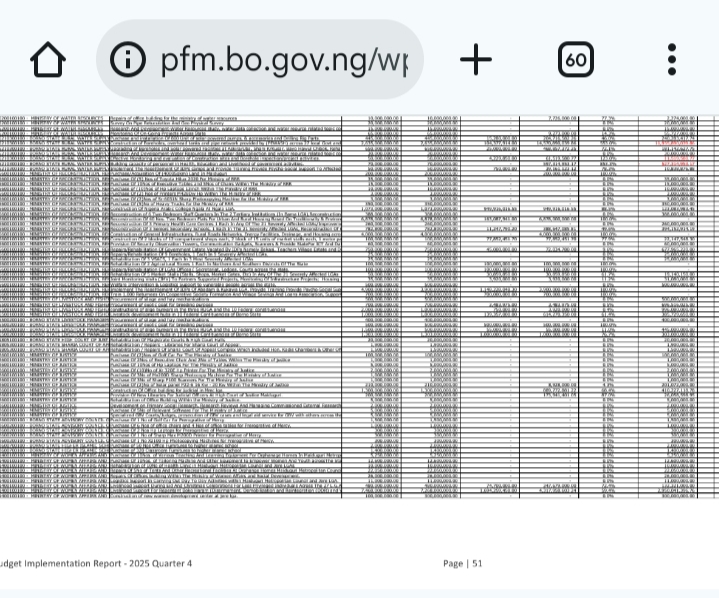
Budget documents examined by Chronicles Reporters indicate that N1.6 billion of the total amount was released between October and December 2025 alone. The spending formed part of the Disarmament, Demobilisation and Reintegration (DDR) initiative for individuals classified as “repentant” insurgents.
In comparison, the Borno State Primary Healthcare Development Board recorded a total capital expenditure of N2 billion for the entire 2025 fiscal year—less than half of what was spent on the reintegration programme. The Borno State University Teaching Hospital received N2.7 billion in capital funding, while the Hospital Management Board’s capital expenditure stood at N3.1 billion, both also below the amount allocated to ex-insurgents.
The figures follow earlier budget reviews which showed that between January and September 2024, the state spent N3.45 billion on similar livelihood support initiatives.
The reintegration policy has continued to generate controversy, particularly among frontline soldiers operating in the North-East. In previous interviews, some military personnel accused government-backed former insurgents of leaking sensitive operational information to active Boko Haram and ISWAP commanders.
According to the soldiers, such disclosures allegedly included troop movements, daily routines, weapon locations and other strategic details, which they said had made military positions more vulnerable to attacks.
Despite the significant investment in rehabilitation programmes, insurgent attacks have persisted across parts of Borno State. In April 2025, Governor Babagana Zulum warned that Boko Haram fighters were regrouping around the Lake Chad basin and the Mandara Hills within the Sambisa Forest.
While commending the military’s efforts, the governor acknowledged ongoing challenges and stressed the need to balance combat operations with non-military approaches. He noted that more than 300,000 individuals had passed through the state’s reintegration process over the last three years, adding that not all of them were combatants.
Governor Zulum also raised concerns about cross-border insecurity, pointing to porous borders and alleged international support networks for insurgent groups. He called for stronger regional security cooperation, increased manpower, and enhanced air and drone capabilities to effectively counter the evolving threat.
According to the governor, without improved security across the wider Sahel region, efforts to fully stabilise Nigeria would remain difficult.