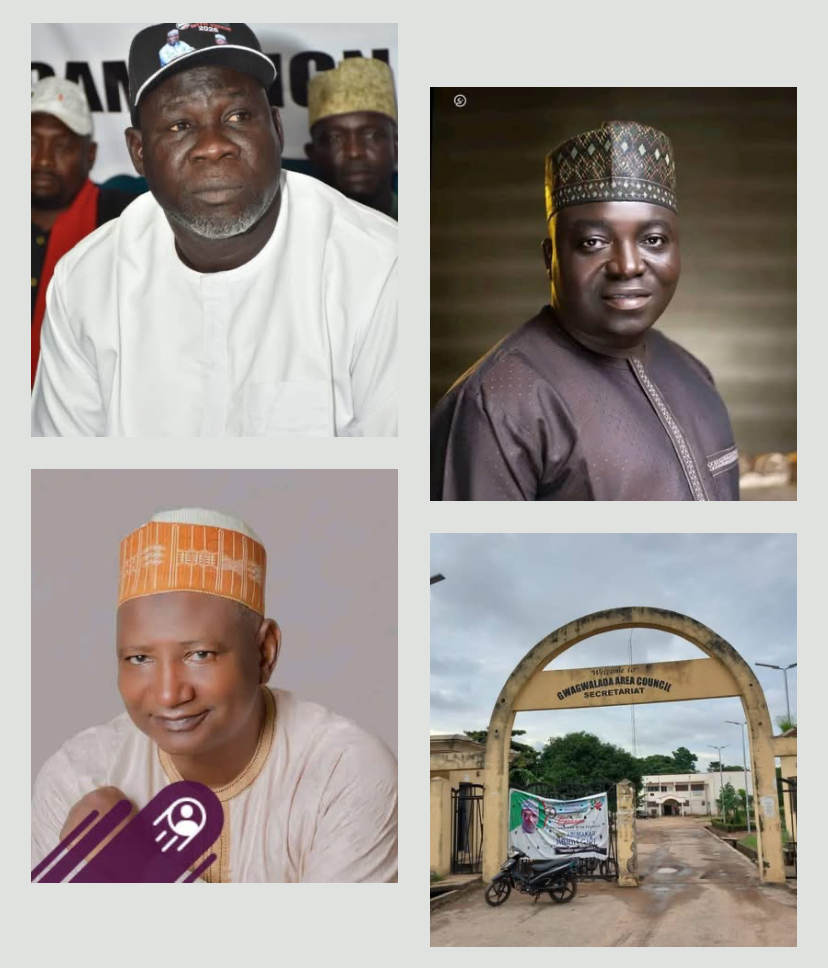
My position on the political actors within Gwagwalada’s evolving landscape is not driven by hatred or personal resentment. As a citizen committed to justice, accountability, and the advancement of our democratic principles, it is important to speak truth with clarity and courage, no matter who feels uncomfortable.
On Usman Yahaya
I hold no animosity toward Usman Yahaya. In fact, my concerns are rooted in a sober understanding of how power works, how influence shapes governance, and how silent obligations become hidden chains.
Usman ascended to power on a platter of gold, a pathway carved more by political benevolence than by a clear record of public struggle or service. And while this is not inherently a crime, it comes with consequences:
• Unpaid political debts that may compromise his independence.
• Obligations to sponsors seeking repayment through influence rather than public interest.
• A surrounding circle that, rather than correcting him, may insulate him from reality.
Leadership cannot thrive in an environment where advisers fear telling the hard truth. Any leader who is shielded from constructive criticism is already halfway toward becoming ineffective.
Moreover, the ideological shadow of Abu Giri, his political principal raises legitimate concerns. Abu Giri’s record, often criticized for violations of the rule of law, allegations of public funds/allocation mismanagement, and his administration’s failure to prioritize teachers wages, casts a long moral burden on anyone politically mentored by him. A system cannot produce what it does not cultivate.
On Kasim Ikwa
I do not bear hatred for Kasim Ikwa either. Our past encounters reveal a young politician still finding his footing in the chaotic terrain of power. While I once had disagreements with his principal, Obama, I must commend Obama for handling our dispute with diplomacy and maturity—traits vital in public leadership.
Kasim himself, during our interactions, demonstrated a level of composure, coordination, and openness unexpected in many emerging politicians. Even more encouraging is the fact that he surrounds himself with young minds who constantly remind him to respect diverse opinions and understand the grievances of his critics.
This capacity for dialogue, if nurtured, could become the cornerstone of a new political attitude, one where engagement replaces intimidation, and humility replaces arrogance.
On Ezekiel Zezelaga
In the case of Ezekiel Zezelaga, my concerns are deeper and grounded in observable patterns. Ezekiel has consistently displayed an arrogant disregard for the rule of law, a posture that raises legitimate alarms about what is to come if such a figure occupies executive office.
His temperament suggests a dangerous trajectory:
• A willingness to assault, intimidate, or weaponize security agencies against critics.
• A tendency toward governance defined by fear rather than service.
• Allegations linking him to controversial embezzlement networks, abuse of privilege, and racketeering.
A leader who sees criticism as an attack becomes authoritarian.
A leader who fears accountability becomes oppressive.
A leader who disrespects the rule of law becomes a threat to democracy itself.
And in a society still fighting for transparency, justice, and protection of fundamental rights, such tendencies should not be dismissed—they must be confronted.
FINAL NOTE:
THE RESPONSIBILITY OF CRITICAL ANALYSIS
This commentary is not an attack. It is a call for reflection, a demand for integrity, and an invitation to the public to examine their leaders beyond slogans, posters, or stomach infrastructure.
Democracy survives only when citizens ask hard questions, hold leaders accountable, and refuse to romanticize mediocrity.
We must continue to analyze, critique, and reshape our political environment—not out of hatred, but out of love for justice, community, and the future generations who will inherit whatever we build today.