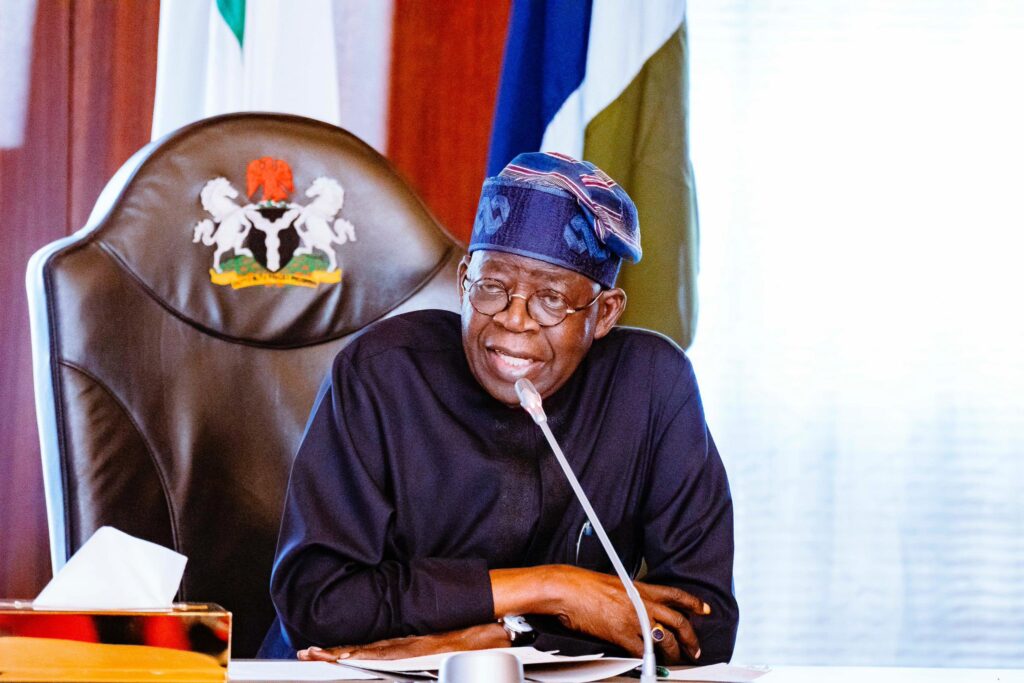
President Bola Ahmed Tinubu is expected to visit the United States on Tuesday for high-level diplomatic engagements amid escalating tensions between both nations following U.S. President Donald Trump’s recent threat of military action against Nigeria over alleged Christian persecution.
Presidential sources confirmed to Chronicle Reporters on Sunday that the visit will focus on strengthening bilateral relations and addressing recent controversies surrounding the alleged “genocide against Christians” — a claim the Nigerian government has strongly denied.
According to sources familiar with the itinerary, President Tinubu is scheduled to meet with U.S. Vice President James David (JD) Vance, who has been delegated by President Trump to represent him during the discussions, barring any last-minute changes.
The meeting, which follows days of diplomatic tension, is expected to centre on counterterrorism cooperation, religious freedom, and regional security.
Earlier, presidential spokesperson Daniel Bwala had stated that both leaders shared a common vision in combating terrorism and promoting global security.
“Both President @officialABAT and President @realDonaldTrump have shared interest in the fight against insurgency and all forms of terrorism against humanity,” Bwala said in a statement last week.
He commended the Trump administration’s prior support to Nigeria, including authorising the sale of arms, which he said President Tinubu’s administration has effectively utilised in its ongoing fight against terrorism.
“President Trump has assisted Nigeria a lot by authorising the sale of arms to Nigeria, and President Tinubu has adequately utilized the opportunity in the fight against terrorism for which we have massive results to show,” he added.
Bwala also indicated that the upcoming talks would provide an opportunity for both sides to clarify differences regarding the nature of terrorist attacks in Nigeria.
“As for the differences as to whether terrorists in Nigeria target only Christians or in fact all faiths and no faiths, the differences if they exist would be discussed and resolved by the two leaders when they meet,” he noted.
The meeting comes on the heels of President Trump’s inflammatory remarks threatening to send U.S. troops into Nigeria “guns-blazing” if attacks on Christians are not stopped.
In a statement widely circulated by U.S. media, Trump warned:
“If the Nigerian Government continues to allow the killing of Christians, the U.S.A. will immediately stop all aid and assistance to Nigeria, and may very well go into that now disgraced country, guns-blazing, to completely wipe out the Islamic terrorists who are committing these horrible atrocities.”
He added that the U.S. Department of War had been instructed to prepare for “possible action,” describing any potential intervention as “fast, vicious, and sweet.”
In response, the Nigerian Presidency strongly dismissed claims of a Christian genocide, describing them as a misrepresentation of Nigeria’s diverse and multi-religious society.
President Tinubu reaffirmed his administration’s commitment to protecting the rights of all citizens, regardless of faith, under the nation’s constitution.
“Nigeria stands firmly as a democracy governed by constitutional guarantees of religious liberty,” Tinubu said in a statement issued on Saturday.
He emphasised that since assuming office in 2023, his government has maintained active engagement with both Christian and Muslim leaders while addressing security challenges affecting all citizens.
“The characterisation of Nigeria as religiously intolerant does not reflect our national reality, nor does it take into consideration the consistent and sincere efforts of the government to safeguard freedom of religion and beliefs for all Nigerians,” he added.
Observers say Tinubu’s visit comes at a critical time, as Nigeria seeks to navigate strained diplomatic relations with Washington while defending its international reputation.
The talks with Vice President JD Vance are expected to set the tone for future cooperation between both nations — particularly in security, governance, and human rights.