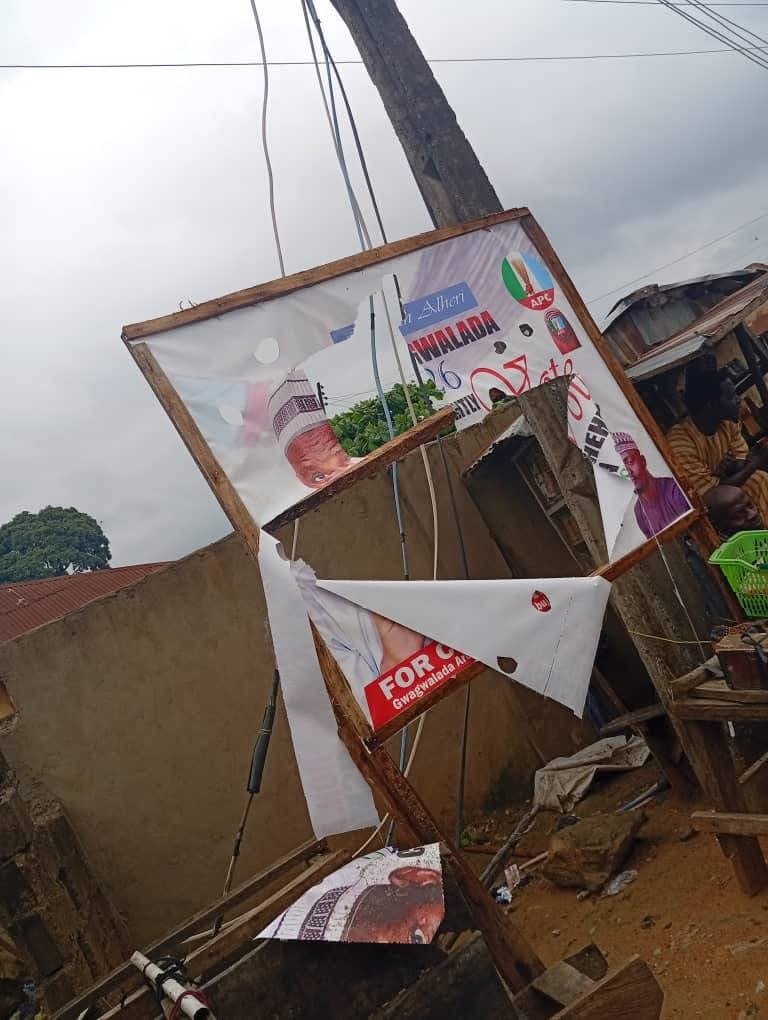
The atmosphere in Gwagwalada politics grew tense over the weekend following the vandalization of campaign banners belonging to Hon. Usman Yahaya, the All Progressives Congress (APC) flag bearer for the upcoming Gwagwalada Area Council elections. The development has triggered a wave of speculation and concern among residents, raising fears of possible electoral violence if political stakeholders fail to address the situation decisively.
Reacting swiftly, the Peoples Democratic Party (PDP) Chairmanship candidate, Hon. Comr. Kasim Mohammed, strongly condemned the act, describing it as unfortunate, undemocratic, and a clear attempt to distract from the real issues at stake in the elections. Kasim categorically distanced himself and his campaign organization from the incident, insisting that neither he nor his supporters had any hand in the destruction.
In a statement made available to Chronicles Reporters, Kasim emphasized that his campaign is built on issues, ideas, and a deep respect for democratic values, not thuggery or the politics of destruction.
“I disassociate myself and my campaign organization from these unfortunate acts of political hooliganism. We remain committed to promoting peace, unity, and issue-based politics. My focus is to engage the electorate on policies that will transform Gwagwalada, not to waste energy on tearing down opponents’ campaign materials,” Kasim declared.
The PDP candidate further appealed to his supporters to remain calm and law-abiding, urging them not to be drawn into retaliatory actions that could escalate political tensions. According to him, the “bigger task ahead” remains securing electoral victory through peaceful and lawful means.
Meanwhile, the destruction of Hon. Usman Yahaya’s banners has sparked wider debate online and offline. Some political commentators and residents believe the act may have been politically motivated, especially given the recent cracks within the APC.
Just last week, a faction within the APC led by a party stalwart, Dobiza Dobiza, openly denounced Yahaya’s candidacy, citing concerns over his ethnic background. The group accused Yahaya, who hails from a Fulani family with roots in Kano, of allegedly sidelining indigenous voices in Gwagwalada. This internal crisis has fueled suspicion that the act of vandalization may have emerged from within his own party ranks, rather than from external rivals.
Analysts say the incident reflects the growing fragility of Gwagwalada’s political climate as campaigns intensify ahead of the polls. The resort to ethnic sentiments and acts of violence, they warn, could undermine the credibility of the elections if not properly addressed by party leaders, security agencies, and the Independent National Electoral Commission (INEC).
Civil society organizations monitoring the process have also expressed concern, urging political actors to prioritize peace and unity over divisive rhetoric and sabotage.
For now, Hon. Kasim Mohammed’s strong condemnation of the incident sets a tone of restraint and maturity in the political space. Whether other candidates will follow suit in de-escalating the rising tensions remains to be seen.