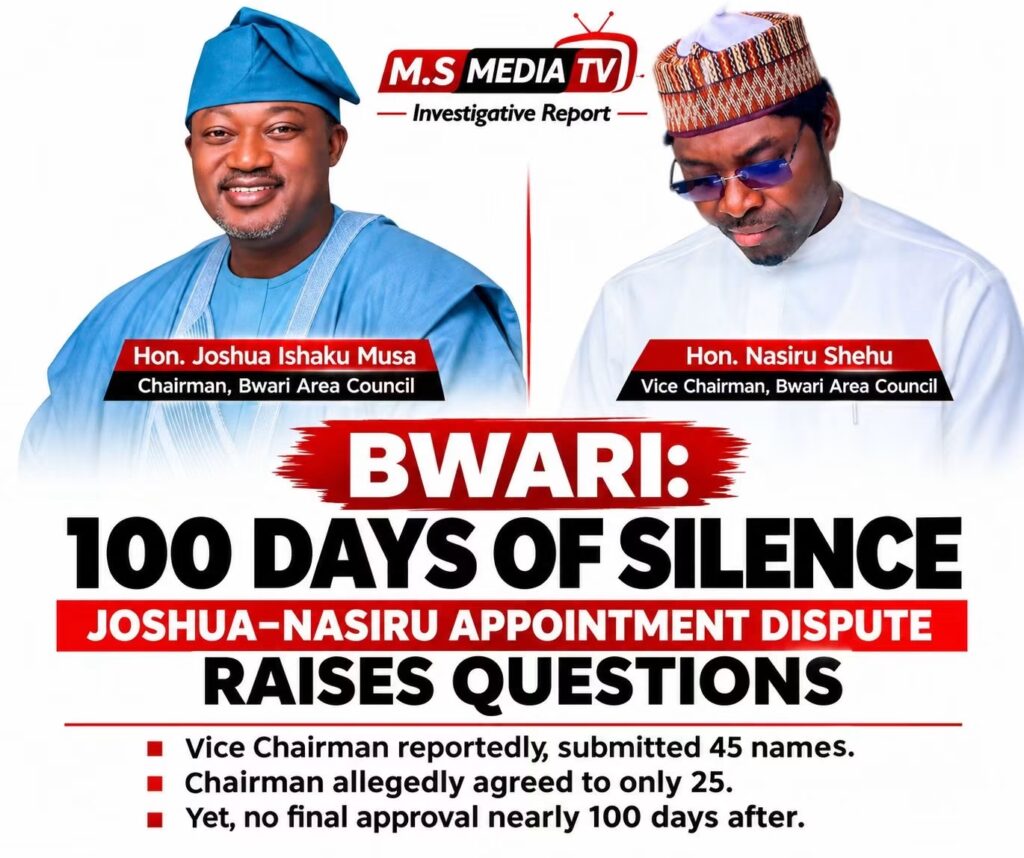
A growing controversy is reportedly unfolding within the administration of Bwari Area Council, Federal Capital Territory, following the prolonged delay in approving appointments proposed for the office of the Vice Chairman, Hon. Nasiru Shehu, amid questions about fairness, political inclusion and the distribution of administrative authority between him and the Council Chairman, Hon. Joshua Ishaku.
Reports indicate that Hon. Nasiru Shehu submitted a list of 45 nominees for appointments into his office, seeking the Chairman’s approval. However, sources familiar with the development allege that the Chairman was prepared to approve only 25 of the proposed names, a position said to have generated dissatisfaction within the Vice Chairman’s camp.
Despite the reported compromise over the number of nominees to be considered, the appointments have allegedly remained unapproved for nearly 100 days, raising questions about the reasons behind the delay and its implications for the functioning of the Vice Chairman’s office.
The prolonged wait has reportedly fuelled concerns over the working relationship between the two principal officials of the council, with observers questioning whether the situation reflects an internal administrative disagreement, a struggle over political influence or a broader dispute over representation within the council’s leadership structure.
The controversy gained renewed attention on November 3, 2026, when the Chairman’s office announced the appointment of Ora as Special Assistant on Entertainment. The announcement has prompted further questions about the apparent difference in the pace of appointments emanating from the Chairman’s office and the unresolved nominations reportedly submitted by the Vice Chairman.
At the centre of the debate is a question of administrative consistency: why are appointments being announced by the Chairman’s office while nominees reportedly submitted by the Vice Chairman continue to await approval?
Although the announcement of a Special Assistant by the Chairman does not, by itself, establish that any rule has been breached, the contrasting developments have intensified calls for greater transparency regarding the criteria, procedures and timelines governing appointments within the council.
Political observers may interpret the situation as part of the negotiations and disagreements that sometimes accompany power-sharing arrangements in local government administration. However, without official clarification from the parties involved, it would be premature to conclude that the delay is a deliberate attempt to undermine the Vice Chairman or exclude his political interests from the administration.
Nevertheless, the reported delay raises legitimate questions about internal coordination, the exercise of approval powers and the extent to which the Vice Chairman is able to organise and staff his office to discharge his responsibilities effectively.
For residents of Bwari, the matter goes beyond the personal or political relationship between two elected officials. It concerns the transparency of public administration, the use of official authority and whether decisions affecting the council’s leadership are being handled through clear, consistent and accountable procedures.
If the Vice Chairman’s nominations have been delayed because of administrative requirements, budgetary considerations, disagreements over the proposed positions or other legitimate concerns, residents deserve an explanation. Equally, if the Chairman and Vice Chairman have differing views on the number or distribution of appointments, a transparent resolution would help prevent speculation from deepening into a wider political controversy.
Hon. Joshua Ishaku and Hon. Nasiru Shehu have yet to be quoted in this report providing their respective explanations for the reported delay. The council’s official position on the submitted list, the approval process and the circumstances surrounding the appointment announced on November 3 would be important in establishing a complete account of the matter.
Chronicles Reporters recognises the importance of giving both sides a fair opportunity to explain their positions. The Chairman’s office should clarify the status of the 45 names reportedly submitted by the Vice Chairman, whether any appointments have been approved, and the reasons for the outstanding decisions. The Vice Chairman’s office should also clarify the submission process and the steps taken to resolve the matter.
As the reported delay approaches the 100-day mark, the central issue remains whether the disagreement can be resolved through transparent administrative procedures rather than allowing uncertainty to persist.
For an administration entrusted with public responsibilities, prolonged silence on a matter of this nature risks undermining public confidence and fuelling perceptions of political rivalry or unequal treatment.
The people of Bwari deserve clarity on the status of the proposed appointments, the rules guiding their approval and the steps being taken to ensure that the council’s administration functions effectively.
Is the delay the result of a routine administrative disagreement, a contest over political influence or a failure to establish a clear and transparent appointment process? Until the relevant authorities provide verifiable answers, these questions will remain open.
Chronicles Reporters will continue to follow developments in the matter and welcomes an official response from the offices of the Chairman and Vice Chairman to ensure that the public receives a balanced and factual account of the dispute.