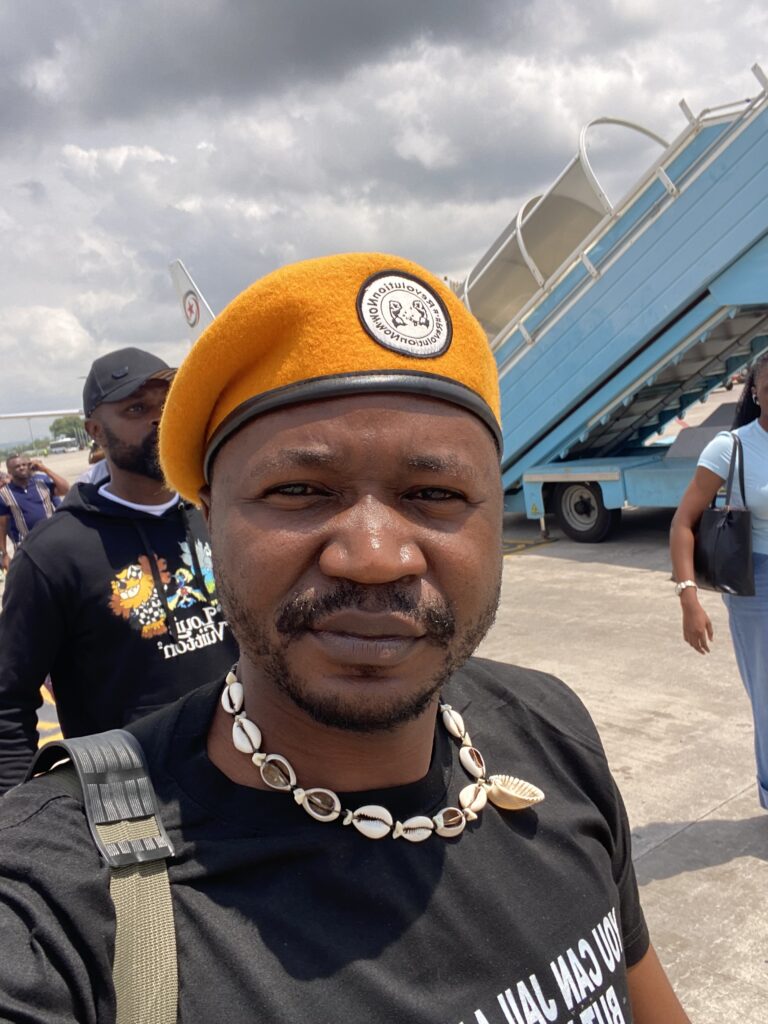
Human rights activist and community organiser says his refusal to mingle with politicians or speak on their behalf is a matter of principle, independence and personal integrity.
Human rights activist and community organiser Manasseh B.P. has explained why he deliberately maintains his distance from politicians, insisting that he does not want to compromise his principles or become a double-faced individual in the course of his activism.
In a statement reflecting his position on political relationships and public advocacy, Manasseh said his decision not to mingle with politicians, work for them or speak on their behalf stems from his desire to preserve his independence and remain consistent in his convictions.
According to him, associating too closely with political figures can create situations in which an activist’s personal interests, loyalties or relationships may conflict with the responsibility to speak truthfully about issues affecting the public.
“Why I don’t mingle with politicians and even work or speak on their behalf is because I don’t want to have a double face. Political figures are never to be trusted,” Manasseh B.P. stated.
The comment underscores his expressed belief that human rights advocacy must remain independent of political calculations and personal alliances, particularly in an environment where citizens often expect activists to hold public officials accountable regardless of their political affiliations.
For Manasseh, the decision to keep his distance from politicians appears to be more than a question of personal preference. It reflects a broader concern about the relationship between political power and independent civic engagement.
Human rights activists and community organisers frequently find themselves at the centre of political controversies, especially when they speak about governance, public accountability, citizens’ welfare and alleged abuses of power. Their credibility often depends on whether they can criticise those in authority without being perceived as protecting individuals with whom they maintain personal or political relationships.
When activists become closely associated with political figures, questions may arise about whether their public statements are motivated by principle or loyalty. An activist who consistently challenges one political camp but remains silent when another commits similar acts may face accusations of selective outrage.
Manasseh’s position suggests that he wants to avoid such contradictions by refusing to place himself in a position where political relationships could influence his public voice.
His emphasis on not wanting to have a “double face” points to the importance he attaches to consistency between personal convictions and public conduct.
Manasseh’s assertion that political figures are never to be trusted expresses a deep scepticism about political relationships. It is a sweeping personal viewpoint rather than a conclusion that applies equally to every politician, but it reflects a familiar concern among citizens who believe political loyalty can sometimes be driven by convenience, ambition or the pursuit of influence.
In democratic societies, politicians and public officials are expected to earn public confidence through transparency, accountability and the fulfilment of their commitments. Where citizens perceive a gap between political promises and actual performance, distrust can grow.
For community organisers and human rights advocates, maintaining a critical distance from political officeholders may be one way of protecting their ability to question decisions, demand explanations and draw attention to issues that affect ordinary people.
However, political independence does not necessarily require avoiding every conversation with elected officials. Constructive engagement can help activists communicate community demands, influence policy and seek solutions to public problems. The central question is whether such engagement compromises an activist’s independence or prevents them from holding public officials accountable.
Manasseh’s statement makes clear that, for him, the boundary is drawn around personal and professional involvement that could undermine his preferred approach to activism.
Another significant aspect of his declaration is his refusal to speak on behalf of politicians.
Political communication often involves individuals who defend public officials, promote their achievements or explain their decisions to the public. Such roles can be legitimate, but they are distinct from independent human rights advocacy, which requires the freedom to question those same officials when circumstances demand it.
By distancing himself from political spokesperson roles, Manasseh is signalling that he does not want his public voice to be interpreted as an extension of any politician’s interests.
The distinction is important because the public often looks to activists for criticism that goes beyond party affiliations. When an activist speaks, citizens may expect the argument to be based on evidence, rights, fairness and the public interest rather than the need to protect a political benefactor.
His position also raises a broader question for civic organisations and community movements: can independent advocacy remain effective when its leaders become deeply involved in partisan political networks?
There is no single answer to that question. Some activists work directly with governments while maintaining their independence, while others prefer to remain outside political structures. What matters is the ability to act transparently and hold power accountable.
His reference to not wanting to have a double face suggests that he considers consistency essential to his identity as a human rights activist and community organiser. In practical terms, this means seeking to ensure that the positions he expresses publicly are not contradicted by private political commitments.
For activists who campaign on behalf of communities, trust is a valuable asset. Residents who raise concerns about public services, governance or their fundamental rights need confidence that their representatives will not abandon those concerns when political interests become involved.
Maintaining independence can help protect that confidence, although credibility ultimately depends on conduct, evidence and consistency over time.
Manasseh’s statement therefore presents his decision as a personal standard: he would rather maintain distance from political figures than risk being placed in a position where his loyalties could be questioned.
Beyond his personal position, the statement invites reflection on the role of independent voices in public life.
Community organisers often serve as a link between residents and those in positions of authority. Their responsibility may involve highlighting neglected communities, questioning public spending, demanding better services and drawing attention to issues that receive insufficient attention.
Such responsibilities require the freedom to criticise both allies and opponents where the facts justify it. They also require a willingness to engage with public institutions when doing so could produce meaningful results for citizens.
The challenge is to maintain a clear distinction between engagement and political capture. An activist can meet a politician to discuss a community problem without becoming that politician’s supporter or spokesperson. Equally, refusing political appointments or partisan roles can be a deliberate strategy for preserving independence.
Manasseh’s declaration reflects his chosen approach, one built around distance from political figures and a stated determination to avoid what he regards as double-faced conduct.
Whether others agree with his assessment of politicians, the underlying question remains relevant: how can activists protect their credibility while navigating a political environment in which influence, access and personal relationships can shape public perception?
Manasseh B.P.’s statement places political independence and personal integrity at the centre of his approach to human rights activism and community organising.
His refusal to mingle with politicians, work for them or speak on their behalf reflects his stated concern that close political relationships could undermine the consistency he expects of himself.
Ultimately, the credibility of any activist rests not only on the relationships they reject but also on the principles they uphold, the evidence behind their claims and their willingness to hold every public official to the same standard.
For Manasseh, however, the message is clear: he does not want political association to determine his voice, shape his convictions or create doubts about where his loyalty lies.
His declaration serves as a reminder that independent advocacy depends on more than the ability to criticise those in power; it also requires the courage to preserve one’s principles when political relationships offer opportunities for influence.