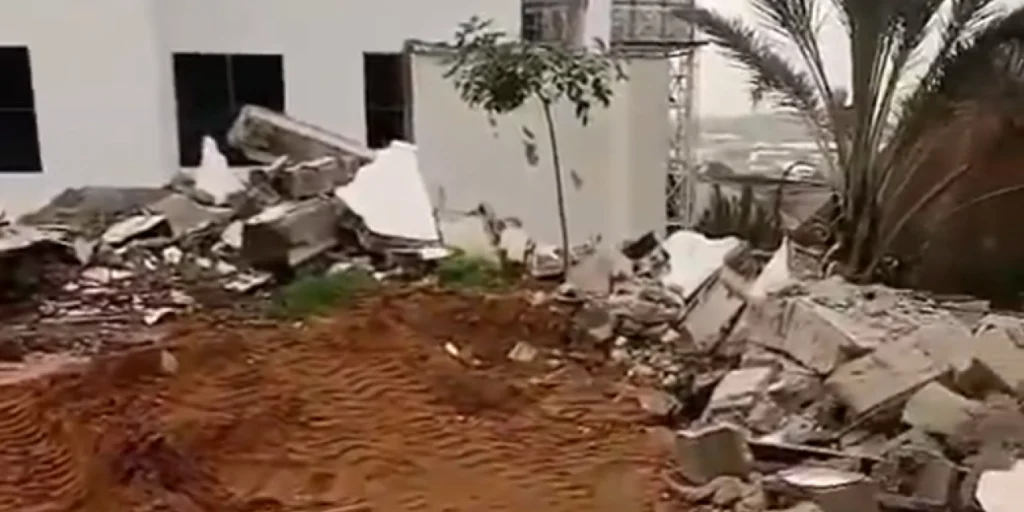
Amnesty International has raised the alarm over the demolition of a community in Abuja by officials of the Federal Capital Development Authority (FCDA), allegedly acting on the orders of the Minister of the Federal Capital Territory (FCT), Nyesom Wike, over a green area allocated to a private real estate developer despite the presence of critical underground drainage infrastructure.
The global human rights organisation raised the concern on Tuesday, stating that bulldozers deployed by the FCDA were demolishing the area despite concerns over the existing infrastructure beneath the land and its importance to the surrounding community.
According to Amnesty International, the green area was allocated to Hammari Energy Limited for private real estate development, raising questions about the decision to permit construction on a corridor containing underground stormwater and sewage drainage facilities.
The organisation identified the affected corridor as Plot 5334, explaining that it accommodates underground drainage infrastructure constructed by Julius Berger Plc between 2012 and 2014 to address flooding risks in the area.
Amnesty International expressed concern over the ongoing demolition and the allocation of the green area for private development despite the presence of the infrastructure, which was constructed to manage stormwater and sewage.
In its statement, the organisation said bulldozers belonging to the FCDA were carrying out the demolition on the orders of Wike, describing the operation as a flagrant act affecting the community.
“Right now bulldozers from FCDA working on the orders of FCT Minister Mr. Nyesom Wike are carrying out flagrant demolishing affecting our community,” Amnesty International said.
The organisation further stated that the green area had been allocated to Hammari Energy Limited for real estate development, despite the corridor’s existing underground infrastructure.
“The corridor, designated as Plot 5334, was allocated to Hammari Energy Limited for private real estate development. It accommodates underground stormwater and sewage drainage infrastructure constructed by Julius Berger Plc between 2012 and 2014 to address flooding risks in the area,” the organisation stated.
The demolition has raised concerns about the implications of allocating land containing essential drainage infrastructure for private real estate development, particularly given the role such facilities play in managing flooding and sewage in urban communities.
The presence of the underground drainage system also raises questions about how the proposed development would affect the infrastructure and whether adequate consideration was given to its purpose before the land was allocated to the private developer.
Amnesty International’s intervention has brought renewed attention to the demolition exercise and the decisions surrounding the allocation of the green area, with the organisation highlighting concerns over the impact of the operation on the affected community.
However, the statement did not include responses from Wike, the FCDA or Hammari Energy Limited to the concerns raised by Amnesty International.