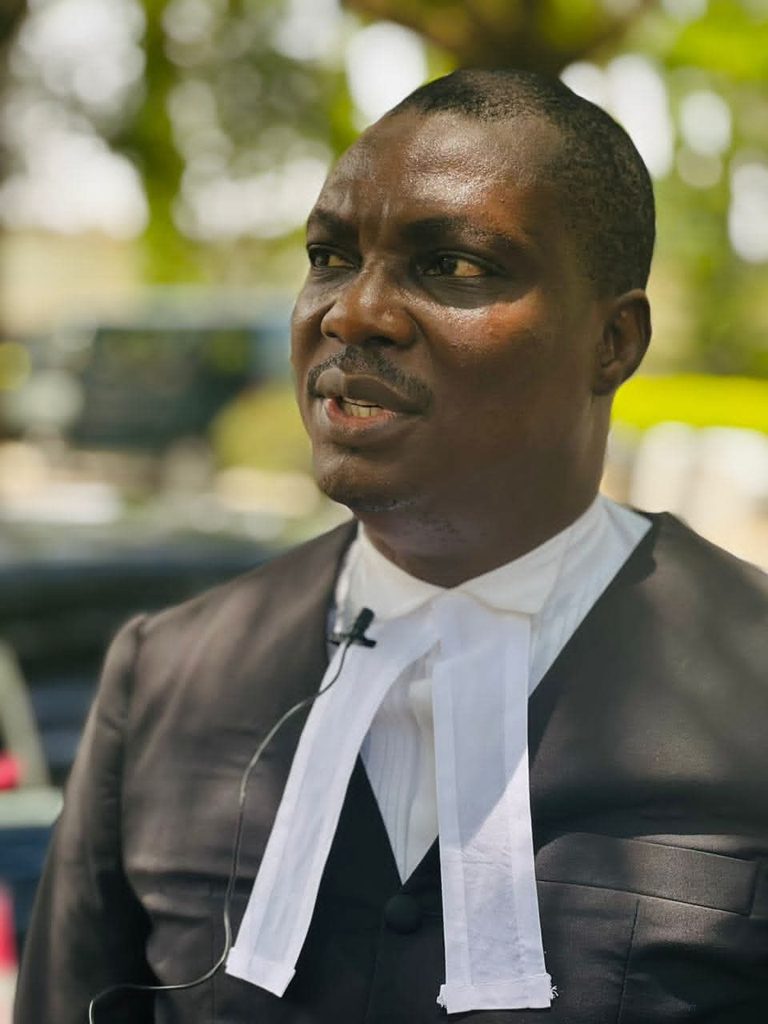
Human rights advocate and public interest lawyer, Tope Temokun, has formally demanded an independent investigation into the Nigerian Air Force aircraft crash in Igbokoda, Ondo State, which reportedly killed all 25 persons aboard, including five crew members and 20 passengers, among them six civilians.
Temokun, in a letter dated October 8, 2026, addressed to the Chief of the Air Staff at the Nigerian Air Force Headquarters in Abuja, demanded the immediate preservation of all evidence relating to the crash, public disclosure of the investigation’s findings, accountability where wrongdoing is established, and a comprehensive review of previous military aviation disasters in Nigeria.
The letter, titled “Tragic Crash of Nigerian Air Force Aircraft NAF 931 in Ondo State on 5th October, 2026 — Public Interest Demand for Preservation of Evidence, Independent Investigation, Disclosure of Findings, Accountability and Comprehensive Review of Military Aviation Safety,” was written in his capacity as a human rights advocate and public interest lawyer.
Temokun, who identified himself as an indigene of Ode-Aye in Okitipupa Local Government Area of Ondo State and a member of the Nigerian Bar Association, Okitipupa Branch, said the tragedy raised fundamental questions about the government’s constitutional obligation to protect human life and the responsibility of public institutions to ensure safety.
He said his personal and professional connection to the area, alongside the circumstances surrounding the loss of lives aboard an aircraft operated by a government institution, made it necessary to demand transparency and accountability.
The lawyer said his intervention was motivated by the overriding public interest and not by any personal or financial interest.
In the letter, Temokun referred to a SaharaReporters publication dated October 7, 2026, titled “Nigerian Air Force Air Crashes Have Killed At Least 294 Since 1980, Including 25 In Ondo,” which raised concerns about the reported circumstances preceding the crash.
According to the publication cited in the letter, aircraft NAF 931 had reportedly undergone unscheduled technical rectification at the 81 Air Maritime Group base in Benin City on October 4, a day before the fatal crash.
Earlier reports had suggested that the aircraft developed a technical or engine fault that prevented it from continuing its journey to Lagos, necessitating maintenance work before it was returned to service.
The publication further reported that the aircraft departed Benin for Lagos on October 5 and that air traffic controllers lost radio contact with it at approximately 9:13 a.m.
The aircraft reportedly crashed about 500 metres east of the Naval Base in Igbokoda and sank into swampy terrain, making recovery operations particularly difficult.
Temokun also noted that the Nigerian Air Force, through its Director of Public Relations and Information, Air Commodore Ehimen Ejodame, reportedly confirmed on October 6 that 25 persons were aboard the aircraft and that there were no survivors.
While acknowledging that the reports remained subject to official investigation and verification, the lawyer stressed that the reported maintenance intervention shortly before the crash required thorough examination.
He, however, cautioned against drawing premature conclusions, stating that the reported technical work did not, by itself, establish that the maintenance intervention caused the crash or that any officer or technician was negligent.
According to him, a credible investigation must establish whether the aircraft was airworthy when it departed Benin, whether all reported defects had been satisfactorily rectified, what inspections and tests were conducted, and who authorised the aircraft’s return to service.
“These are not questions of speculation or hostility towards the Nigerian Air Force. They are questions of public safety, institutional responsibility and the protection of human life,” the letter stated.
Temokun further raised concerns about the historical record of fatal Nigerian military aviation accidents, citing the publication’s report that at least 294 people had died in such disasters since 1980, including the 25 victims of the latest crash.
He specifically referenced the Nigerian Air Force C-130 Hercules disaster of September 26, 1992, at Ejigbo/Oke-Afa in Lagos State, which reportedly claimed 159 lives, and the Fokker F27 crash at Forcados on May 26, 1980, in which 30 people reportedly died.
According to the lawyer, the incidents raise questions about whether previous military aviation accidents were investigated rigorously enough and whether recommendations from those investigations were translated into enforceable safety reforms.
He acknowledged that multiple accidents over several decades did not automatically establish negligence or a common technical cause.
However, he argued that repeated loss of lives in military aviation disasters required the government to look beyond the immediate circumstances of individual crashes and examine possible systemic weaknesses in aircraft maintenance, airworthiness certification, operational supervision, safety management, regulatory oversight and the implementation of previous safety recommendations.
Temokun cited Section 33(1) of the Constitution of the Federal Republic of Nigeria, 1999, as amended, which guarantees the right to life, alongside Article 4 of the African Charter on Human and Peoples’ Rights, which protects the right to life and prohibits arbitrary deprivation of life.
He also referenced the Supreme Court decision in Abacha v. Fawehinmi (2000) 6 NWLR (Pt. 660) 228, noting that the African Charter forms part of Nigerian law.
The lawyer argued that the protection of life required more than refraining from unlawful killing, as it could also impose obligations on the State to take reasonable preventive measures against foreseeable threats to life and investigate deaths in circumstances potentially involving acts or omissions by State institutions.
He maintained that the investigation into the crash must be sufficiently independent, comprehensive and transparent to command public confidence.
As part of his immediate demands, Temokun asked the Nigerian Air Force to secure and preserve all documents, records and physical evidence connected to the aircraft’s technical condition, maintenance history and operations before the crash.
The materials he listed include aircraft maintenance and technical logs, defect reports, engineering worksheets, work cards, component replacement records, inspection and testing records, airworthiness certificates, return-to-service authorisations, flight records, crew reports, operational communications, air traffic control recordings and electronically stored information.
He particularly demanded the preservation of every record relating to the reported unscheduled technical rectification at the 81 Air Maritime Group base in Benin City on October 4.
Such records, he said, should include the identities of the personnel involved, the nature of the work undertaken, the technical findings recorded and the authority under which the aircraft was released for further operations.
He also called for the preservation of all recovered wreckage, relevant aircraft components and any flight-data recorders, cockpit-voice recorders or other recording devices fitted to the aircraft.
The lawyer warned that no relevant document, recording, electronic data or physical evidence should be destroyed, altered, overwritten, concealed or otherwise rendered unavailable while investigations and any resulting proceedings remained pending.
Although he acknowledged reports that the Chief of the Air Staff had ordered an investigation, Temokun insisted that the gravity of the incident required an inquiry whose independence and technical competence were beyond reasonable doubt.
He demanded that investigators establish the nature of the reported technical fault, examine the maintenance work carried out in Benin, determine the inspections and tests conducted before departure, verify the aircraft’s airworthiness certification and establish whether any unresolved defect or operational failure contributed to the crash.
The investigation, he said, should also determine whether applicable maintenance procedures and safety standards were followed and whether any act or omission by an individual or institution contributed to the deaths.
Temokun further urged the Nigerian Air Force to examine the adequacy of its maintenance oversight and safety management systems, including whether recommendations from previous military aviation accident investigations had been implemented.
He called for the meaningful participation of technically competent persons who were institutionally independent of any personnel or command structures whose actions might come under scrutiny.
Where necessary, he said, independent aviation accident investigators and other relevant technical experts should be engaged to strengthen the credibility of the process.
The lawyer also demanded information about the composition of the investigating panel, its terms of reference, the scope of its inquiry and the process through which its findings would be communicated.
He stressed that the families of the deceased had a legitimate and compelling interest in the investigation and should receive accurate information about the circumstances surrounding the deaths of their loved ones.
According to him, the bereaved families should not be left indefinitely to depend on unofficial reports and speculation.
He therefore requested an undertaking from the Air Force that the material findings of the investigation would be communicated to the families and made available to the Nigerian public, subject only to specific and legally justified restrictions genuinely necessary for national security.
Temokun also called for appropriate disciplinary, civil or criminal action, in accordance with the law, if the investigation established negligence, misconduct, breaches of safety procedures or other culpable acts or omissions.
Beyond individual accountability, he demanded clear recommendations to prevent similar tragedies and public disclosure of the institutional measures the Nigerian Air Force intended to implement.
He argued that Nigeria could not continue treating every military aircraft crash as an isolated tragedy without confronting any systemic deficiencies that credible investigations might reveal.
The lawyer consequently called for an independent institutional review of previous fatal accidents involving Nigerian Air Force aircraft, with particular attention to investigation findings, safety recommendations and corrective measures.
He urged the Air Force to determine whether previous investigations had identified recurring technical, operational, maintenance or supervisory deficiencies and whether recommendations arising from those investigations had been implemented.
The proposed review, he said, should cover maintenance procedures, airworthiness certification, technical supervision, personnel training, operational risk assessment and compliance with recommendations from previous accident investigations.
It should also identify outstanding safety recommendations, explain why they had not been implemented where applicable, and specify the institutional measures required to prevent similar disasters.
Temokun demanded that the material findings and proposed corrective measures be made available to relevant oversight authorities and the public, subject to lawful and demonstrably necessary security restrictions.
He maintained that the government’s constitutional obligation to protect life could not be fulfilled merely by investigating deaths after they occurred, but also required reasonable preventive measures against known or foreseeable risks.
“The Nigerian State must not merely investigate how its citizens and military personnel died. It must demonstrate what it has learned from their deaths and what it has done to prevent others from dying in similar circumstances,” the letter stated.
The lawyer requested written confirmation within 48 hours of receipt of his letter that all relevant records, technical documents, electronic information and physical evidence relating to NAF 931 had been secured and preserved.
He also demanded a substantive response within seven days, setting out the composition and terms of reference of the investigating body, arrangements for independent technical scrutiny, the investigation of the reported maintenance work in Benin, plans for communicating findings to the bereaved families and the public, and proposals for reviewing previous military aviation disasters and outstanding safety recommendations.
Temokun warned that he would consider further legal steps, depending on the Air Force’s response or failure to respond, to secure the preservation of evidence, an effective investigation, appropriate disclosure, accountability and institutional safeguards against a recurrence.
He said such steps could be pursued under the Nigerian Constitution, the African Charter on Human and Peoples’ Rights and other applicable laws.
The lawyer emphasised that his intervention was not motivated by any personal or pecuniary interest, adding that his primary concerns were the protection of the right to life, accountability by State institutions and the establishment of effective safeguards against preventable loss of life.
He also argued that transparency and accountability would not diminish the honour or integrity of the Nigerian Air Force but would demonstrate respect for those who died while serving in or travelling aboard its aircraft.
Copies of the letter were sent to the Attorney-General of the Federation and Minister of Justice, the Minister of Defence and the Chief of Defence Staff.
The demands come amid renewed public scrutiny of the circumstances surrounding the crash and the broader safety record of Nigerian military aviation.
The reported circumstances surrounding the aircraft’s maintenance before the fatal flight remain matters for investigation. No conclusion about the cause of the crash or individual responsibility should be drawn until the relevant evidence has been examined and the findings established.